

34 results











Installation Services
Generator Installation

Viewing 1-12 of 34
Get 10% off your purchase
Sign up for emails & save 10% on select home decor. Valid on select items.
Loading Recommendations
Questions & Answers
What can a 10,000–15,000 watt generator run in my home?
A 10,000–15,000-watt generator gives you the kind of power that keeps your home running steady when the lights go out. Think fridges, freezers, sump pumps, furnace blowers, lights, outlets, and even a few bigger appliances with no problem. With smart load management, you can cover most of your daily essentials without skipping a beat. It's a strong, reliable range that gets the job done without overcomplicating things.
Can a generator be used year-round or only during emergencies?
You can use a generator any time of year, not just during emergencies. While it's built to step in when the power goes out, regular test runs and scheduled operation are part of keeping it ready and reliable. Used the right way, a generator is always on standby, staying maintained, exercised, and prepared to deliver power whenever you need it. Get the reliable power you need for your home standby, rv, and campsite with a generator that stays ready to work when it matters most.
Do home standby generators come with any upgrades?
House generators come with plenty of upgrades designed to better match how you use your home and how much control you want during an outage. Many options are built to improve convenience, performance, and peace of mind, letting you tailor the system to your lifestyle and power needs. Browse our collection of generators featuring built-in remote monitoring, lcd display, and mountable. The right upgrades make a solid generator even more dependable and easier to live with, so you're not just powered on but set up right from day one.
What does a 200A transfer switch do?
A 200A transfer switch takes your whole home's electrical load and cleanly shifts it from utility power to your generator the moment the grid drops. It's the same setup most modern homes use, so it ties right into your main panel for safe and smooth operation. The tool is simple, reliable, and built to keep your house up and running when you need it most.
House Generators Keep Your Life Running When the Power Goes Out
Be prepared for power outages of any length with a whole-house generator. These large appliances cycle into action when your home’s normal power supply stops. A home generator can make your life more comfortable until your electricity returns. From Generac whole-home generators to Kohler house generators and more, we have the brands you know and trust.
No matter what weather your home is prone to, every household can benefit from a backup generator. Many circumstances can knock out power: snowstorms, hurricanes, tornadoes, strong winds, severe storms, overtaxed power grids, or unknown causes. If you’re new to generators, check out our guide on how to choose the right size generator and read up on transfer switches for your generator.
Safety Note: Do not do home generator installation yourself. These generators produce a tremendous amount of power that can be dangerous or deadly if handled improperly. You can void your warranty if you personally install the generator, transfer switch, or interlock switch. Always call a professional for home standby generator installation.
Home Generator Fuel Types
When choosing the right whole-house generator for you, consider your current power sources and what is permitted on your property. There are three fuel types for these large generators: natural gas, gasoline, and propane. Some are dual-fuel or tri-fuel. Dual-fuel is usually natural gas and liquid propane for house generators, and tri-fuel is gasoline, propane, and natural gas. If power outages are infrequent, you may want to choose propane or gasoline, as they keep longer, and natural gas lines may be out of service after a major disaster.
- Natural gas house generators are a good choice if you have a natural gas range or dryer in your home. That means the resource is readily available at your location.
- Propane house generators are a wise decision if you’ve got a propane tank on your property to fuel other appliances. The fuel stays usable for a long time if stored properly.
- Gasoline house generators make sense if you don’t currently have natural gas appliances or a propane tank. You can get gasoline from your local gas station and avoid installing a new natural gas line or propane tank.
Home Generator Types
Home generators are intended as backup energy during power outages. However, some homeowners use them when grid electricity is at peak usage and cost. Although they run on one type of gas or another, some people call them electric generators for the whole house because they generate electricity. They’re easier to run than portable generators or inverter generators, as they’re hardwired to your home, so you won’t need to run extension cords in poor weather conditions.
Home standby generators automatically fire up when the power to your house is cut. An automatic transfer switch means the generator kicks in moments after you lose power. Natural gas standby generators and propane standby generators are far more common than gasoline standby generators.
Emergency home generators are ready to roll when you’ve lost power. They’re the same as regular home standby generators, just a different name. They keep your electricity running during an emergency weather event, a brownout, or a power loss.
Campsite home generators tend to be smaller units, and some camp generators utilize both solar and battery power. They may even be small enough for wall-mounting in flood-prone areas. Many people use portable generators or portable power stations for campsites as small campsite generators, too, as they can follow you wherever your camping adventures lead.
Choosing a Home Generator Wattage and Size
When you’re figuring out what size generator will run a house, keep your necessary appliances in mind. Once you’ve factored in enough power for those, add up which luxuries would make your life easier. In other words, the cost of a generator for a 2000 square-foot house will depend on the number and size of the appliances you choose to run. Enjoy an almost-normal routine with bigger power sources.
Whole-house generator models come in a range of maximum running wattage options. Choose a lower wattage to power just the essentials or a high wattage to cover the entire house. A high-wattage generator makes power outages easier to handle. We carry home generators ranging from 7,600 watts to 28,000 watts. 20,000-watt house generators are a popular option.
Calculate Generator Wattage Needs
The formula for figuring home generator wattage needs is:
- Running wattage (R) + Starting wattage (R x 3) = Total wattage needed
Consult your owner’s manuals for the appliances you’d like to run when the power is out. If you can’t find the paper manuals, look up the brand, make, and model online. Check your appliance tag for wattage info, too. For example, if your coffee maker uses 500 watts, you’d figure 500 + 1500 = 2000 watts to run it.
Major appliances, heating, and air conditioning require higher wattages, so consider those numbers when figuring out how much power you’ll need from a whole-home generator. An electric furnace takes 5,000–25,000 watts, central air conditioning 2,000–4,000, and window units less. Sump pumps are around 1,500 watts. These are estimates. The actual wattage will vary according to your specific appliances.
Avoid running your home generator near the top wattage for extended periods. It’ll last longer if you run it at less than 80% capacity most of the time. Plan for a cushion of extra wattage and size up. Then you’ll have peace of mind knowing your emergency home generator is ready to come online when you need it.
Find a Whole-Home Generator Today
Although home generators have many considerations for fuel type and sizing, we can help. We partner with professional generator installers, so they can guide you to the proper transfer switches and generator size you need. That way, you’ll get a safe and proper setup that fits your home. Shop online or on our mobile app for whole-house generators that’ll keep your life running when the power goes out. We also carry home generators in stock in the store, so if you’re looking for a generator near you now, we’ve got you covered.
Related Categories
Related Products
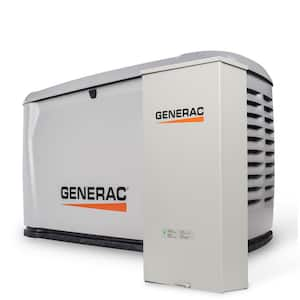
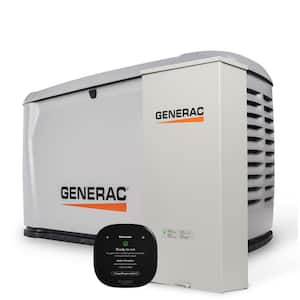
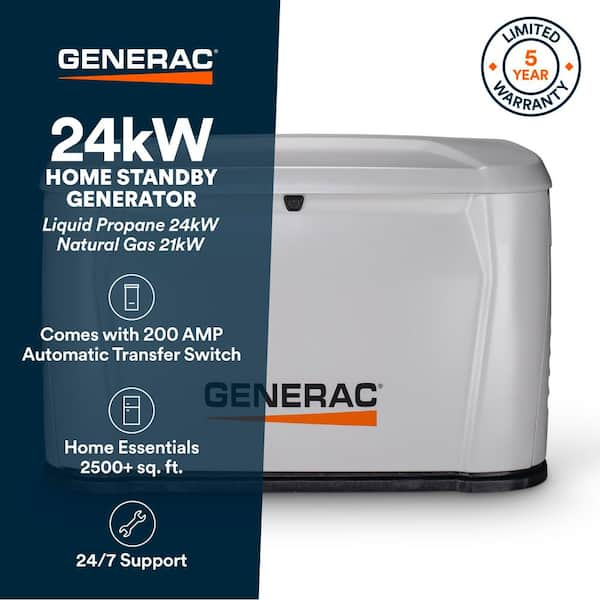
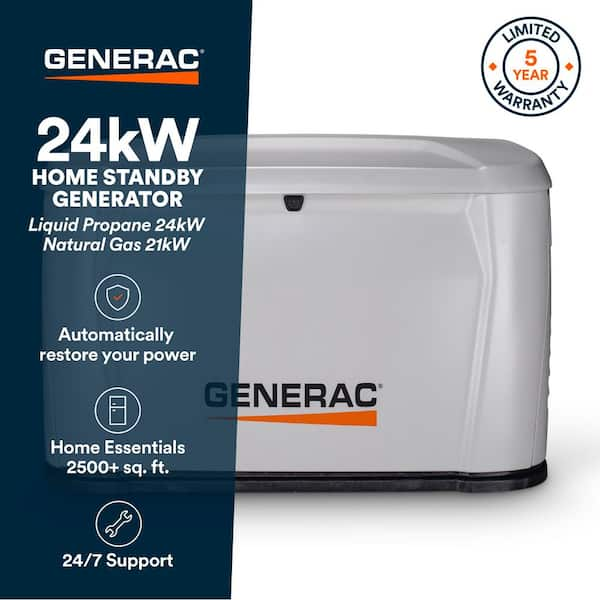
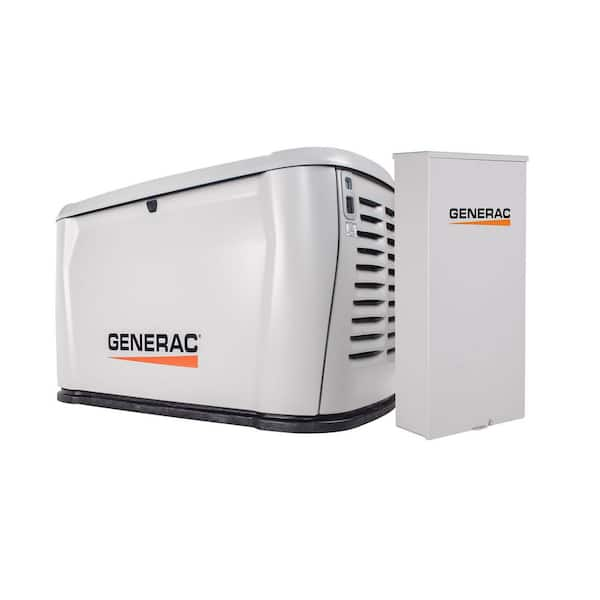
24kW Air-Cooled Auto Start Natural Gas or Propane Whole House Generator and 200 Amp Transfer Switch w/ Smart Monitoring
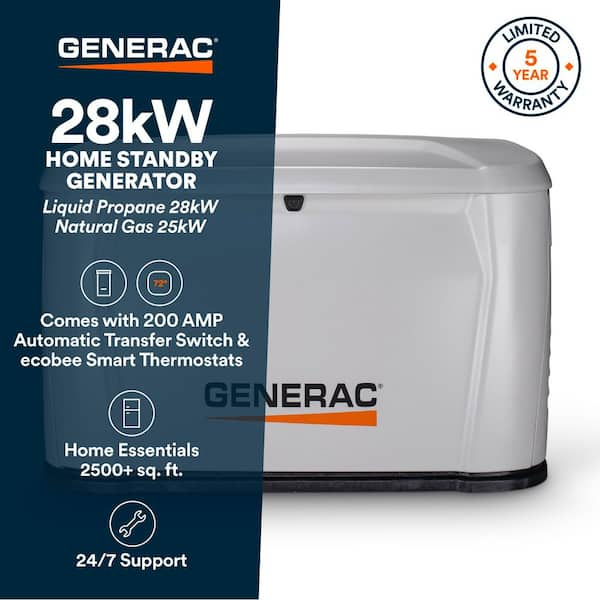
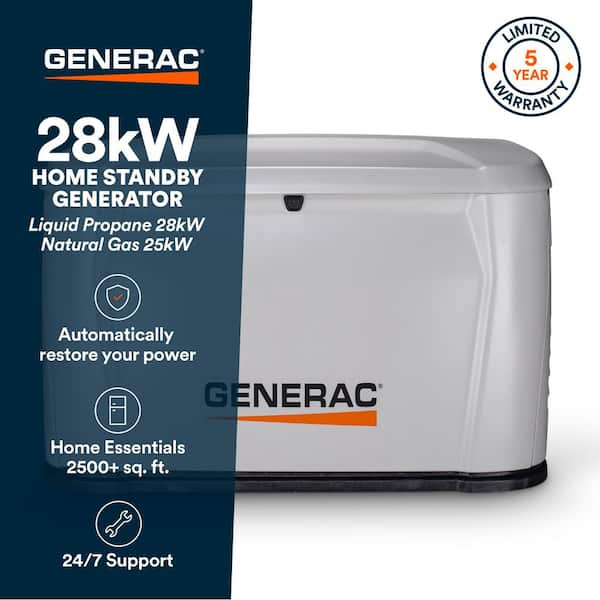
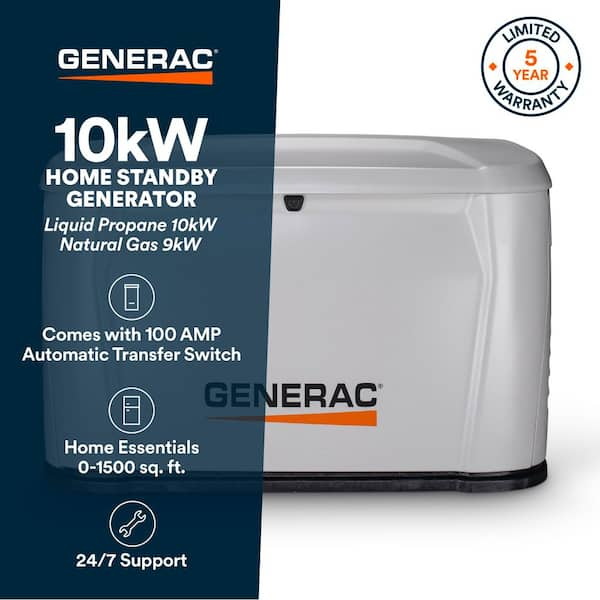
As the #1 selling home standby generator brand, Generac's Home Standby Generators provide the automatic backup power you need to protect your home and family during a power outage. Connected to your existing LP or natural gas fuel supply, it starts within seconds of sensing power loss - automatically - and runs for as long as necessary until utility power returns. Choose from just enough power to cover essential circuits or whole house coverage. This affordable automatic standby generator offers protection for about half the cost of central air conditioning. Long, best-in-class service intervals mean you spend less time on maintenance and more time enjoying the comfort that comes with owning a standby generator. Innovative engine design and rigorous testing are at the heart of Generac's success in providing the most reliable generators possible. All backed by 24/7/365 customer support and a nationwide dealer network of more than 9,000 strong.
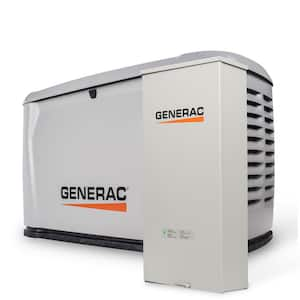
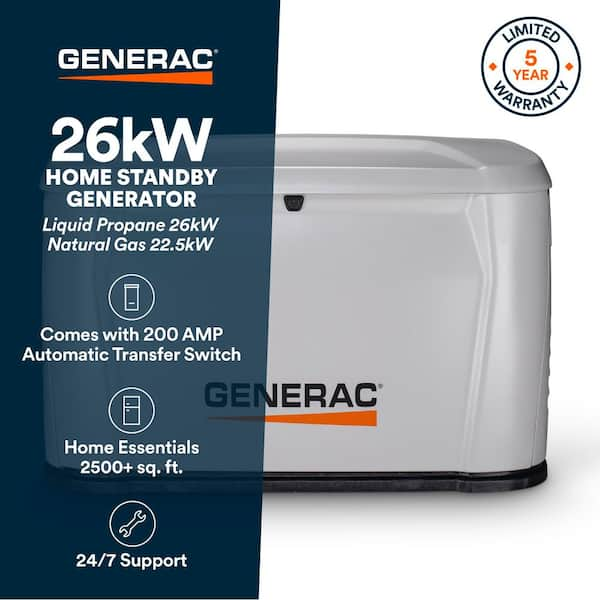
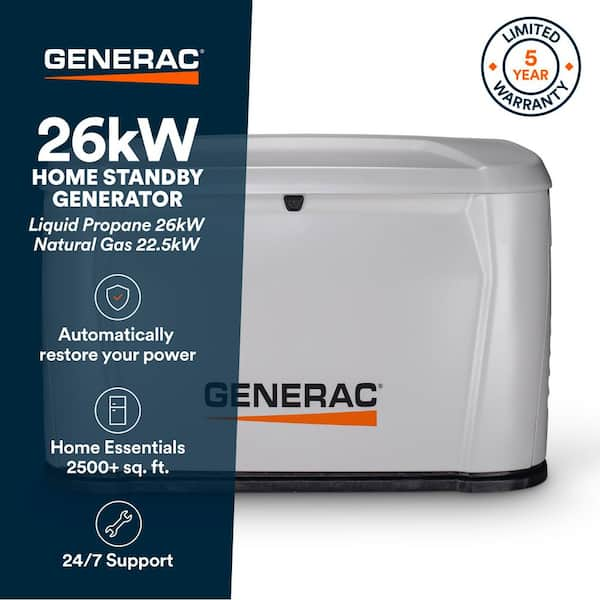
26kW Air-Cooled Auto Start Natural Gas or Propane Whole House Generator and 200 Amp Transfer Switch w/ Smart Monitoring
As the 1 selling home standby generator brand, Generac's Home Standby Generators provide the automatic backup power you need to protect your home and family during a power outage. Connected to your existing LP or natural gas fuel supply, it starts within seconds of sensing power loss - automatically - and runs for as long as necessary until utility power returns. Choose from just enough power to cover essential circuits or whole house coverage. This affordable automatic standby generator offers protection for about half the cost of central air conditioning. Long, best-in-class service intervals mean you spend less time on maintenance and more time enjoying the comfort that comes with owning a standby generator. Innovative engine design and rigorous testing are at the heart of Generac's success in providing the most reliable generators possible. All backed by 24/7/365 customer support and a nationwide dealer network of more than 9,000 strong.
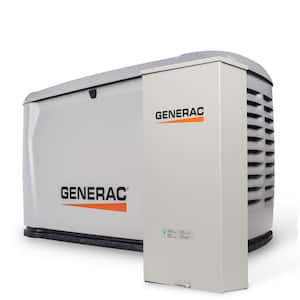
22kW Air-Cooled Auto Start Natural Gas or Propane Whole House Generator and 200 Amp Transfer Switch w/ Smart Monitoring
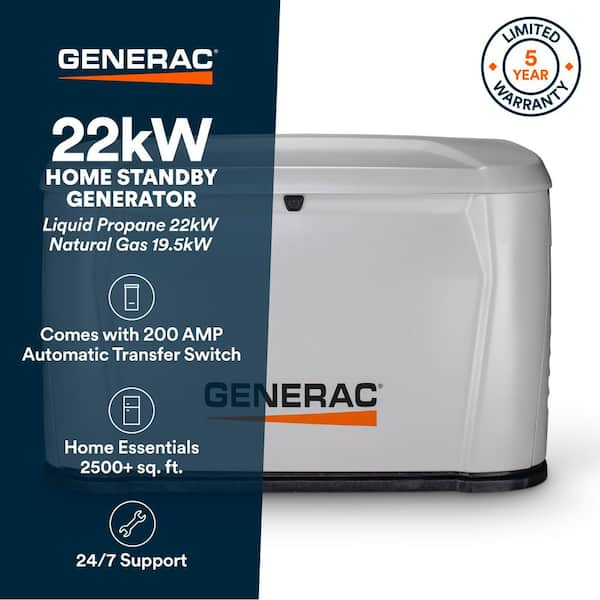
As the #1 selling home standby generator brand, Generac's Home Standby Generators provide the automatic backup power you need to protect your home and family during a power outage. Connected to your existing LP or natural gas fuel supply, it starts within seconds of sensing power loss - automatically - and runs for as long as necessary until utility power returns. Choose from just enough power to cover essential circuits or whole house coverage. This affordable automatic standby generator offers protection for about half the cost of central air conditioning. Long, best-in-class service intervals mean you spend less time on maintenance and more time enjoying the comfort that comes with owning a standby generator. Innovative engine design and rigorous testing are at the heart of Generac's success in providing the most reliable generators possible. All backed by 24/7/365 customer support and a nationwide dealer network of more than 9,000 strong.
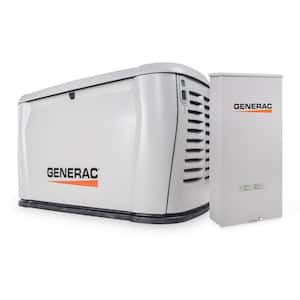
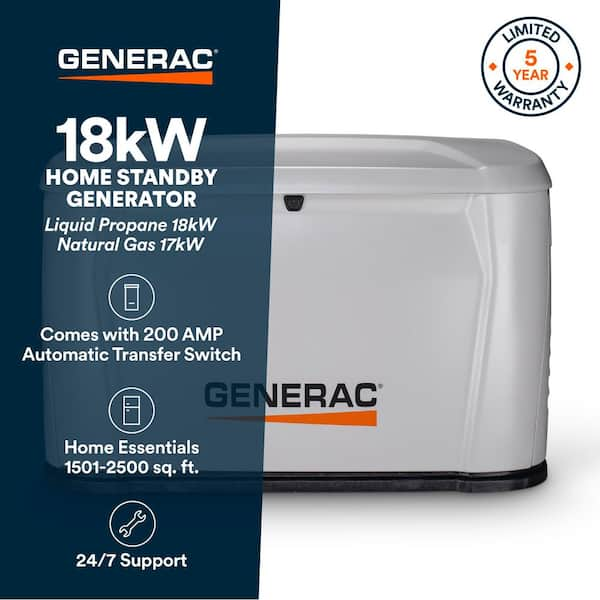
18kW Air-Cooled Auto Start Natural Gas or Propane Whole House Generator and 200 Amp Transfer Switch w/ Smart Monitoring
As the #1 selling home standby generator brand, Generac's Home Standby Generators provide the automatic backup power you need to protect your home and family during a power outage. Connected to your existing LP or natural gas fuel supply, it starts within seconds of sensing power loss - automatically - and runs for as long as necessary until utility power returns. Choose from just enough power to cover essential circuits or whole house coverage. This affordable automatic standby generator offers protection for about half the cost of central air conditioning. Long, best-in-class service intervals mean you spend less time on maintenance and more time enjoying the comfort that comes with owning a standby generator. Innovative engine design and rigorous testing are at the heart of Generac's success in providing the most reliable generators possible. All backed by 24/7/365 customer support and a nationwide dealer network of more than 9,000 strong.