Backer Board vs. Self-Leveler for Tile Floor
Published August 31, 2026
Backer board is used on substrates to create stability and strong bonds while self-leveler is used for flatness. These are not competing choices and for some jobs, both may be necessary.
In this guide we discuss unlerlayment for tile, how to analyze the needs of a substrate and the products to use for prepping tile floor projects.
SHOP BACKER BOARDS AND SELF-LEVELER NOW
Table of Contents
What Each Material Actually Does
When to Use Backer Board
When to Use Self-Leveler
When You Need Backer Board and Self-Leveler
Substrate Assessment Before You Start
Common Prep Mistakes
What Each Material Actually Does
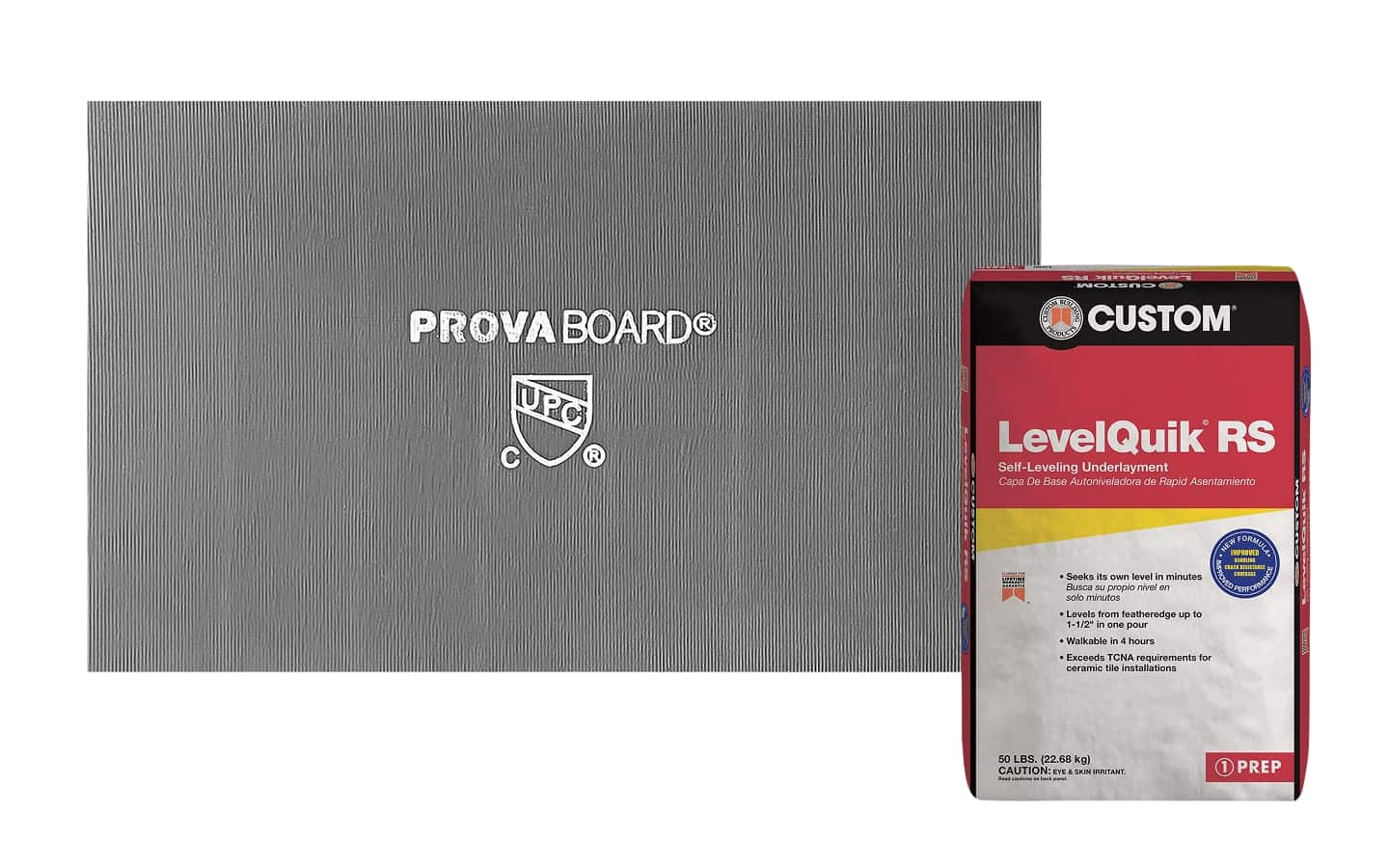
Backer board is a rigid, cement-based panel that gives tile a stable base for bonding. Self-leveler is a pourable cement-based compound that flows (self-levels) flat, correcting dips and slopes when applied.
Here are some other key facts to know when assessing the differences:
- Backer board is moisture-resistant and stiff. It provides a flat, strong and stable foundation that can prevent cracks and shifts over time.
- Self-leveler is self-flattening and smooth but adds no meaningful stiffness, lacking the load-bearing strength of backer board.
Uncoupling membrane offers bonding, waterproofing and crack isolation as the third option for preparing substrates for tile application.
- Uncoupling membrane is a flexible, plastic sheet that gets applied using a thin layer of mortar.
- Uncoupling membrane is a common alternative to backer board.
When to Use Backer Board
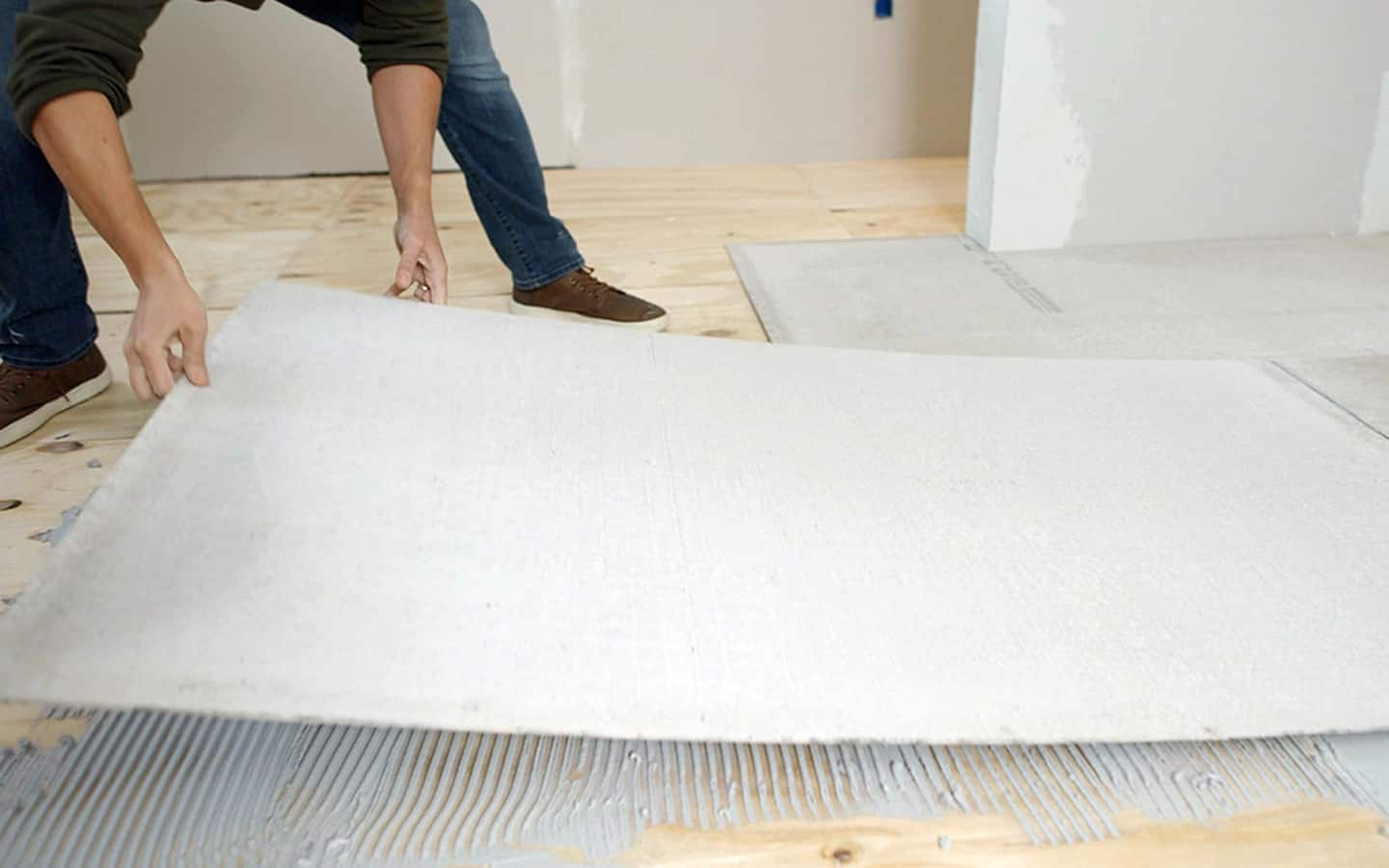
Do you need backer board for tile application?
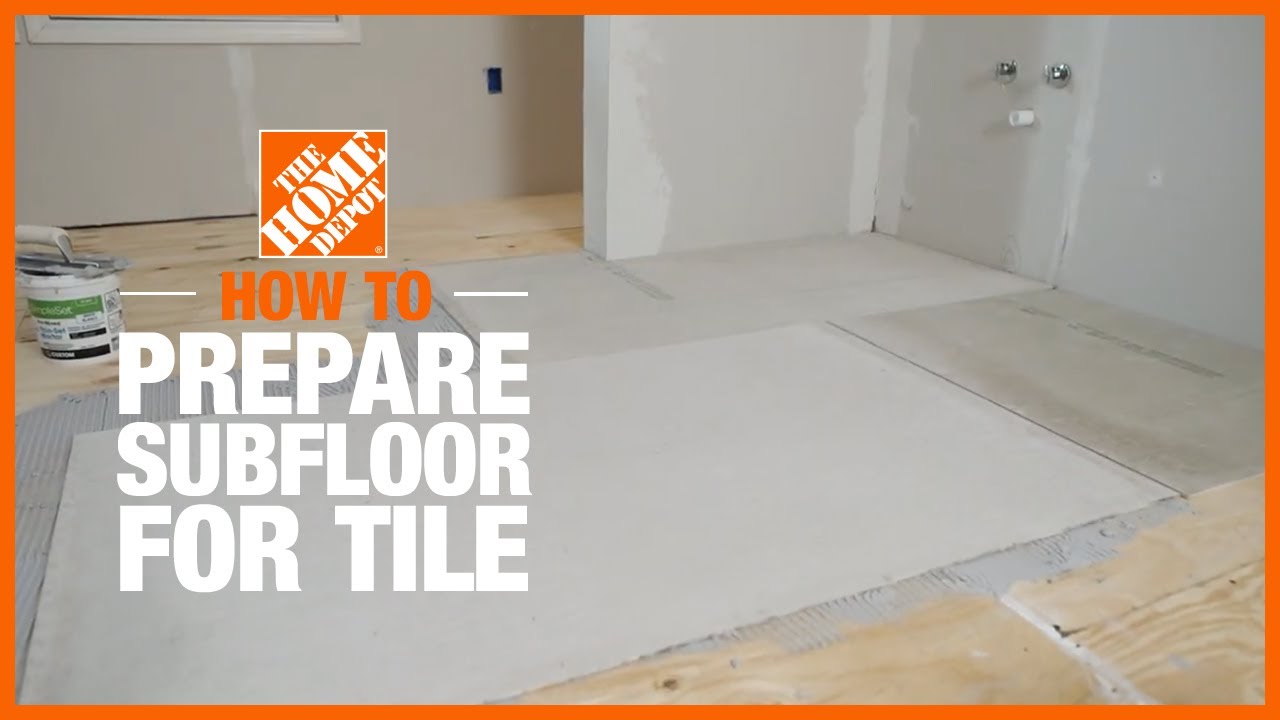
Use backer board when a wood subfloor needs a rigid, rot-proof, reliable bonding surface for tile.
- Backer board is ideal for wet areas like shower floors or walls, around tubs and for bathroom floors when paired with a waterproofing membrane.
- Backer board is typically 1/2-inch or 1/4-inch thick as an underlayment with subfloors needing to be at least 3/4 inches thick for application. The substrate (subfloor plus the backer board) should measure at least 1 and 1/8 inches thick in total per the TCNA (Tile Council of North America).
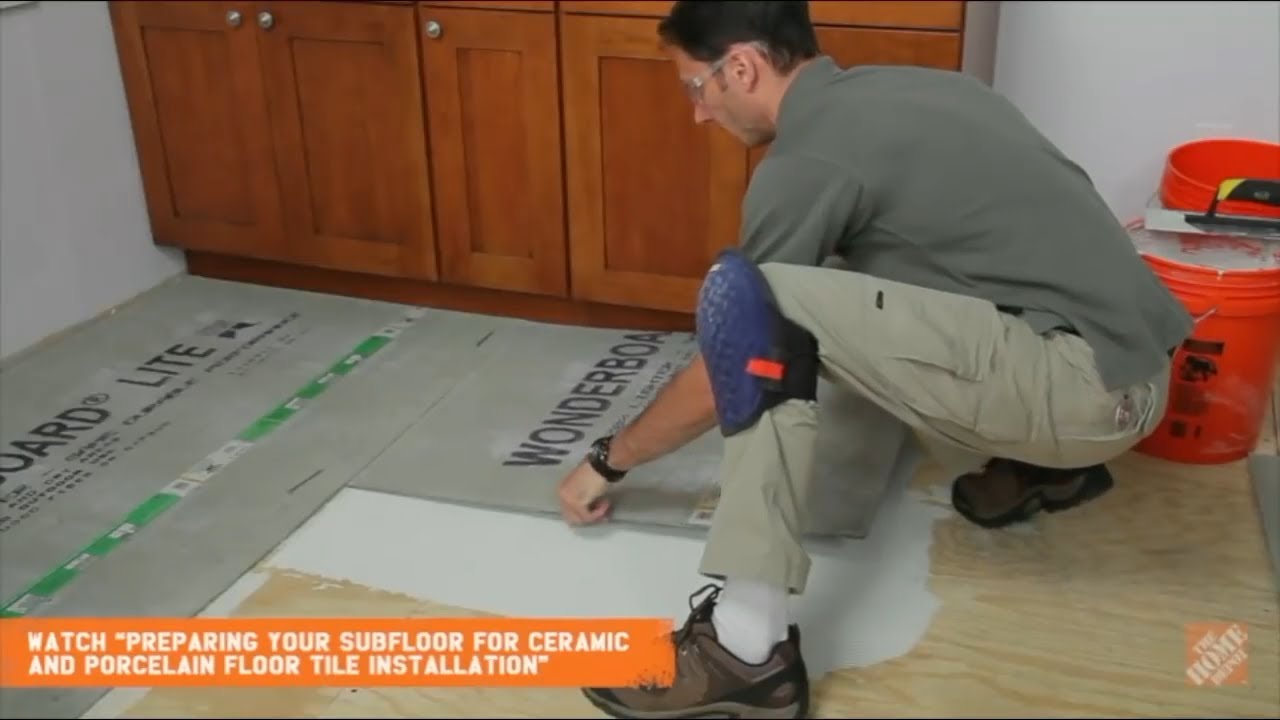
- Backer board should be set in a polymer-modified thinset (mortar), screwed into the subfloor, then taped at every joint with alkali-resistant mesh tape. This is key for installation.
- Backer board can range from about $.80 to $3.00 per square foot in material, varying by region and the type of board used.
When to Use Self-Leveler
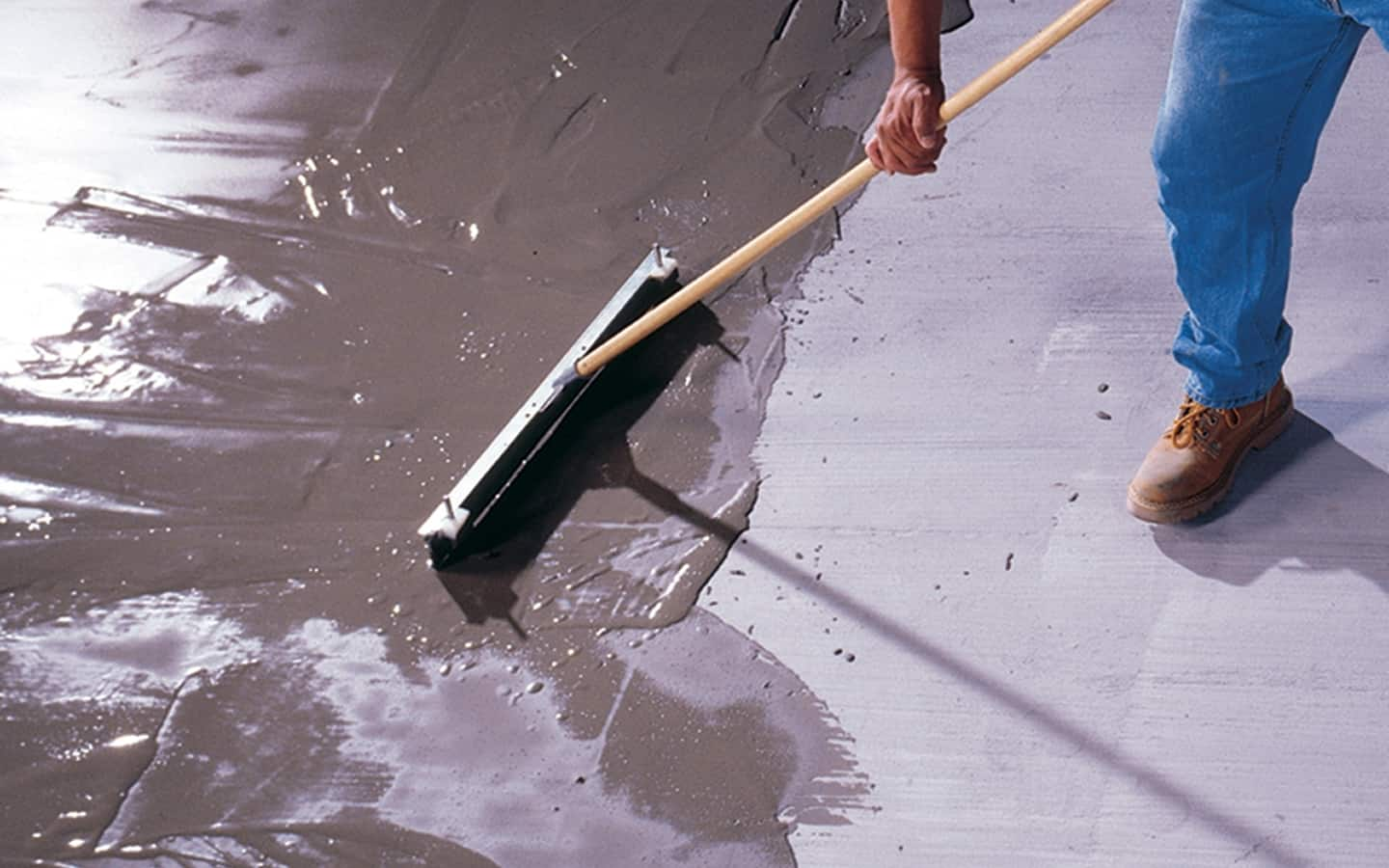
When should I use a self-leveler underlayment for tile application?
Self-leveler is ideal for leveling floors that are out of flat by more than 1/4 inch over 10 feet, coinciding with TCNA regulations for standard tile. Backer boards cannot flatten uneven subfloors and are not recommended in this case.
- Self-leveler is the optimal preparation application for subfloors that suffer from humps, dips and/or transitions.
- Self-leveler has a pour range that typically spans 1/8 inch to 1 inch per pour.
- Self-leveler is typically ready for tile within 12 to 24 hours and is walkable in about 4 to 6 hours.
- Self-leveler can range from about $1.50 to $3.00 per square foot in material, making it competitive with backer board.
Consider these best practices when using self-leveler:
- Prime first. Self-leveler will not bond to a dusty or unsealed subfloor and skipping primer can be a top cause of failure.
- When working with wood floors, use a self-leveler rated for wood subfloors or install lath first. Most levelers are formulated for concrete so be cautious.
Can you tile directly over self-leveler?
Yes, you can tile directly over a self-leveler compound once it has cured. Simply set the tile directly on it with a thinset (no backer board needed).
When You Need Backer Board and Self-Leveler
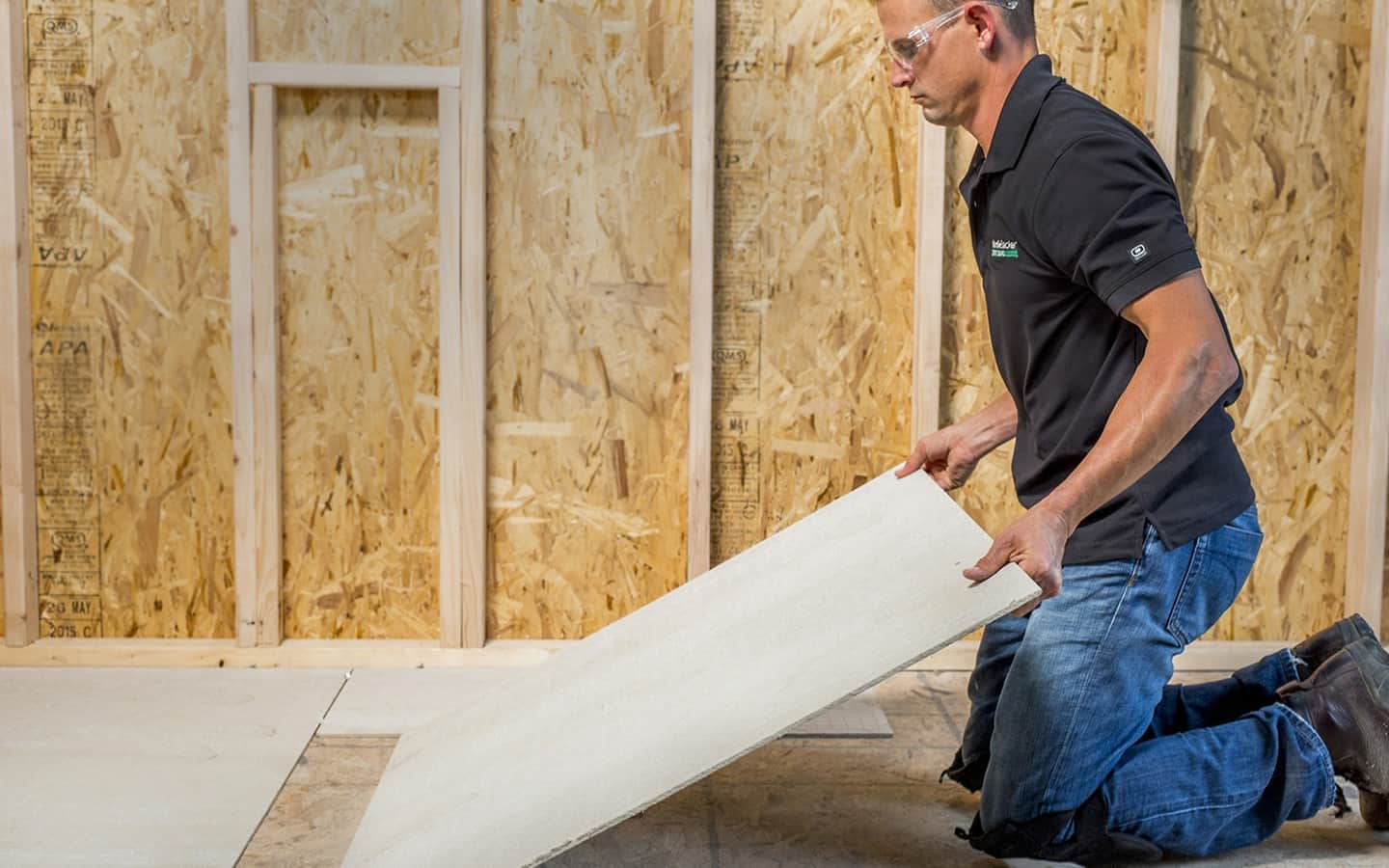
Some tile preparation projects require both backer board and self-leveler.
Scenario:
I am prepping a wavy, wood subfloor for tile.
- Because the floor is wavy, it is not flat enough or stable enough to tile as-is.
- Due to this, the job would require backer board and self-leveler in the typical project sequence.
What would this look like in real-time?
- Prime the floor.
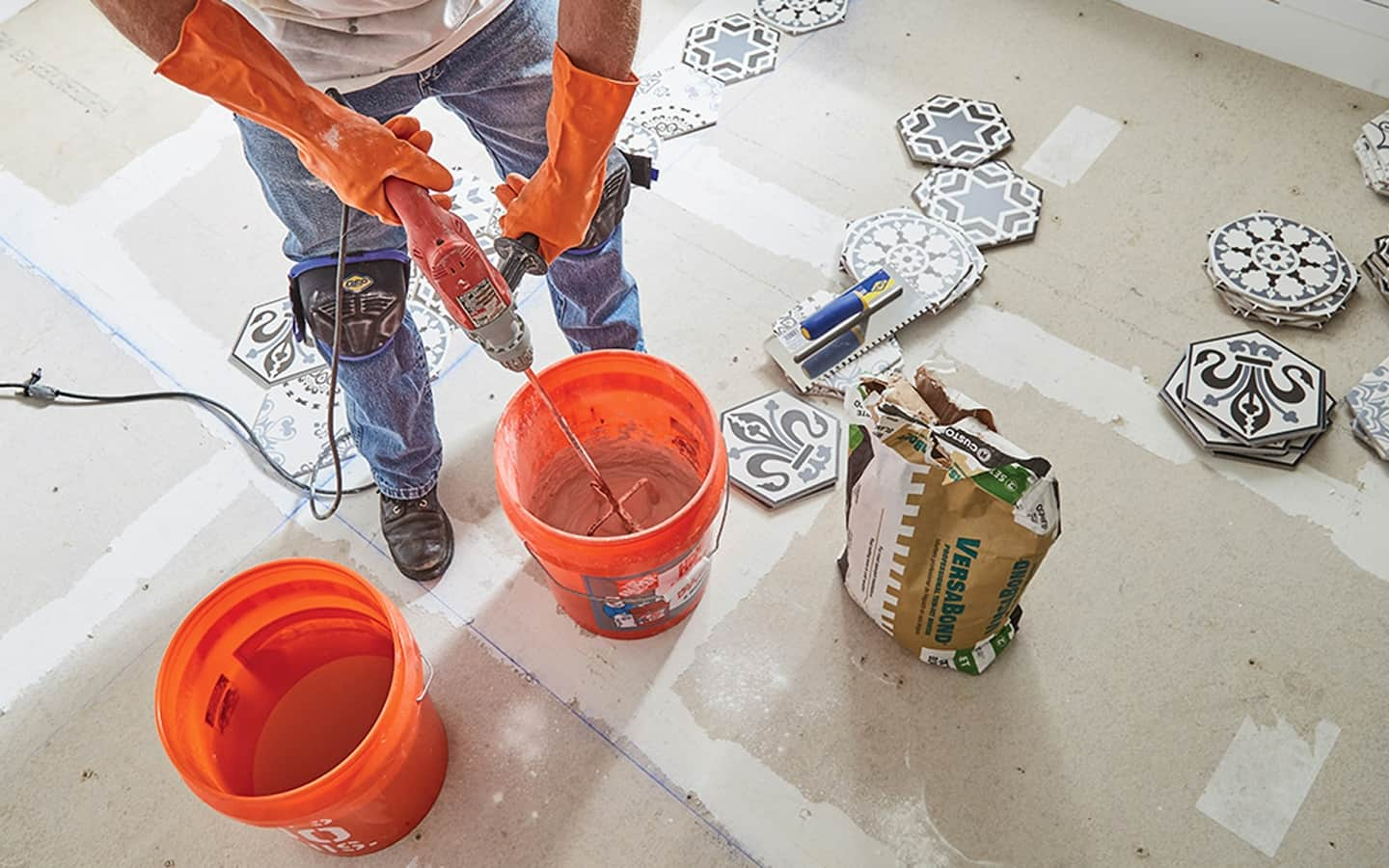
- Pour a self-leveler rated for wood subfloors directly over the subfloor to flatten it.
- Set backer board over the self-leveler using thinset, screws and alkali-resistant mesh tape for reinforcement.
- Install your tiles over the backer board with thinset.
Other best practices for applying both backer board and self-leveler include:
- Patch any small low spots under backer board before setting it in the thinset. The patches must be under the board, not on top of it.
- Mind the total floor height and thresholds. Stacking underlayment can create a level difference at doorways that requires transitions.
Substrate Assessment Before You Start
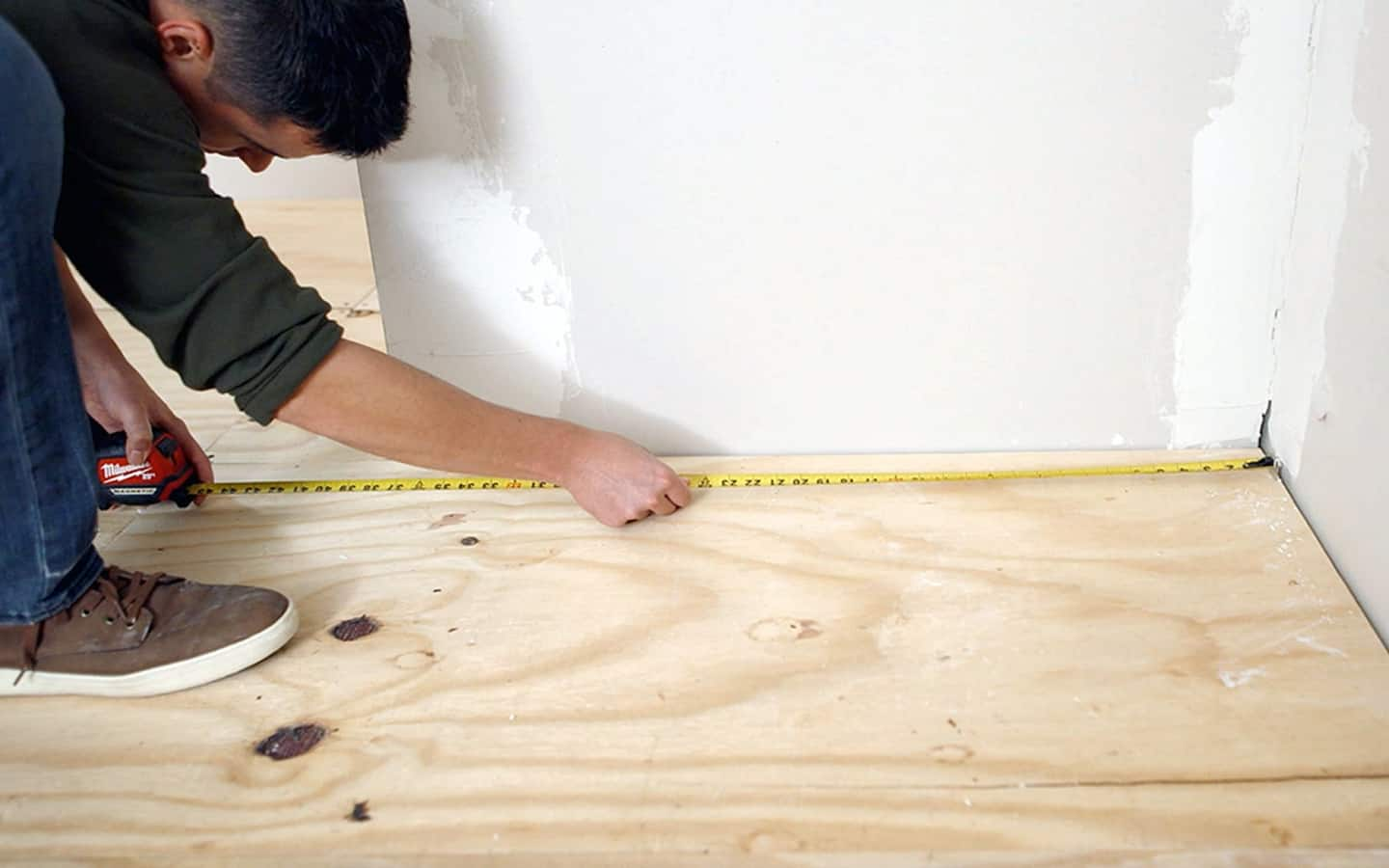
Flatness, deflection and testing are important to consider when prepping tile projects.
Consider these best practices before tiling:
- Check the subfloor and identify whether it is OSB, plywood, old tile, or concrete slab.
- Check the flatness of your surface using a long, straightedge to mark highs and lows.
- Check for deflection by walking the floor for spring.
- For concrete, check for moisture with the relative humidity test before tiling a slab.
Common Prep Mistakes
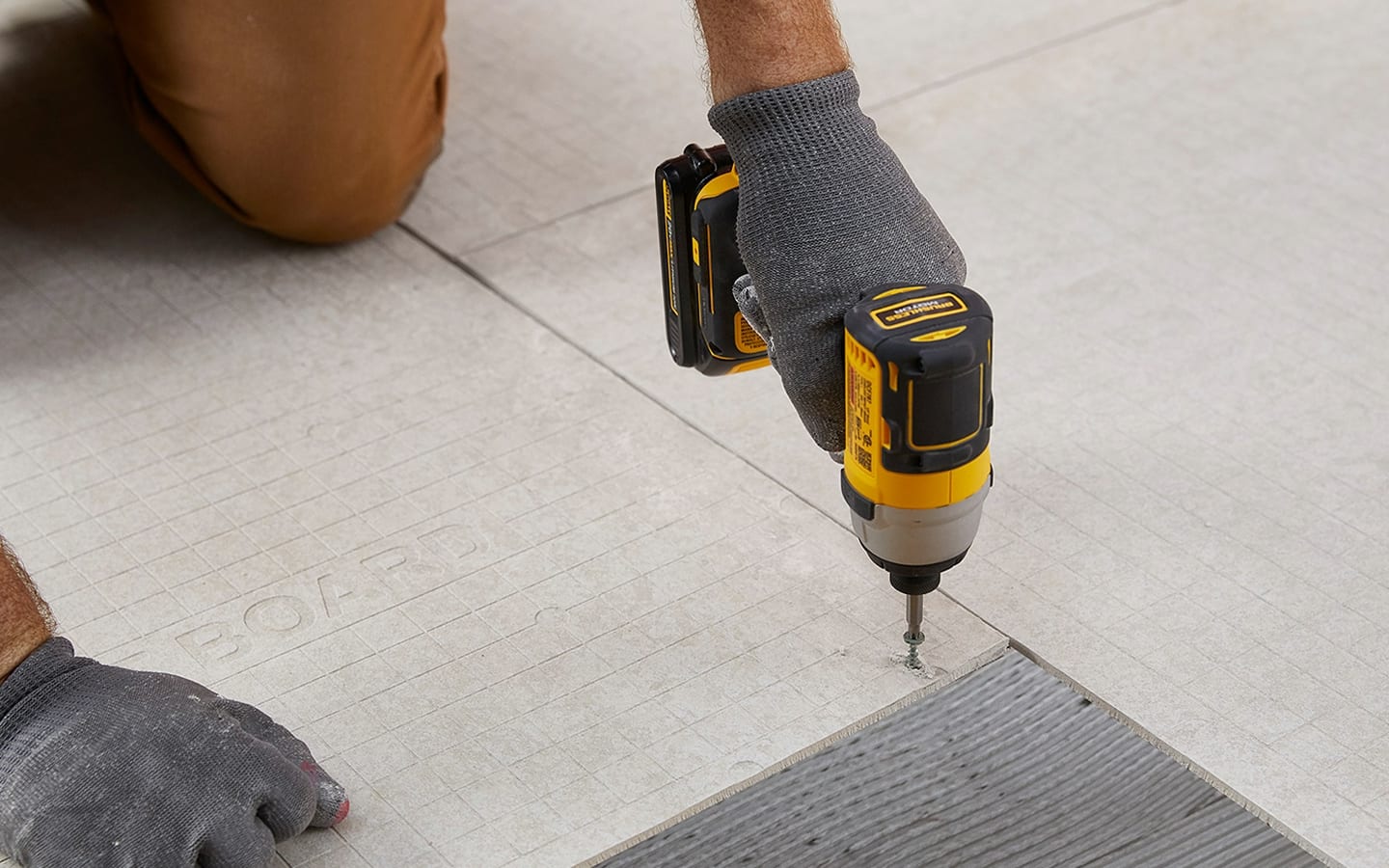
- Avoid tiling directly over a single layer of plywood. It is rarely stiff enough and can crack the tile.
- Avoid screwing backer board down with no thinset spread underneath. This could leave voids that flex.
- Avoid pouring self-leveler without priming first or over a wood subfloor with a concrete-rated product.
- Avoid using self-leveler to add stiffness or using backer board to fix a dip.
- Don’t ignore deflection, check for spring by walking and using your eyes and ears to spot any bounce in the floor.
More Tools. More Products. More Perks.
Be more competitive and boost your bottom line with Pro Xtra, The Home Depot’s loyalty program built for Pros. Sign up today to access the enhanced Pro Online Experience, built with the online business tools and time-saving features Pros need.
Partner with The Home Depot for bulk procurement of backer boards or self-leveler, localized delivery and Pro Desk Services in store.