Product Images
Top Rated
1 Gal. Autumn Bonfire Azalea Bush with Reblooming Red Flowers - Low-Maintenance Evergreen Shrub
- Multi-season reblooming Azalea shrub with red blooms
- Compact flowering evergreen shrub for full sun to part shade
- Ships at 8-12 in. and can grow up to 3 ft. tall when mature
- View More Details
Free & Easy Returns In Store or Online
Return this item within 90 days of purchase.
Ask about this product
Get an answer now with AI
Magic Apron Assistant is an AI virtual assistant. By proceeding, you consent to the recording and use of your information by The Home Depot (and authorized third parties). More information
Product Details
About This Product
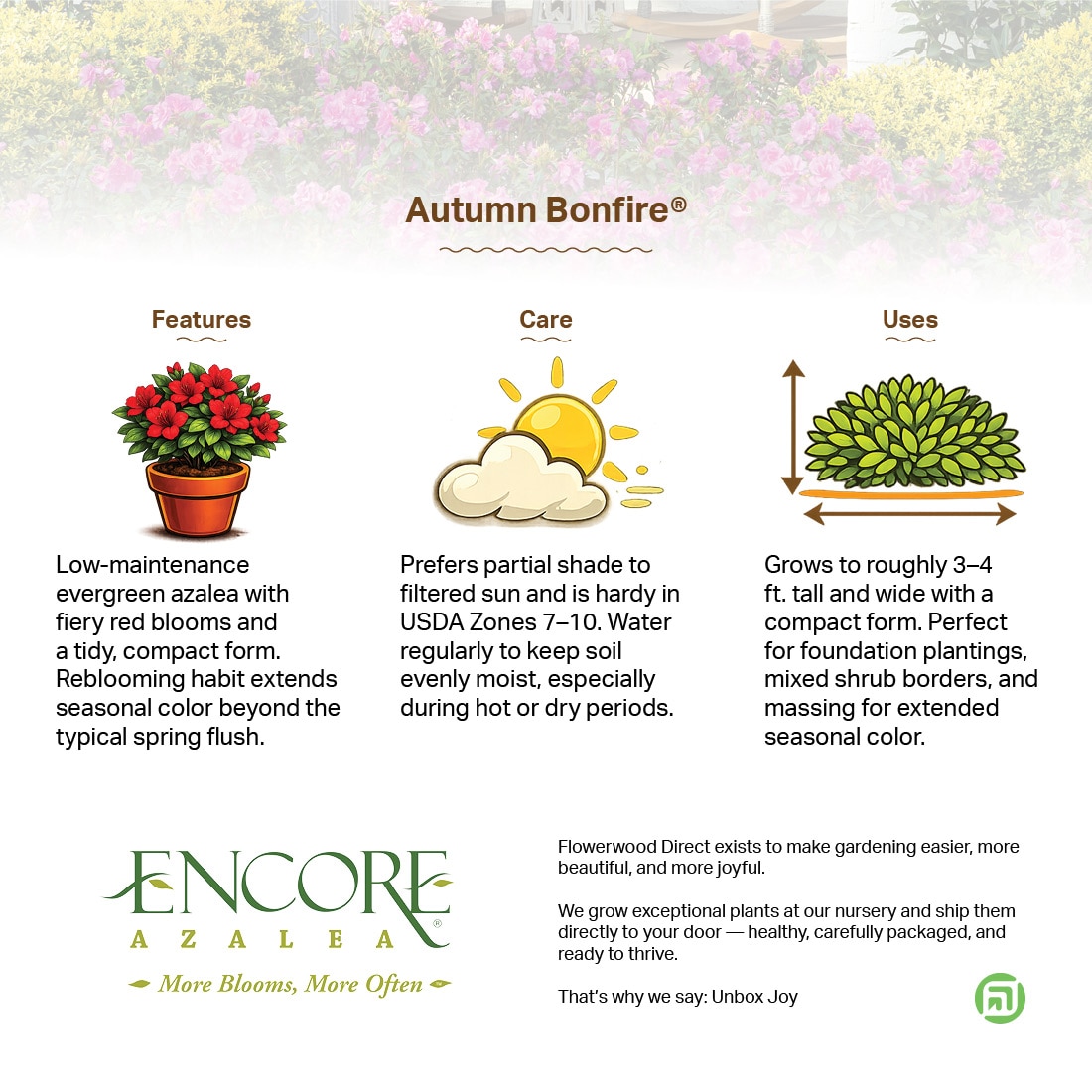
A fast-growing dwarf azalea, the new Autumn Bonfire Encore Azalea glows with numerous, true red, semi-double, and single blooms in Spring, Summer, and Fall. Autumn Bonfire holds its bright green foliage year-round and grows to an average of 3 ft. high by 3.5 ft. wide. Now, you can enjoy 34 varieties of Encore Azaleas that boast profuse, repeat blooms; bold color, and year-round interest. These Azaleas require little maintenance once established and have superb disease resistance. They are also great attractants to pollinators such as butterflies and hummingbirds. Encore Azaleas bloom best when given four to six hours of direct sunlight daily. When planting this Azalea dig the hole twice as wide as the pot and mix slightly acidic garden soil in with your native soil, then leave the top of the root ball half an inch above the ground level when filling the hole with soil.
Highlights
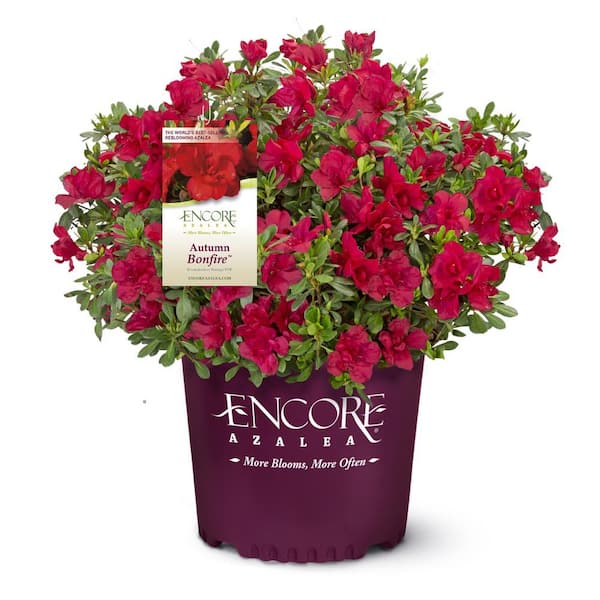
- Encore Azalea Autumn Bonfire has vivid true-red semi-double blooms
- These Azalea shrubs can be grown in the landscape, and pots or containers. Perfect for container gardens on a deck or patio
- Very low maintenance plant once established
- Water thoroughly twice per week until established, then water once per week
- Fertilize Encore Azalea bushes every spring with slow-release fertilizer
- May be pruned if desired after spring bloom
- Mix different varieties of Encore Azalea for great color patterns in your landscape
- Average Shipping Size: 8-14 inches tall X 8-12 inches wide
- Can be grown in full sun to partial shade, needs 4-6 hours of sunlight
- Ships from Alabama - Customers beyond the Southeast US should place orders from early fall to late spring to avoid heat damage in transit
- Placing a large order? Consider ordering 1-2 of these red blooming azalea plants to ensure that they will meet your specifications before placing the order for the entire project
- The blooms of the Encore Azalea Bonfire will start off red and will fade to a dark pink as the blooms age
- Not guaranteed to be in bloom on arrival
- Return Policy
Product Information
Specifications
Dimensions
Mature Height (in.) | 36 in. |
|---|---|
Mature Width (in.) | 42 in. |
Details
Additional Characteristics | Attracts Butterflies, Attracts Hummingbirds, Disease Resistant, Insect Resistant, Low Maintenance |
|---|---|
Annual / Perennial | Perennial |
Average Shipping Height (in.) | 9 in |
Best Time to Plant | Spring to Fall |
Bloom Season | Fall, Spring, Summer |
Blossom Color Family | Red |
Botanical Name | Rhododendron hybrid 'Robleza' PP29770 |
Common Name Family | Azalea |
Container Size | 1 Gallon(s) |
Evergreen or Deciduous | Evergreen |
Fragrance | Non-Fragrant |
Growth Habit | Shrub |
Hardiness Zone | 10 (30 to 40 F),6 (-10 to 0 F),7 (0 to 10 F),8 (10 to 20 F),9 (20 to 30 F) |
Mature Height (ft.) | Less than 4 |
Mature Shrub Height Range (Ft.) | 3-4 Ft. |
Minimum Space Between Plantings (in.) | 36 in |
Number of plants included (Pack-Size) | 1 |
Pet Friendly | Unsafe for Pets |
Returnable | 90-Day |
Sun Tolerance | Full Sun |
Water Requirements | Twice a week |
Wildlife Attracted | Bees, Birds, Butterflies, Pollinators |
Wildlife Deterred | No Wildlife Deterred |
Questions & Answers
can you plant these in the fall?
Yes, azaleas can be planted in the fall. Depending upon where you live in the country will determine how insulated you will need to protect them for winter survival, which will be vitally important.
My bush died after a week and a half dyed
Please contact customer service for assistance.
Can it be pruned to keep 2-3’ high and the same in width
Yes the Autumn Bonfire can be trimmed to these dimensions.
I planted 3 of the autumn bonfire azaleas and one blooms the other 2 don’t. I have had them for a year now. Will the other 2 ever bloom?
Yes, the other two Encore Azalea Autumn Bonfire plants can still bloom, even if they haven't flowered as heavily as the first one during their first year in the landscape. The most common reason for uneven blooming is differences in sunlight. Encore Azaleas perform best with at least 4–6 hours of direct sun daily, and plants receiving more light will typically produce more flowers. Also, newly planted azaleas often spend their first year focusing on root establishment rather than flowering, so bloom performance can improve significantly as the plants mature. To maximize blooms, make sure the plants are getting adequate sunlight, keep the soil consistently moist but well-drained, and apply a fertilizer formulated for azaleas according to label directions. Avoid heavy pruning, especially after midsummer, as this can remove developing flower buds. A layer of mulch can help maintain even soil moisture and root temperatures. If the plants are healthy and growing well, there's a good chance you'll see increased flowering as they become more established and settle into their location.
Why are theyunsafe for pets
Encore Azalea Autumn Bonfire is considered unsafe for pets because all azaleas (Rhododendron species) are toxic if ingested. The issue is that azaleas naturally contain compounds called grayanotoxins, which can affect the heart and nervous system of dogs, cats, and other animals. If a pet chews or eats the leaves, flowers, or even small amounts of plant material, it can lead to symptoms such as vomiting, drooling, weakness, low blood pressure, and in severe cases, more serious cardiac effects. This is why azaleas are commonly listed as toxic ornamental shrubs for pets. That said, the plant itself is not dangerous to have in a landscape by default—most pets simply avoid it. The risk comes from curious animals that chew on plants, especially puppies, dogs that graze, or pets that explore garden beds. For a pet-friendly garden, the key is placement and supervision, or choosing non-toxic alternatives if you have animals that regularly interact with your plants.
Will this survive in chicago
Encore Azalea Autumn Bravo is not reliably hardy in Chicago. Chicago is typically USDA Zone 5b to 6a, with very cold winters, wind, and repeated freeze/thaw cycles. Autumn Bravo is generally rated for about Zones 6–8 (sometimes 6–10 depending on the source and selection), meaning it sits right on the edge—or just outside—what Chicago can consistently support. In practical terms, it might survive in a protected microclimate in the Chicago area (like a sheltered foundation bed with heavy mulch and winter protection), but it is not considered a dependable landscape shrub there. Even when it survives, it can suffer winter burn, dieback, or lost flower buds, which reduces blooming performance the following season. So the bottom line is: in Chicago, this azalea is a risky choice for in-ground planting. It performs much more reliably in warmer Zones 6b–8+, and in colder areas it’s better treated as a container plant that can be protected or moved for winter rather than a permanent landscape shrub.
Do these plants come with leaves?
Yes, Encore Azalea Autumn Bonfire plants do come with leaves. These are evergreen shrubs, which means they maintain their foliage year-round rather than going dormant and dropping all their leaves. When you receive the plant, it should already have healthy green leaves on it, even if it’s not currently in bloom. The amount of foliage can vary slightly depending on the season and shipping conditions, but you can expect a leafy, established plant—not a bare stem.
Are they hardy in zone 9 or 10?
Yes, Encore Azalea ‘Autumn Bonfire’ shrubs are hardy and thrive beautifully in USDA Zones 7 through 10. They perform especially well in Zones 9 and 10, where winters are mild and the growing season is long. In these warmer areas, they’ll often bloom multiple times a year, adding vibrant color nearly year-round. To keep them happy, plant them in a spot that gets morning sun and afternoon shade, as the intense heat in hotter climates can stress the plant. Make sure the soil drains well and mulch around the base to help keep roots cool and moist.
Viewing 1-8 of 48
Customer Reviews
4.4 out of 5
Loading Recommendations
Compare Key Features
Product Snapshot | |||
|---|---|---|---|
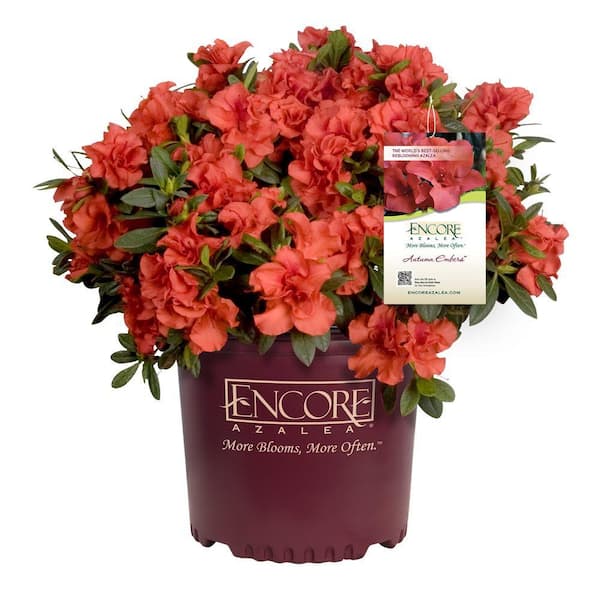
Ideal for customers who want vibrant, reblooming red flowers, ensuring year-round garden beauty. | Ideal for customers who want vibrant, reblooming red flowers and evergreen foliage, ensuring year-round beauty. | Ideal for customers who want fragrant, reblooming gardenias, ensuring year-round beauty and scent. | Ideal for customers who want vibrant, reblooming red-orange flowers, ensuring year-round color. |
Evergreen | |||
Growth Rate | |||
Fast | Low maintenance once established | Moderate | Not specified |
Related Products
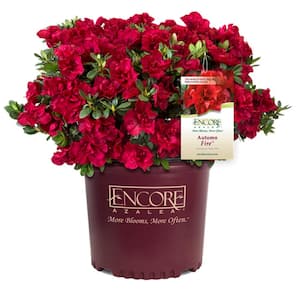
1 Gal. Autumn Fire Azalea Shrub with Reblooming Red Flowers - Low-Maintenance Small Evergreen Bush
Autumn Fire Encore Azalea offers vibrant year-round color to any garden. Autumn Fire, produces blazing true red semi-double blooms. Its glossy, dark green foliage deepens to a saturated purple bronze in winter adding year round appeal to gardens. Unlike many traditional azaleas, Encore azaleas bloom best in full sun, so choose an area of your yard where they can receive at least 4-6 hours of sunlight. Autumn Fire works well in foundation plantings or as a low growing hedge. Be sure to plant your Encore Azaleas in acidic to slightly acidic soil to maximize your bloom yield. Fertilize in the spring with a balanced fertilizer after the threat of the last frost has dissipated and feed once more in the summer to help you Encore bloom through fall. Encore Azalea is the world's best-selling multi-season blooming azalea. In many areas of the country, Encore Azalea bloom during 3 seasons of the year-spring, summer, and fall. And, for areas of the country where azaleas don't traditionally thrive, such as those in USDA hardiness Zone 6 and 7, you will see a spring or summer bloom, but not a fall bloom before your temperatures drop.
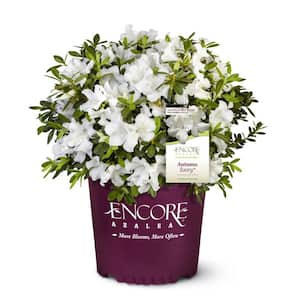
1 Gal. Autumn Ivory Dwarf Azalea Shrub with Reblooming White Flowers - Low-Maintenance Small Evergreen Bush
Autumn Ivory Encore Azalea offers vibrant year-round color to any garden. Autumn Ivory is a compact grower that bursts with huge quantities of bright white flowers spring, summer and fall Unlike many traditional azaleas, Encore azaleas bloom best in full sun, so choose an area of your yard where they can receive at least 4-6 hours of sunlight. Its dwarf size makes Autumn Ivory one the best Encore Azalea for containers and foundation plantings. Also makes a great container plant. Be sure to plant your Encore Azaleas in acidic to slightly acidic soil to maximize your bloom yield. Fertilize in the spring with a balanced fertilizer after the threat of the last frost has dissipated and feed once more in the summer to help you Encore bloom through fall. Encore Azalea is the world's best-selling multi-season blooming azalea. In many areas of the country, Encore Azalea bloom during 3 seasons of the year-spring, summer, and fall. And, for areas of the country where azaleas don't traditionally thrive, such as those in USDA hardiness Zone 7, you will see a spring or summer bloom, but not a fall bloom before your temperatures drop.
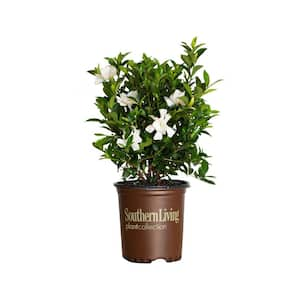
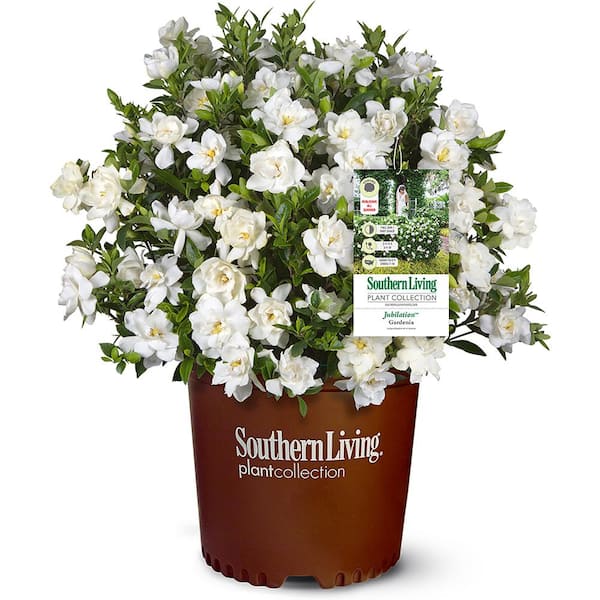
2.5 Qt. Jubilation Gardenia, Live Evergreen Shrub, White Fragrant Blooms
The Southern Living Jubilation Gardenia is a charming improvement on a Southern favorite. It features milky white, double form blooms with a rich aroma and it re-blooms throughout the Summer. The dark green, glossy foliage is evergreen. These Gardenias require little maintenance once established and have superb disease resistance. They are also great attractants to pollinators such as butterflies. Southern Living Jubilation grows more compact than traditional gardenias and is perfect for smaller areas of the garden
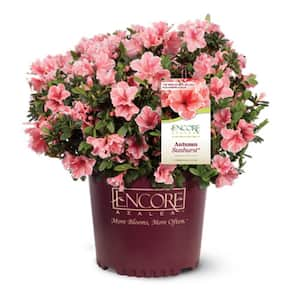
1 Gal. Autumn Sunburst Azalea Shrub with Reblooming Coral-Pink and White Flowers - Low-Maintenance Evergreen Plant
Autumn Sunburst Encore Azalea offers vibrant year-round color to any garden. Autumn Sunburst is a bright highlight in the garden, growing compactly and blooming profusely in Spring, Summer and Fall. Its unique blooms are coral pink with white ruffled edges and stand out against the compact dark green foliage. These azaleas require little maintenance once established and have superb disease resistance. They are also great attractants to pollinators such as butterflies and hummingbirds. Unlike many traditional azaleas, Encore Azaleas bloom best in full sun, so choose an area of your yard where they can receive at least 4-6 hours of sunlight. Autumn Sunburst works well in foundation plantings or as a low growing hedge. Be sure to plant your Encore Azaleas in acidic to slightly acidic soil to maximize your bloom yield. Fertilize in the Spring with a balanced fertilizer after the threat of the last frost has dissipated and feed once more in the Summer to help your Encore bloom through Fall. Encore Azalea is the world's best-selling multi-season blooming azalea. In many areas of the country, Encore Azalea bloom during 3 seasons of the year-Spring, Summer, and Fall. And, for areas of the country where azaleas don't traditionally thrive, such as those in USDA hardiness Zone 6 and 7, you will see a Spring or Summer bloom, but not a Fall bloom before your temperatures drop.