Pro Forecast: November 2025 Outlook
Exterior Remodels Pay Out
Shop Tools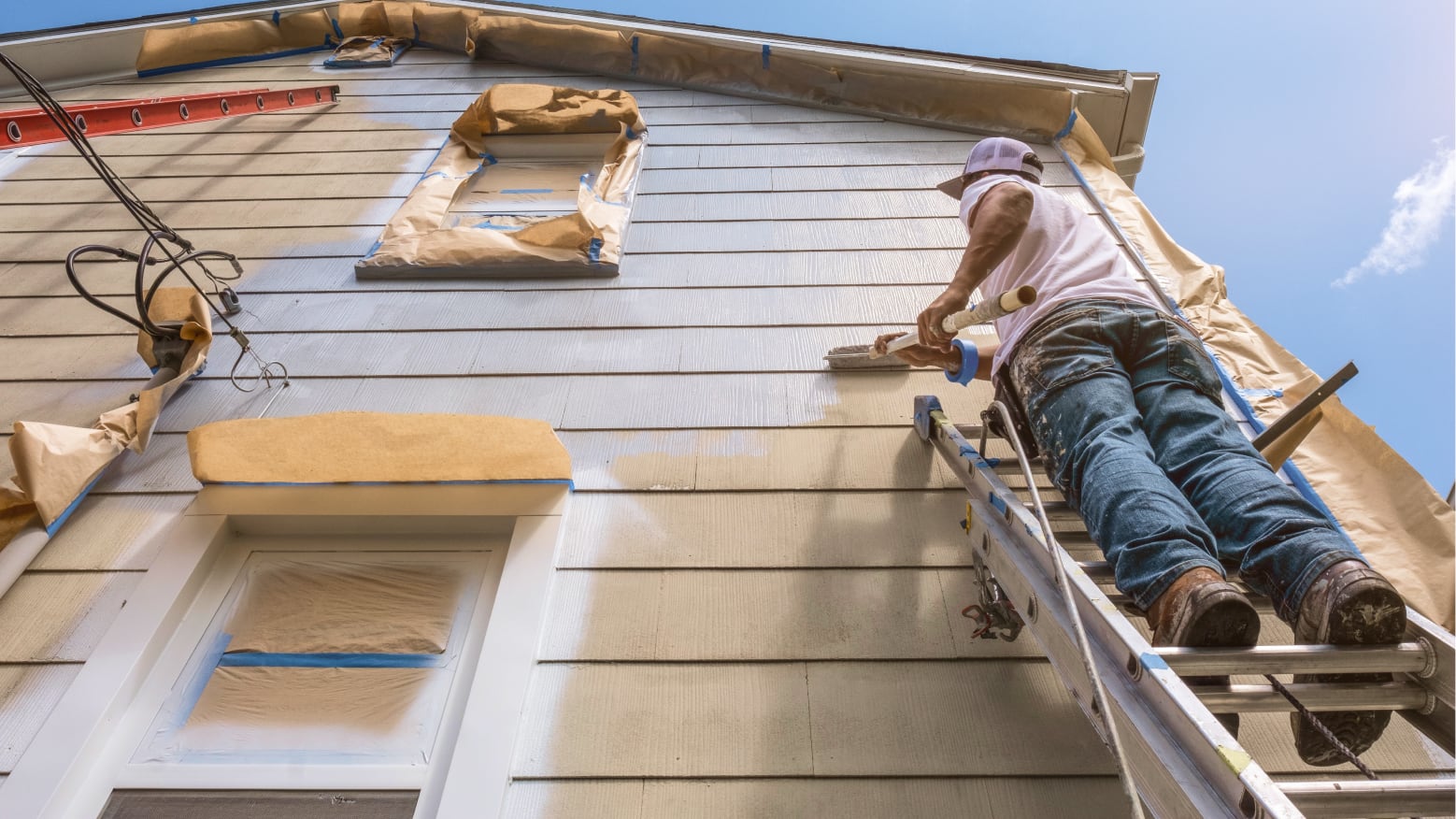
“The Forecast” is a monthly report of industry outlook news to help Pros plan their jobs, keep up with the market and anticipate developing trends.
Key Topics in the November Forecast:

CURB APPEAL
Home exterior remodels show high return on investment by attracting buyers in a soft housing market.

NEW LIFE FOR OLDER HOMES
With U.S. homes reaching a median age of 41 years old, expect more upgrades and other remodeling jobs.
Exterior Remodels Boost Home Sales
Exterior remodels and other home improvement projects consistently show the highest return on investment (ROI), according to multiple new studies. The 38th annual Cost vs. Value report from real estate research firm Zonda ranks home improvement projects by the increase on sale price. Home improvement Pros should emphasize high-return projects with customers.
According to Zonda’s survey of real estate professionals, these are some of the latest ROI trends:
• Exterior replacements such as new garage doors make up 8 out of the top 10 home improvement projects. • Installing garage doors, steel doors and manufactured stone veneer all more than doubled their return on investment, indicating that these make homes more appealing in a challenging housing market. (See our guide, “Cost vs. Value, Best ROI Home Improvements.”) • Kitchen remodels provide the highest ROI of home interior projects. • Backup generator installation shows increasingly high ROI, especially in regions with extreme weather conditions. • The region where projects show the highest ROI is the Pacific, followed by the West South Central (Arkansas, Louisiana, Oklahoma and Texas).
Let Us Help You Finish the Job




The 2025 Cost Vs. Value report’s top 10 remodeling projects for ROI and the percentage of their costs recovered:
- Garage door replacement (267.7%)
- Steel door replacement (216.4%)
- Manufactured stone veneer (207.9%)
- Fiber-cement siding replacement (113.7%)
- Minor kitchen remodel (112.9%)
- Vinyl siding replacement (96.5%)
- Backup power generator (95.3%)
- Wood deck addition (94.9%)
- Composite deck addition (88.5%)
- Fiberglass grand entrance (84.7%)
In some cases, less expensive projects can show a higher return on investment. The report’s top two projects for ROI each cost less than $5,000. Meanwhile, upscale projects costing more than $100,000, such as bathroom and primary suite additions and kitchen remodels, show less than 50% ROI and can be less likely to recoup costs.
In contrast, other recent research has found a greater mix of exterior and interior projects for ROI or cost recovery. HVAC conversion to electrical power has proved increasingly popular. The 2025 Remodeling Impact Report of the National Association of Realtors (NAR) singles out interior jobs such as kitchen renovations and basement and attic conversions.
Generally, homeowners putting their house on the market favor exterior projects. The housing market, however, has led to a higher proportion of homeowners aging in place. Homeowners staying in place often prioritize interior renovations.

For factors outside of cost recovery, the NAR 2025 Remodeling Impact Report includes a homeowner survey of customer satisfaction (or a “joy score”) in home improvement projects. The following are the home improvement projects that ranked the most highly, out of a possible 10, for customer satisfaction.
- Added primary bedroom suite (10)
- Kitchen upgrade (10)
- New roofing (10)
- Bathroom renovation (9.8)
- Complete kitchen renovation (9.7)
- Paint one interior room (9.3)
- New wood flooring (9.1)
- Basement conversion to living area (8.8)
- Paint exterior siding (8.8)
- New front door (7.5)
Remodeling and renovation Pros may want to promote their ability to do jobs that offer high return on investment or customer satisfaction. Pros in more robust housing markets should consider marketing for curb appeal to homeowners eager to sell. Pros in slower markets should consider emphasizing interior projects with high customer satisfaction, such as photo galleries on their web sites.
Homeowners looking to sell may be about to see more favorable conditions. Reductions in interest and mortgage rates are energizing a sluggish housing market. In September the Federal Reserve cut interest rates for the first time in 2025, reducing the Federal Reserve rate from 4.25-4.5% to 4.0-4.25%.
Mortgage rates frequently correlate with the Federal Reserve rate. In September 30-year mortgage rates dropped to an average of 6.26%, the lowest rate in almost 12 months. In addition, mortgage applications jumped nearly 10%.
According to its September 2025 Economic and Housing Outlook, Fannie Mae predicts that mortgage rates will end 2025 at 6.4% and then drop to 5.9% in 2026. The Federal Reserve has signaled more possible rate cuts before the end of 2025.
Mortgage rates have been elevated so long that a relatively small decrease can lead to surprisingly high sales activity. Even before the Federal Reserve cut, modest reductions in mortgage rates led to large rise in new home sales. According to data from the U.S. Census Bureau and the Department of Housing and Urban Development, new home sales increased 20% in August, a 14.5% rise compared to 2024.
The median sale price of new homes rose to $413,500 in August, 1.9% more than 2024. In a sign of cost declines, 20% of new homes were priced below $300,000, the highest amount in 11 months.
However, existing home sales made a modest drop of 0.8%; 1.8% higher than in 2024. The median sale price increased to $422,600, which went up 2% from last year.
Fannie Mae predicts overall home sales will total 4.72 million in 2025 and 5.16 million in 2026.
Overall, the ongoing challenges in the housing market and other economic factors have slowed the growth of Pro jobs. The Home Improvement Research Institute (HIRI) reports that the Pro market for home improvement products has seen reduced growth in sales, a sign of fewer building and remodeling projects.

The Pro market grew 10% from 2019-2024, reflecting the highs of the post-pandemic period. HIRI predicts a healthy 4.6% growth by the end of 2024. The institute projects a subsequent slowdown, with 2.9% growth in 2026 and 3.6% from 2027-2029, which are smaller increases than its earlier forecasts. HIRI predicts that inflation, which has been moderate for most of 2025, will accelerate closer to the year’s end, boosting materials costs and inhibiting growth.
According to HIRI’s survey of contractor business sentiment, Pros expect a shift to smaller jobs of under $5,000 in the months ahead. Pros report that the number of bids converted and jobs awarded have improved, but backlogs remain flat. HIRI finds that 31% of firms reported cancelling or postponing jobs due to problems in scheduling, product availability and labor constraints.

HIRI predicts that the following states will have the fastest-growing Pro markets from 2025-2029:
District of Columbia - 7.2% growth
Nevada - 6.9%
Washington - 6.8%
Alaska - 6.6%
Minnesota - 6.5%
Oregon - 6.4%
Oklahoma - 6.2%
North Dakota - 6.2%
Pennsylvania - 6.1%
Louisiana - 5.8%

The Older the Home, The More the Upgrades
The median age of U.S. owner-occupied homes has reached 41 years old, according to National Association of Home Builders. Nearly half of the owner-occupied homes in the United States were built before 1980.
During a continuing housing shortage, demand will increase for older homes to go on the market, boosting remodeling jobs for sale. At the same time, homeowners holding low-interest mortgages are likely to defer sales and potentially age in place, leading to more renovations.
Aging homes tend to break down more, requiring more repair and maintenance. Priorities with aging homes include upgrading wiring, replacing or moving HVAC systems and re-piping or updating the plumbing system. The older the home, the more likely the need for upgrades due to energy efficiency.
25-year-old homes should be due for new furnaces, HVACs and aluminum windows
30–40-year-old homes should be due for new thermostats as well as major remodeling projects including garage doors, French doors or whirlpool tubs.
50+ year-old homes or more should be due for new sinks, vinyl flooring, kitchen cabinets, and copper, tile or slate roofing.
Older homes also may have structural issues or hazardous material that needs removal. Houses built before 1978 are likely to have lead-based paint, while homes built between 1930 and 1950 may contain asbestos.

The older the housing stock, the more likely the need for remodeling jobs, and vice versa. According to Census Bureau research, the following ranks the U.S. regions based on the age of the homes:
Northeast - 60 years
Midwest - 50 years
West - 42 years
South - 36 years
The following states have the oldest median age of homes and likely the highest demand for repair, renovation and remodeling jobs:
New York - 63 years
Rhode Island - 60 years
Massachusetts - 59 years
Pennsylvania - 57 years
Connecticut - 55 years
The following states have the youngest median homes and should have relatively fewer repair, renovation and remodeling jobs based on age:
Nevada - 26 years
Arizona - 30 years
Utah - 31 years
Georgia - 31 years
North & South Carolina (tie) - 32 years



You May Also Like