How It Works
1. Request a free consultation
Tell us what you need done and we'll introduce you to available local independent pros
2. On-site assessment and quote
Evaluate your options by comparing quotes, asking questions and confirming availability
3. Professional installation
Choose the pro who's best for you and work directly with them to finish your project

Why Pro Referral
All pros on the Pro Referral marketplace operate independently and each business owner has been screened before being matched with customer requests. We only accept pros who can meet our high standards and expectations.
Background Check
After their application is submitted, we use third-party sources to check the business owner’s background.
License Verification
We verify that each business has valid, applicable state-level trade licensing for the services they provide.
Insurance Requirements
We require pro businesses to carry general liability insurance.

Frequently Asked Questions
Answers to commonly asked questions
How much does it cost to install an exhaust fan?
Labor rates for installing exhaust fans are affected by the type of fan and the requirements of the project. Installing a simple replacement may cost $100 or less while running new ductwork and wiring or reworking cabinetry for a new installation could cost $500 or more. The cost for a fan can range from $80 for a basic bath fan to over $400 for a heavier duty workshop or garage fan.
How long does it take to install an exhaust fan?
Installation time varies depending on the fan’s location and the condition of any existing wiring or ductwork. Replacing a fan with proper wiring or ductwork can take less than an hour, while wiring and duct upgrades may take a few hours depending on their complexity and accessibility. A completely new installation may take an entire day or longer.
Do I need to install an exhaust fan?
Installing a new exhaust fan will help improve the air quality and reduce moisture damage in rooms that lack efficient ventilation. If you have an existing fan in your bathroom, kitchen, garage or work area that’s not working properly, replacing it will make your indoor air more breathable and improve your overall comfort level.
Should I hire a pro to install my exhaust fan?
Improper exhaust fan installation increases your risk of mold, mildew or other property damage. A qualified electrician can ensure electrical connections and venting to the outdoors are done correctly. A pro can also help choose the right fan for your needs and recommend features like light fixtures or heating units.
Where should my exhaust fan be installed?
Exhaust fans are used in homes for ventilation in bathrooms, in range hoods and downdraft fans for kitchens, in attic cooling systems, and in garages, studios, and workshops. Many exhaust and ventilation fans incorporate features such as lights and heaters which can be wired to switches for independent control. All exhaust fans require direct venting to the outdoors. Ducting may be concealed in walls or ceilings, or run directly through an exterior wall.
What size exhaust fan do I need?
Fan performance is gauged by how much air it moves. Most manufacturers measure this in cubic feet per minute (CFM). Fans for kitchens and workshops are more powerful than bath fans. Industrial fans are designed to move air rapidly in very large areas. Before purchasing a fan, consider its application and the size of the room it will be installed in.
What does CFM mean?
The term “CFM” refers to cubic feet per minute or the volume of air a fan can move in a minute’s time. You can determine the volume of your room by multiplying its length by width by height. You will want to choose a fan that is designed to exchange the air in the room at a rate that is appropriate for your needs. For example, you’ll need a higher capacity fan in a workshop or over a kitchen range than in a typical bathroom. CFM ratings are usually printed on the outside of the fan’s packaging.
Exhaust Fan Installation
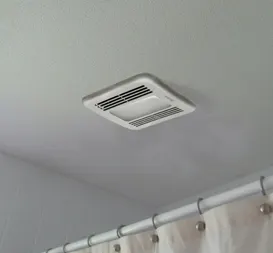
Exhaust fans provide important ventilation in your kitchen or bathroom and can be useful additions to a workshop, basement or utility area. These fans help prevent grease buildup, clear out unhealthy fumes, prevent rooms from becoming too stuffy, and reduce the risk of mold and mildew.
Exhaust Fan Placement
Kitchen and bathroom exhaust fans are perhaps the most widely used. They are essential for removing moisture that could cause damage and mold growth, along with smoke, cooking odors, and even grease. Exhaust fans are also commonly installed in other work areas, such as a garage, studio, workshop or laundry room to draw smoke, fumes or with other contaminants outside or simply to improve air circulation in the room. Attic exhaust fans can be used to reduce temperature and humidity in your home’s attic, which can help reduce cooling costs and protect framing and roofing materials.
Exhaust Fan Installation
Installing an exhaust fan requires electrical connections and ventilation to the exterior of your home. Ceiling mounted fans typically use ducts hidden in the walls, ceiling, or attic to reach a safe exit point on the roof or a wall. Exhaust fans mounted on an exterior wall vent directly outside, without any ductwork required. An exhaust fan replacement is fairly straightforward since the existing wiring and duct work can often be utilized. A new utility, bath, or kitchen exhaust fan installation can be rather complicated, depending on how far the installation site is from the power source and an exterior wall or the roof.
Professional Installation
Installing an exhaust fan can be a difficult job that often requires working in confined spaces, modifying cabinetry, and cutting through interior and exterior walls or a roof, as well as working with your home’s electrical system. A qualified installer or licensed electrician can manage the job from start to finish, ensuring your new exhaust fan is installed safely and correctly.