Congratulations on
Your Kitchen Renovation!
Learn how to properly care for and maintain
your new cabinets, countertops, and backsplash.
Properly caring for your cabinets, countertops and backsplash will help maintain the beautiful appearance for years.
Select your product to learn more about maintenance.
Cabinet Makeover Care & Maintenance
Congratulations on your new home makeover! Our products are durable and built to last. With proper maintenance it will look like new for years to come.
Stained Wood Product Care
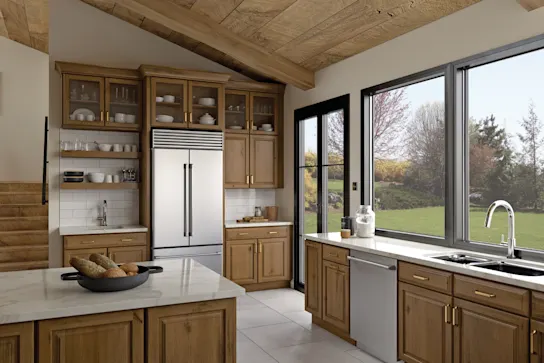
- DO use a damp cotton cloth and small amount of mild dish detergent.
- DO wipe dry immediately with a dry cloth.
- DO maintain home humidity levels of 35% – 50%. This prevents the wood from expansion and contraction damage.
- DO NOT use abrasive material to clean off the product.
- DO NOT spray any liquid directly onto the product to clean.
- DO NOT use multi-purpose cleaners, ammonia, bleach, wax or silicone as it may damage the finishes of the product.
1/3
Painted Wood Product Care
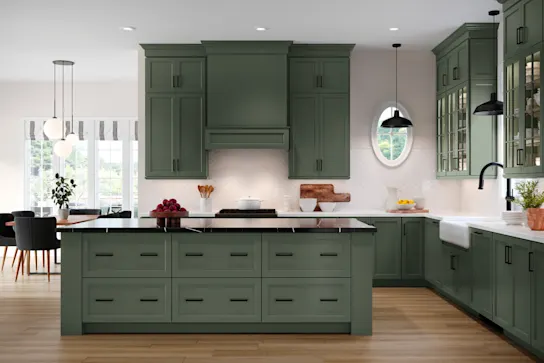
- DO use a damp cotton cloth and small amount of mild dish detergent.
- DO wipe dry immediately with a dry cloth.
- DO NOT use abrasive material to clean off the product.
- DO NOT spray any liquid directly onto the product to clean.
- DO NOT use multipurpose cleaners, ammonia, bleach, wax or silicone as it may damage the finishes of the product.
- This product requires 28 day’s curing time AFTER the door has been installed.
- Over time on the doors and drawer fronts, a non-structural hairline crack may appear on the joints. This is merely an aesthetic characteristic in a colored lacquer finish and is not covered by warranty.
2/3
Engineered Product Care

- DO use proper cleaning materials such as: Hydrate, nonabrasive soap and water, or denatured alcohol and water.
- DO NOT use lacquer thinners or any other product containing acetone, or any abrasive rubbing material or cleaner.
- Due to extremely high temperatures vented from self-cleaning ovens, it is recommended that a filler be installed between any door & drawer front and a self-cleaning oven.
- Customers are also advised to open all doors and drawer fronts near the self-cleaning oven when the oven is in self-cleaning mode.
- Damage to exposure to temperatures above 65ºC (150ºF) is not covered by warranty.
3/3
Countertop Care & Maintenance
Select your material to learn more about how to properly maintain your countertop and find answers to common questions about each material.
Staining
Is granite stain resistant?
Staining is possible on all porous countertops but your countertops are treated with Stoneguard HD Sealer to make the granite more stain resistant. This technology, combined with decades of experience, allows an unprecedented free 15-year limited warranty for food and beverage stains and material integrity.
What should I avoid with my countertops?
We suggest that spills of wine/alcohol, mustard, oils and acidic products should be wiped up immediately. Please see the care and maintenance section for full details.
What happens if my granite stains?
In the rare occasion that your granite is stained by a food or beverage, The Home Depot’s installers will work with you to remove the stain and reseal your granite to preserve and protect it. In order for your 15-Year Limited Warranty to remain
in effect, you must carefully follow these care and use guidelines.
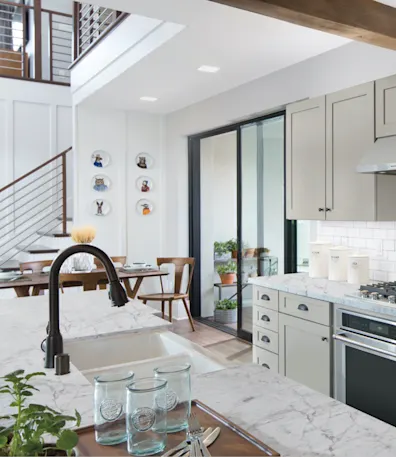
Maintenance
Is it easy to maintain a granite countertop?
Yes, normal use and regular cleaning with approved products (like SCI products specially formulated for granite and offered through The Home Depot), will ensure that your countertop maintains its natural beauty for many years. Abrasive or acidic household cleaners are to be avoided. It is recommended you reseal your granite countertops once a year to maintain the material’s integrity.
How do I clean my countertop?
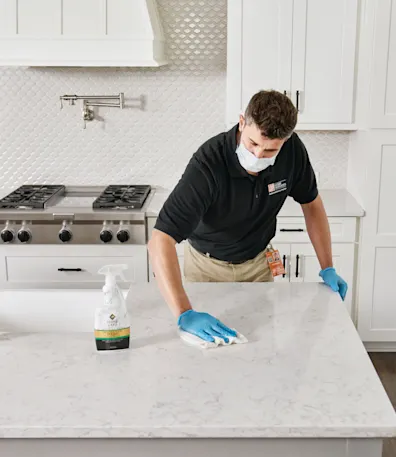
We recommend SCI’s Granite and Stone Daily Cleaner Spray for daily use. Other SCI products can be used to either maintain or polish the finish. Abrasive or acidic cleaners including lemon juice, vinegar and bleach should not be used. Any spills should be wiped up as soon as possible.
Will granite maintain its polished gloss?
Yes. Regular cleaning, with recommended products and normal use, will ensure that your granite countertop never loses its gloss. If you like a heightened level of gloss, use SCI’s Granite and Stone Polish with a microfiber cloth.
Material Integrity
Is granite scratch resistant?
Yes. Granite is scratch resistant. Composed primarily of quartz, granite is one of the hardest natural materials on Earth.
What will happen if I put a hot saucepan on my granite countertop?
Your granite is heat resistant. However, placing a hot saucepan directly from the stove onto any countertop is not recommended.
Will my granite crack if I sit or stand on it?
We do not recommend sitting or standing on your granite countertop.
Does granite chip?
Granite is not indestructible and we recommend being especially careful with heavy pots and saucepans around the edges of the countertop and the sink cutout.
Can I cut food on my granite countertop?
While granite is scratch resistant, we do not recommend cutting food directly on your granite countertop mainly to avoid your cutting knives becoming blunt.
Stone Selection
Are all granites alike?
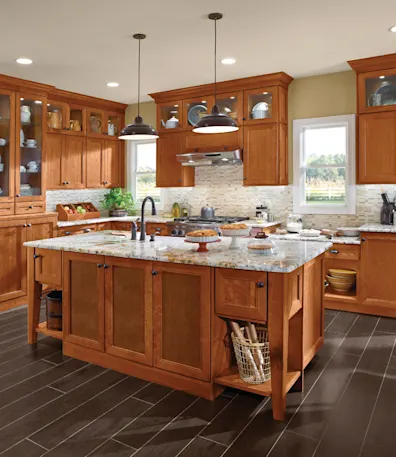
No, your slab is hand selected by our worldwide team of certified inspectors. Any slabs that do not conform to our highest quality standards are rejected. Our slabs are premium grade, with guaranteed quarry-to customer quality. In addition, each countertop has the added protection of Stoneguard HD — a process that makes granite food and beverage stain-resistant and virtually maintenance free. Backed by a 15-year warranty for stain resistance and material integrity, and surprisingly affordable, there is simply no better choice.
What is natural stone?
Natural stones are classified as igneous, metamorphic and sedimentary based on their geological formation. There are many different types of natural stones including granite, marble, limestone, sand stone, soapstone and schists. Granite is the most common and most suitable natural stone for countertops.
What is the difference between granite and a man-made countertop?
Granite is a 100% natural surface and its beauty cannot be duplicated. Granite is also fire proof and will not burn. Man-made surfaces (also known as engineered stone) are bound with resins that will burn.
Maintenance
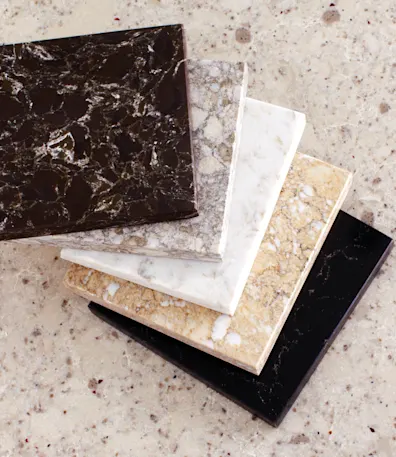
Is it easy to maintain a quartz countertop?
Yes, normal use and regular cleaning will ensure that your countertop maintains its natural beauty for years. Quartz does not require any additional sealing to protect the integrity of the material.
Are there any chemicals or cleaners to avoid on quartz?
We recommend cleaning your quartz countertops with warm, soapy water and a soft non-abrasive cloth. Abrasive or acidic cleaners including lemon juice, vinegar and bleach should not be used. Any spills should be wiped up as soon as possible.
Material Integrity
Is quartz scratch resistant?
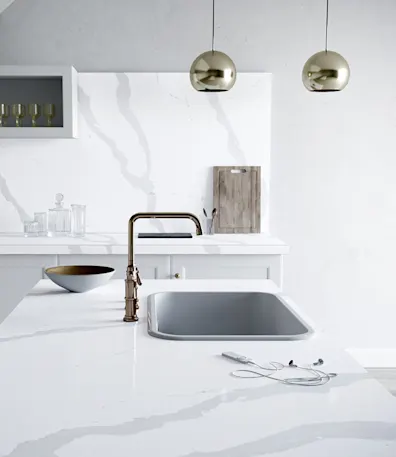
Yes. Quartz is scratch resistant under normal usage. Quartz is one of the hardest natural materials on Earth.
What will happen if I put a hot saucepan on my quartz countertop?
Quartz is not as heat resistant as granite or other stone countertops and additional care should be used. Hot pads and trivets should be used for hot pots or pans to ensure the resin used to bind the quartz does not become vulnerable to heat.
Does quartz chip?
Quartz is not an indestructible material but is less likely to crack or chip compared to granite or marble due to its composition.
Is quartz stain resistant?
The materials used to manufacture quartz cause the countertops to be nonporous and stain resistant. Because they are a nonporous material, substances will not settle into small pores and cause discoloration.
Can I cut food on my quartz countertop?
While quartz is scratch resistant, we do not recommend cutting food directly on your quartz countertop to maintain the luster and shine of the material and to avoid your cutting knives becoming blunt. Because of the material’s nonporous nature, the countertop will not harbor any bacteria, making it more hygienic for food preparation than other countertop surfaces.
Stone Selection
What is quartz?
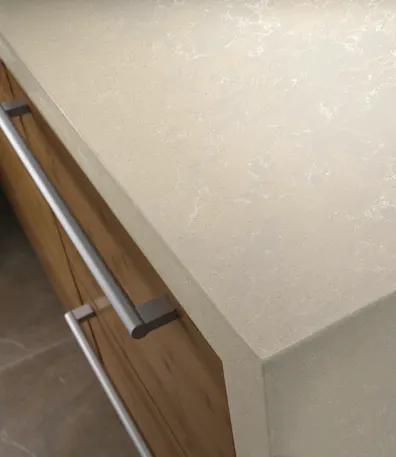
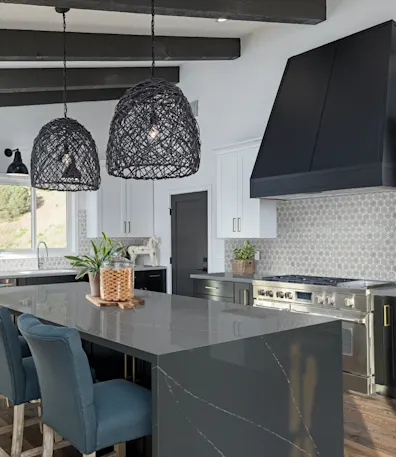
Quartz countertops are man-made engineered stone countertops manufactured by combining ground quartz with resins to bind the material together. Quartz is a naturally occurring mineral mined from quarries all over the world. Countertops made from this mineral are extremely durable as it is one of the hardest minerals on Earth. Because quartz countertops are engineered they can be made in a variety of appearances and colors.
Are quartz countertops seamless?
Quartz slabs come in certain maximum sizes and will potentially require seaming to join to larger sections together. During installation the seam is matched as closely as possible.
How are quartz countertops produced?
The primary ingredient in this type of countertop is ground quartz which is combined with resins to bind it together and pigments to give it color. Quartz is an attractive look in kitchens and some designs even incorporate small amounts of recycled glass or metallic flecks to add dimension.
Maintenance
Is it easy to maintain a solid surface countertop?
Yes, normal use and regular cleaning will ensure that your countertop maintains its quality for years. Solid surface does not require any additional sealing to protect the integrity of the material.
Are there any chemicals or cleaners to avoid on solid surface?
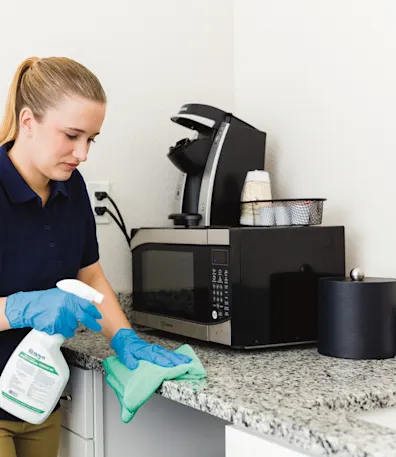
Your solid surface can be cleaned using soapy water and a mild ammonia-based cleaner on a daily bases. More abrasive cleaners can be used to remove stains in the material but extra caution must be taken to prevent any damage. Any spills should be wiped up as soon as possible with mild soap and water.
Material Integrity
Is solid surface scratch resistant?
Solid surface countertops are not scratch resistant; however, small scratches and cuts can be buffed away. For deeper cuts and gouges, a fabricator may be able to repair the damage with special tooling and expertise. It is recommended not to use knives directly on the countertop surface and to use a cutting board.
What will happen if I put a hot saucepan on my solid surface countertop?
With prolonged or extreme heat your solid surface countertop can have yellowing and damage to the surface. Placing a hot saucepan directly onto any countertop is not recommended. Using a hot pad or trivet will prevent the possibility of damage to the surface. Do not put any heat-generating appliances directly on the countertop.
Does solid surface chip?
Solid surface is an impact resistant countertop that is very durable and resistant to chips, cracks, or loose ends.
Is solid surface stain resistant?
The materials used to manufacture solid surface cause the countertops to be nonporous and stain resistant. Because they are a nonporous material, substances will not settle into small pores and cause discoloration.
Can I place food on my solid surface countertop?
Because of the material’s nonporous nature, the countertop will not promote the growth of mold, mildew, or bacteria making the material food safe.
Stone Selection
What is solid surface?
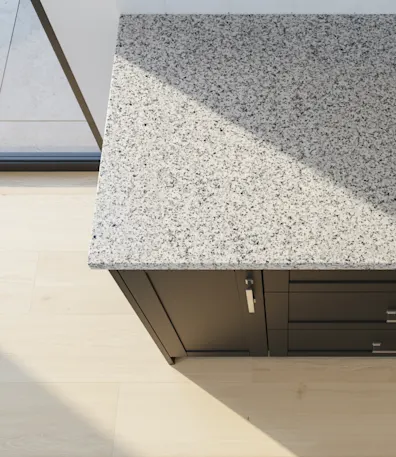
Solid surface countertops are engineered using acrylic and stone bound together by resins. The material is fabricated by heating the mixture at a high temperature to form countertop sheets. Because solid surface countertops are engineered they can be made in a variety of appearances and colors.
Are solid surface countertops seamless?
While solid surface countertops are not seamless, the seams are virtually invisible and are less apparent than other countertops.
Maintenance
Is it easy to maintain an exterior laminate countertop?
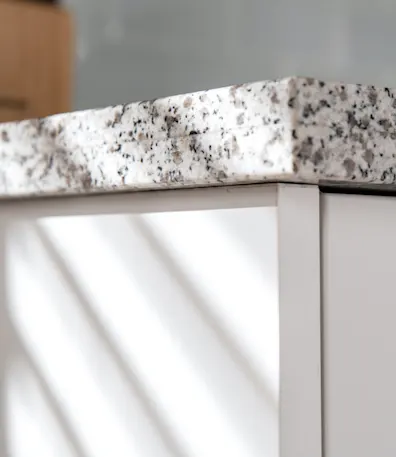
Yes, using a soft cloth with mild dishwashing liquid to wipe down surfaces will ensure that your countertop maintains its quality for years.
Are there any chemicals or cleaners to avoid on an exterior laminate surface?
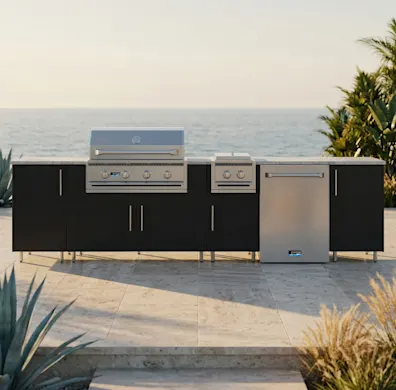
Oceanfront environments with salt air, sea spray will require regular maintenance to prevent rust on handles, hinges, legs, and drawer runners. We recommend cleaning your stainless-steel surfaces several times a month.
Backsplash Care & Maintenance
Glass Tile Backsplashes
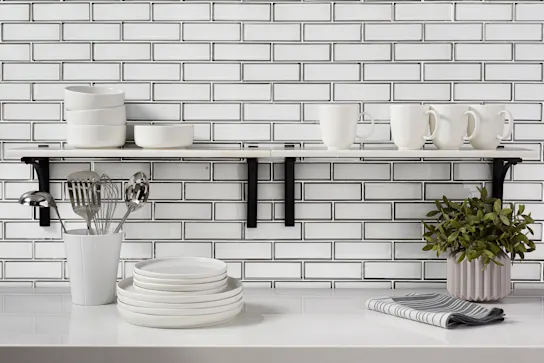
Glass tile is a popular choice for kitchen backsplash areas, not only because it is beautiful, but also because it is easy to care for. The glossy surface of glass tile stands up well to the dirt and grime that can accumulate on kitchen surfaces. To clean these surfaces, any glass cleaners can be used. A soft bristle brush can be used to scrub the tile. Please avoid using abrasive brushes, as this may damage the tile or grout; instead, use a clean cloth and water to wipe off the streaks from the surface of the glass tiles.
1/4
Metal Tile Backsplashes
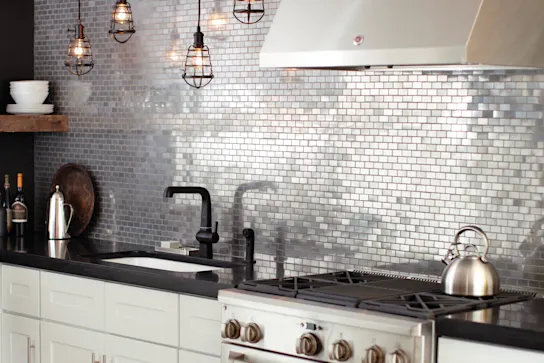
Mosaic containing metals are not recommended around heavy water areas including tubs, shower surrounds, pools, spas and any other exterior application. To clean, use an ordinary household cleaner. For best results, we recommend a liquid, non-abrasive cleaner. Do NOT clean with scouring pads, steel wool, or other abrasive instruments, or damage to the tile surface may result. Cleaners containing ammonia, bleach or other harsh chemicals should be wiped up shortly after application, or damage to the tile surface may result.
2/4
Natural Stone Tile Backsplashes
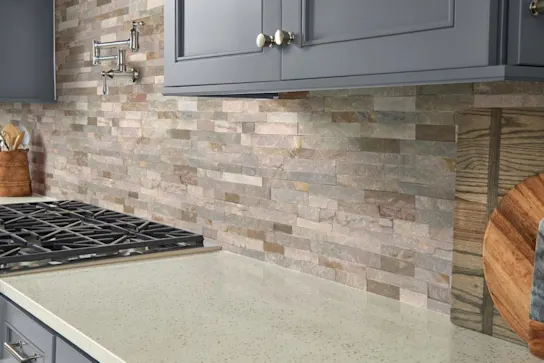
To ensure your natural stone products will provide you with a lifetime of aesthetics and utility, a proper maintenance program is crucial. Natural Stone products are porous and require a different maintenance program than traditional ceramic tile.
Natural stone should be cleaned with neutral cleaners, not containing acid or bleach. Acids, even a light solution of vinegar and water, will etch and eventually damage natural stone. Only use cleaners specifically designed for cleaning stone. Concentrated neutral pH cleaners will not affect existing sealers or wax-type coatings. The surface of the stone should be dampened with clear water. A solution of the cleaner and water mixed to manufacturer instructions should be applied to the stone surface with a sponge. On walls, a spray bottle can be used to apply the cleaning solution. Allow sitting for manufacturer’s specified amount of time (usually 3 to 5 minutes). Agitate with a sponge, synthetic mop, and soft bristle brush.
3/4
Sealing
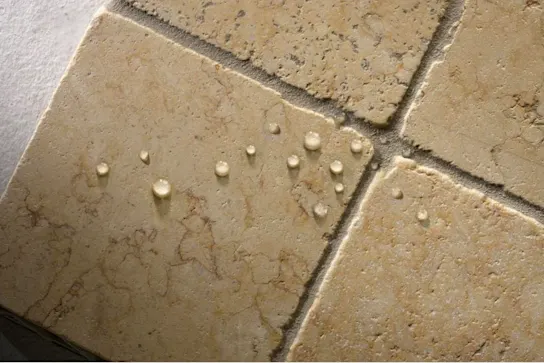
A premium natural look penetrating/impregnating sealer is the normal choice on polished or honed marble, limestone, granite, or where the natural color of a slate is desired. A stone enhancer sealer is often used on tumbled, antique stones or on slate where a darker, enriched or highlighted character is desired. When choosing either one of these types of sealers, make sure the brand you have chosen is formulated to provide maximum stain protection for stone products. Stone products should be tested periodically per manufacturer’s instructions to insure that the sealer is working effectively.
4/4
Sink & Faucet Care & Maintenance
Stainless Steel
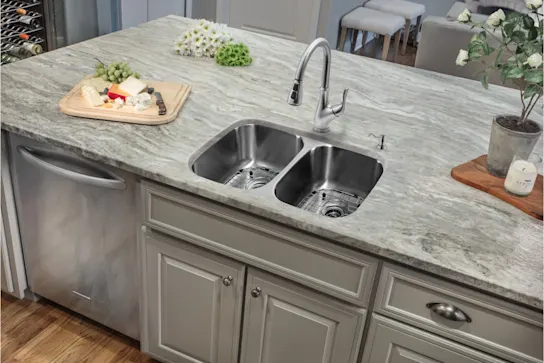
- Rinse thoroughly after each use. Most soaps and detergents contain chlorides that are harsh on stainless steel. The good news is that chlorides are highly water soluble so a thorough rinsing of your sink after each use and weekly cleaning will keep your sink looking bright and shiny.
- Towel dry after each use to prevent mineral deposits from building upon the surface of the sink. Water quality can affect the appearance of your sink. Towel drying and weekly cleaning will prevent discoloration or unsightly film from developing on the finish.
- Clean the sink once a week. Be sure to rub in the direction of the satin finish lines.
- For a gleaming finish: Polish your stainless steel sink by applying dry flour to the surface. Rub the flour in with a soft cloth, then rinse and dry or place the stopper in your sink, pour some club soda in and rub with a soft cloth. Dry with a different soft cloth to prevent water spots and surface rust.
1/4
Fireclay
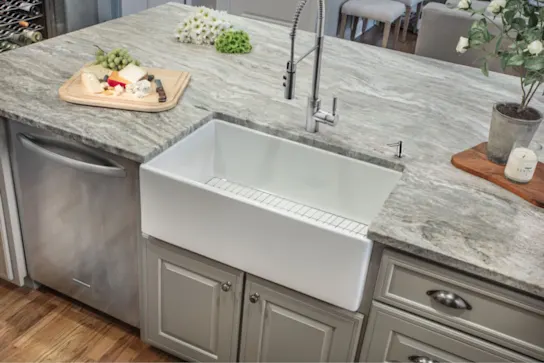
- To maintain the appearance of this product, clean using a soft cloth and a non-abrasive cleaning product. A simple solution of warm water and a mild liquid antibacterial detergent generally does an excellent job. Ensure that the product is rinsed thoroughly and wiped dry.
- Never use any form of abrasive cleaner or applicator as they often contain sand or silica and will eventually scratch the surface.
- The gloss surface of the sink is susceptible to damage from sharp and metallic objects. The worst offender is metal cutlery. Try to avoid metal objects coming into contact with the surface by using protective plastic bowls, wire grid cutlery holders and drainers with non-abrasive bases.
2/4
Quartz Composite
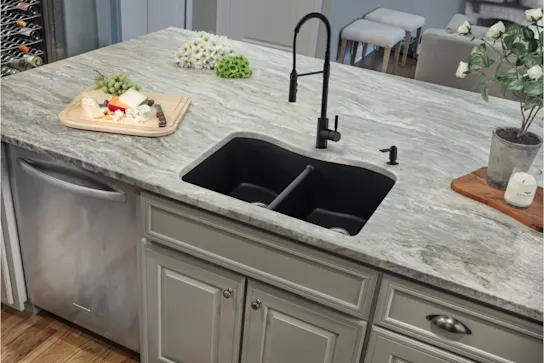
- Wash your sink using warm water, a non-abrasive liquid cleaner or detergent and a soft cloth or non-abrasive woven nylon pad.
- Your sink may be cleaned as often as it is used.
3/4
Porcelain
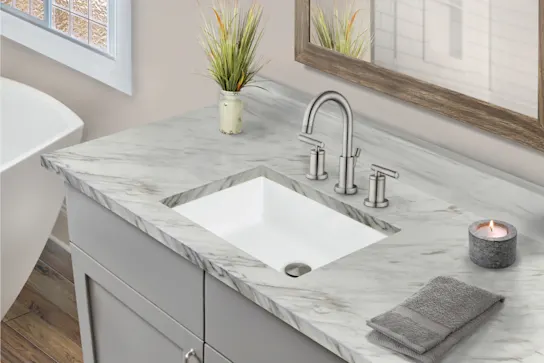
- Wash your sink using warm water, a non-abrasive liquid cleaner or detergent and a soft cloth or non-abrasive woven nylon pad. Your sink may be cleaned as often as it is used.
- For daily cleaning, a warm water soaked sponge with mild soap followed by warm water rinse is recommended. Drying the sink afterwards with a soft cloth or towel will help to eliminate water spots and maintain shine.
- For deeper cleaning needs, a product such as Bar Keeper’s Friend or porcelain safe bathroom cleaner is ideal followed by a thorough rinse and soft cloth or towel drying. For a greener clean, try baking soda.
- Always read cleaning product labels to confirm their recommended usage as well as warnings and cautions.
- Note that these recommendations are for the porcelain only and do not refer to the faucet, drain, or other hardware.
- Rinse thoroughly after each use. Most soaps and detergents contain chlorides that are harsh on porcelain. Chlorides are highly water soluble so a thorough rinsing of your sink after each use and weekly cleaning will keep your sink looking bright and shiny.
- Towel dry after each use to prevent mineral deposits from building upon the surface of the sink. Water quality can affect the appearance of your sink. Towel drying and weekly cleaning will prevent discoloration or unsightly film from developing on the finish.
- Read the labels on cleaning products to confirm they are recommended for use on porcelain.
4/4