
Introduction  How It Works
  Guide
Guide  FAQs
FAQs  Helpful Resources
  Related Services
How It Works Guide FAQs Helpful Resources Related Services Free Consultation
Our licensed professionals will conduct a free in-home consultation.
Custom Solutions
High-quality, warranty backed, products customized for your home. Optional leaf protection available.
Quick 1-2 Day Install
Our custom gutter installations will be ready in as little as two weeks. Actual gutter installation only takes 1-2 days.
Affordable Financing
We offer our customers affordable financing options, including The Home Depot Consumer Credit Card. Apply now.
View more Home Depot licensing information
How It Works
1
Schedule an appointment
Schedule an initial consultation with our licensed professional to help you select products that fit your rainwater management needs.
2
Design your custom gutter solutions
Our professionals work with you to create customized gutter solutions, including leaf protection and are tailored for your home. All measurements will be completed during the consultation.
3
Installation of your new gutters
Your custom gutters will be ready for installation by our local, licensed, insured and background checked professionals in as little as two weeks. Actual installation only takes 1-2 days.
A Homeowner's Guide to Gutters
Benefits
Benefits of Professionally Installed Gutters
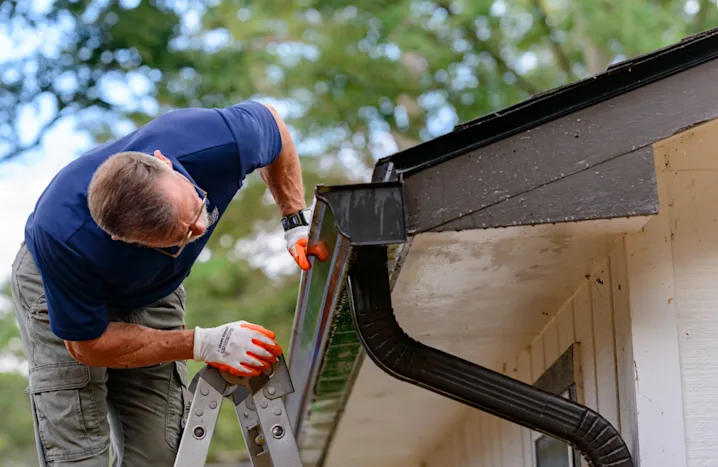
Hiring a professional for gutter installation is a long-term investment in your home’s structural integrity. Professional installation provides several critical advantages that a one-weekend project often misses like:
- Precision pitch and sizing: gutters must be meticulously sloped to ensure water flows toward the downspouts
- Access to seamless technology: sectional gutters are notorious for leaking at the seams over time
- Structural protection & safety: gutters are your home’s first line of defense against water
- Comprehensive warranties: when you install gutters yourself, you only have a limited warranty on the materials
1 / 6
Budget
Budgeting for Gutter Installation Costs
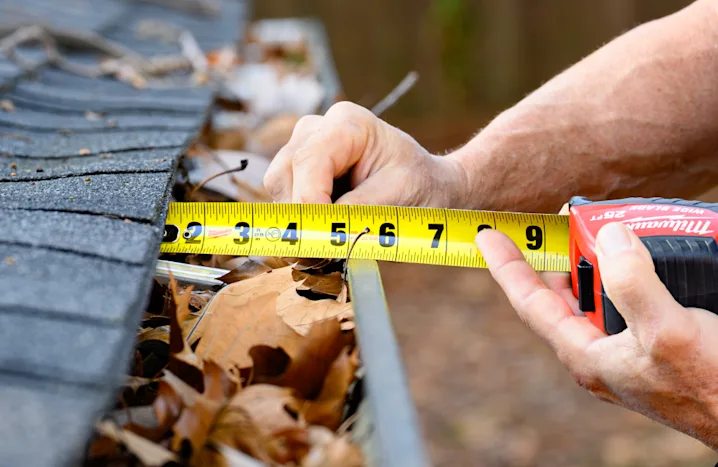
Budgeting for gutter services is about understanding the linear footage of your roofline and the material you choose. Prices vary based on whether you choose sectional (DIY) or seamless (Professional). These rates typically include materials, labor, and basic hardware.
| Material | Total for 200 ft. |
|---|---|
| Vinyl (PVC) | $1,000 – $1,800 |
| Aluminum (Seamless) | $2,000 – $3,600 |
| Galvanized Steel | $2,400 – $4,400 |
| Copper (Luxury) | $6,000 – $11,000 |
2 / 6
Assessment
Assessing Your Homes Needs and Waterflow
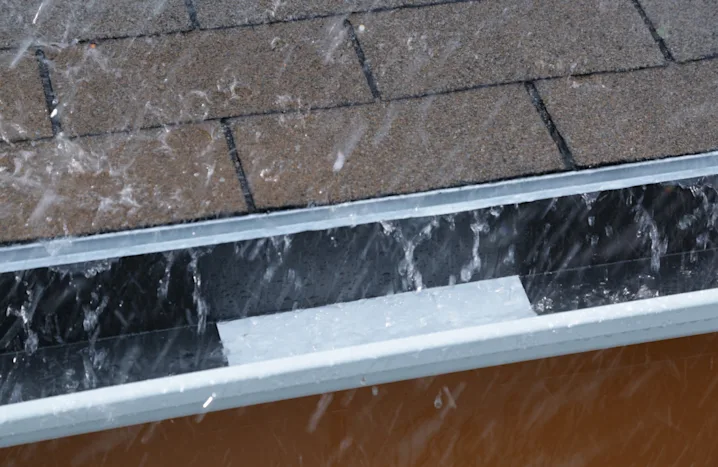
To protect your home, you should assess two things: how much water your roof collects and how quickly your system can get rid of it. As storms become more intense, a standard system may no longer be enough.
- Calculate your roof's watershed: The amount of water your gutters must handle isn't just based on your home’s footprint; it’s based on the surface area of the roof and its steepness
- Determine rainfall intensity: check your local 10-year storm records for the maximum rainfall intensity (measured in inches per hour)
- Identify high-flow hot spots: certain areas of your roof create water bottlenecks like, roof valleys and upper roofs draining to lower roofs.
- Evaluate the downspouts: gutters are only as good as their drains. A common rule of thumb is one downspout for every 20–40 feet of gutter.
3 / 6
Styles
Styles of Gutters
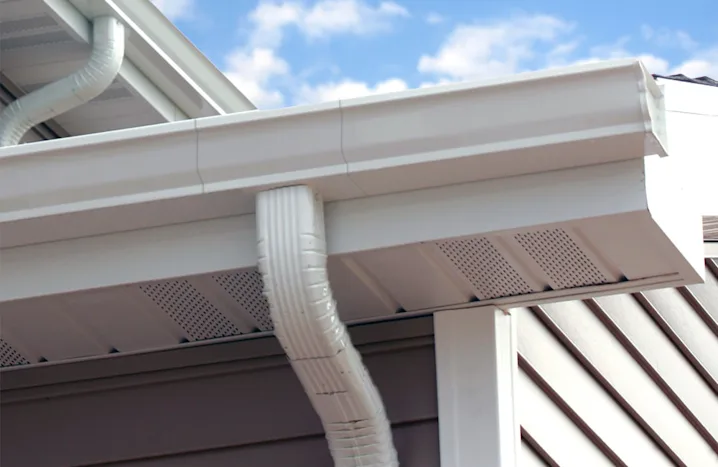
When choosing gutters, you’re balancing two things: the shape - which determines how much water they can handle and the material - which determines how long they’ll last.
Common gutter shapes:
Common gutter shapes:
- K-style: resembles crown molding, holds more water than others and is the standard for seamless installation
- Half round: U-shaped, offers a classic look, is easier to clean and overflows more easily in heavy rain
- Box cutters: oversized and rectangular, designed for massive water volume and often built into the roof
- Fascia: deep and narrow, built to hide rafter tails and provide a integrated look
4 / 6
Materials
Gutter Materials
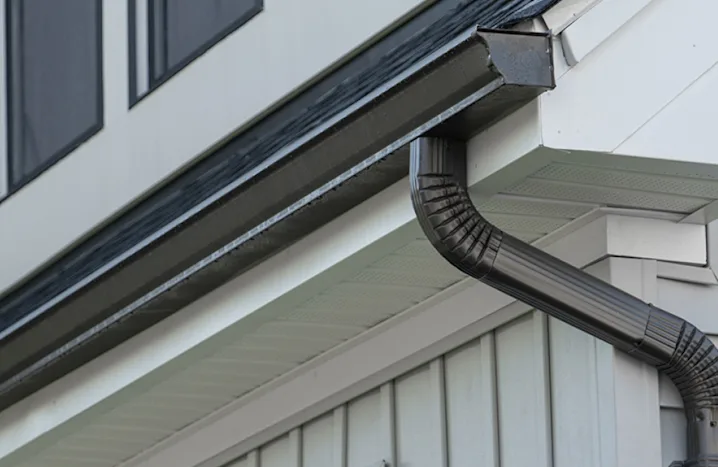
Materials vary by durability, cost, and can be DIY-friendly.
- Aluminum: most popular choice, rust proof, lightweight, comes in many colors and the standard for seamless gutters
- Vinyl/PVC: budget-friendly, DIY friendly, won't rust, but can become brittle and crack in heat or cold
- Galvanized steel: incredibly strong and resistant to damage from ladders or falling branches, will eventually rust
- Copper: ultimate luxury material, never rusts, with proper care they can last 100+ years
- Zinc: highly durable, common on high-end modern or historic homes but should not be used in salty coastal air
5 / 6
Size
Choosing the Right Gutter Size
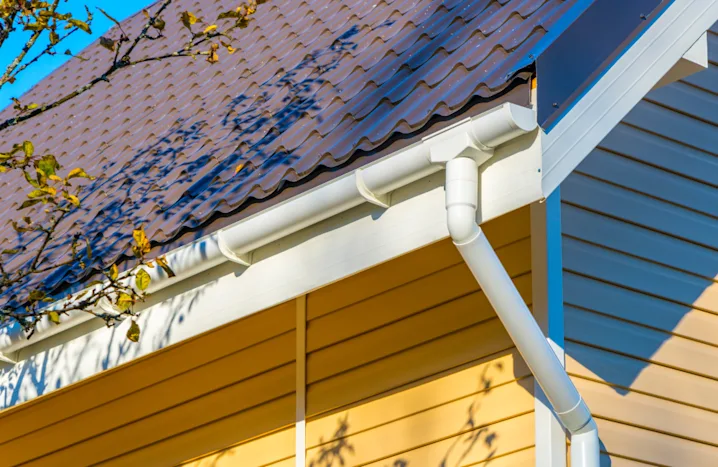
Gutter size is determined by three variables: the square footage of your roof, its pitch, and your local rainfall intensity.
- 5-inch: ideal for most small-to-midsize homes with moderate roof pitches, can handle runoff for up to 5,500 square feet of roof under average conditions
- 6-inch: the preferred choice for modern homes, hold about 40% more water than 5-inch gutters, are recommended for a steep roof (6/12 pitch or higher) or live in a heavy storm area
- 7-inch to 8-inch: reserved for commercial buildings or extremely large custom homes with massive roof expanses
6 / 6
Frequently Asked Questions
Answers to commonly asked questions
What gutter styles are available?
Assortment varies per manufacturer. Generally, we offer K-style and half-round options, with the recommendation being a 6-inch K-style seamless gutter.
What colors are offered?
While colors will vary, white, black, and bronze are generally offered as traditional options, with many more choices available. Ask your installer for more details.
What type of material is used?
The gutters are made of aluminum.
How do you secure the gutters to the house?
Generally, they are secured to the fascia with hidden hangers, placed approximately every 2 feet.
How is the leaf protection attached?
Installation varies per leaf protection assortment. Generally, the leaf protection is screwed into the front of the gutters, and the back slides under the shingles.
What leaf protection options are available?
Leaf protection is optional, and the assortment varies per manufacturer, generally offering a good, better, and best option (such as stainless-steel mesh screens and bullnose covers).
Are the products compatible with heavy rain and snow?
Yes, they are designed to handle heavy rain, snow, and ice without damage or causing overflow.
Are rain gutters covered by homeowners insurance?
It depends on how the damage happened. Homeowners insurance is designed to cover sudden and accidental events, not the gradual wear and tear that comes with age.
Is it worth it to do your own gutters?
It depends on your comfort with heights and your desire for a long-term warranty. While many homeowners consider installing their own gutters to save on labor costs, the savings often come with hidden risks, like leaking and safety accidents.
However, for a permanent, leak-free solution that protects your foundation, hiring a gutter contractor or professional is almost always the better investment. Whether you need a brand-new gutter installation or a full gutter replacement for your home, our team can help ensure your roof drains properly.
However, for a permanent, leak-free solution that protects your foundation, hiring a gutter contractor or professional is almost always the better investment. Whether you need a brand-new gutter installation or a full gutter replacement for your home, our team can help ensure your roof drains properly.
What tools are needed for DIY gutter installation?
Beyond the gutters and downspouts themselves, to ensure the system is pitched correctly and watertight, you’ll need a fairly extensive toolkit:
- an extension ladder
- measuring and layout equipment
- cutting and shaping tools
- assembly and fastening equipment
- sealing and finishing tools
By the time you purchase or rent all of the tools above, you’ve often spent a large chunk of what a professional would cost — without the benefit of a seamless gutter installation or a labor warranty.
Gutter Resources and Expert Tips
Related Services
Fence Installation
Shed Installation
Pergola Installation
Let The Home Depot build the fence you’ve always wanted. Our licensed local service professionals will help you determine your fencing needs, review style and material options, and complete your installation using premium materials.
- Enhance your landscape while protecting your security and privacy - Choose from a wide variety of styles and materials - Rest assured with a 1-year warranty on installation
View Service - Enhance your landscape while protecting your security and privacy - Choose from a wide variety of styles and materials - Rest assured with a 1-year warranty on installation
Custom shed installation is a great addition to your home if you’re looking for stylish, efficient outdoor storage. The Home Depot offers a simple custom configuration tool to help you select the perfect design, including colors, shingles, windows, flooring and more. We offer:
- Custom shed exteriors to match your home
- Flexible financing solutions
- Delivery within 30 miles of a Home Depot store
View Service - Custom shed exteriors to match your home
- Flexible financing solutions
- Delivery within 30 miles of a Home Depot store
Pergolas create an inviting environment for your backyard or patio. We offer wood and extended metal pergolas with options that complement the style of your home, and our licensed service providers are backed by The Home Depot.
- Enhance the look of your lawn or patio
- Add to the value of your home
- Enjoy extra outdoor living space
View Service - Enhance the look of your lawn or patio
- Add to the value of your home
- Enjoy extra outdoor living space
Explore more Services
Promotions & Offers
See All Promotions Bathroom
Bathroom Remodeling Tub to Shower Conversion Custom Shower Door Installation Shower Repair Shower Head Replacement Bathtub Repair Toilet Installation Toilet Repair Sink Installation Faucet Replacement Faucet Repair Walk-In Tub Installation CleanCut Tub Installation Grab Bar Installation Backsplash Installation Exhaust Fan Installation Bathroom Fan Repair Windows & Doors
Window Installation Exterior and Interior Door Installation Garage Door & Opener Installation Vinyl Window Replacement Wood Window Replacement Impact Window Replacement Garage Door & Opener Repair Door Hardware Installation Blinds Installation Custom Window Treatment Design and Installation Plantation Shutter Installation Hurricane Shutter Installation Retractable Screen Installation Window and Door Screen Repair Heating & Cooling
HVAC Installation & Replacement HVAC Repair HVAC Tune-Up Mini Split Installation Window Mounted AC Installation Electric Wall Heater Installation Thermostat Replacement Indoor Air Quality Services Attic Insulation Installation Attic Fan Installation Ceiling Fan Installation Ceiling Fan Repair Exterior Home
Fence Installation Pergola Installation Shed Installation Deck Installation Deck Painting Fence Repair Fence Painting Generator Installation Solar Panel Installation EV Charger Installation Solar Pool Heater Installation Outdoor Shade Installation Custom Garage Storage Artificial Grass Installation Play Set Assembly Gutter Installation Storage Solutions
Custom Closets Custom Home Office Custom Laundry Room Custom Mudroom Custom Murphy Bed Electrical & Lighting
Light Fixture Installation Light Fixture Repair Light Fixture Replacement Holiday Lighting Installation Electrical Panel Installation Electrical Panel Upgrade Electrical Panel Repair Electrical Wiring Installation Electrical Wiring Upgrade Outlet Installation Outlet Repair Light Switch Installation Appliances
Range Hood Installation View less


