#1 Home Improvement Retailer

142 results

    Sort by

    Top Sellers
View product details

Best Seller

Limit 6 per order
$1,299.00
$1,799.00
Save $500.00 (28%)

Buy More, Save More

See Details
View product details
Limit 6 per order
$4,499.00
$4,999.00
Save $500.00 (10%)

Buy More, Save More

See Details
View product details
Limit 2 per order
$1,099.00
$1,699.00
Save $600.00 (35%)

Viewing 1-12 of 142

Questions & Answers

What are some of the most reviewed products in Induction Ranges?

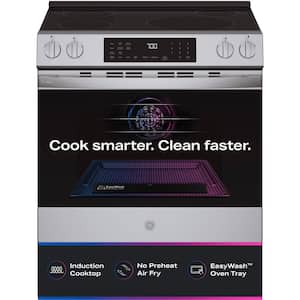
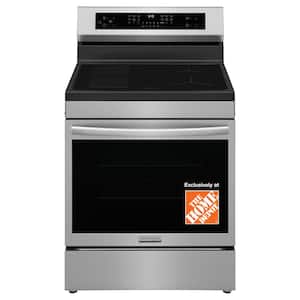
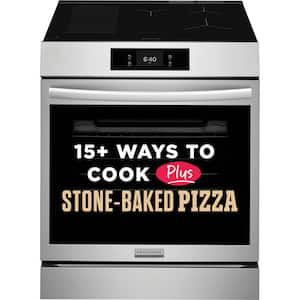
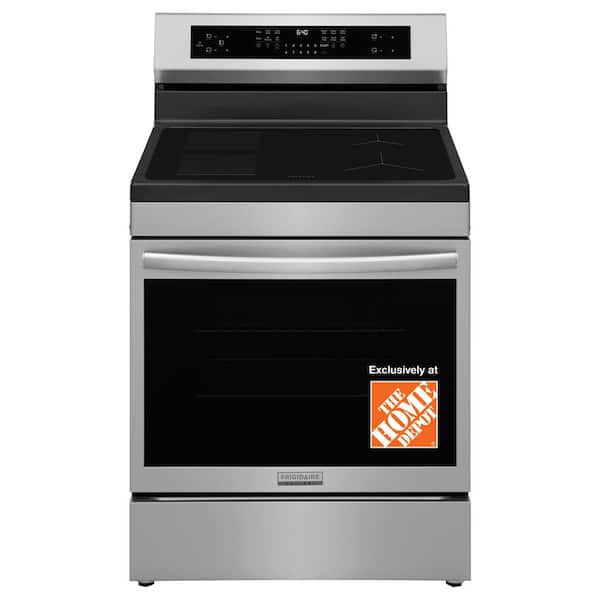
Some of the most reviewed products in Induction Ranges are the FRIGIDAIRE GALLERY 30 in. 5.4 cu. ft. Front Control Induction Range with Air Fry in Stainless Steel with 2,962 reviews, and the FRIGIDAIRE GALLERY 30 in. 5.4 cu. ft. Induction Electric Range with Self-Cleaning Oven in Smudge-Proof Stainless Steel with Air Fry with 2,356 reviews.

What options are available for cooking process within Induction Ranges?

Within Induction Ranges, we carry products with various options for cooking process including Convection, Air Fry and True Convection.

Does an induction range use more electricity?

No, an induction range actually uses less electricity than both gas ranges and electric ranges. Gas ranges are 40% efficient, electric ranges are 74% efficient, and induction ranges are the most efficient of all, clocking in at 84%. Because they're better at using the energy for cooking instead of heating the air, they'll use less electricity than other types of ranges.

What is the difference between electric and induction ranges?

Both range types are technically electric and may feature a sleek glass or ceramic cooktop, but they use different processes. Electric ranges heat metal coils on the stovetop to heat the pan itself from the bottom up. Induction cooktops have the coils hidden beneath the surface and use electromagnetic radiation to create heat within the pan. You can only use iron cookware that is magnetic or marked "induction safe" on an induction range. Electric ranges heat more slowly but retain heat longer, while induction ones heat and cool very quickly. Electric ranges tend to be more affordable than induction ranges.

What are the advantages of an induction range?

An induction range is a safe choice for households with curious children or pets, as the cooktop surface doesn't heat up. Neither does your kitchen. Because the cooktop stays cool, you re less likely to cook food spatters or boil-overs onto the surface. Having an induction cooktop means you don't need to remove any grates or metal coils, so cleanup is easy. It also cooks faster than electric, but not as swiftly as a gas range.

What are the shipping options for Induction Ranges?

All Induction Ranges can be shipped to you at home.

Is there a Fingerprint Resistant Stainless Steel product available in Induction Ranges?

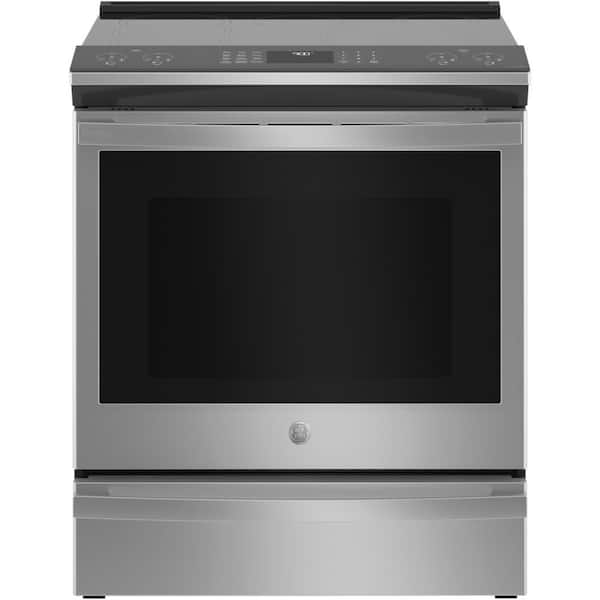
Yes, we carry a Fingerprint Resistant Stainless Steel product in Induction Ranges. Check out the 30 in. 6.3 cu. ft. Slide-In Induction Range with Self-Cleaning Oven in Stainless Steel.

Are there any special values on Induction Ranges?

There are over 18 special value prices on Induction Ranges.

What are the disadvantages of an induction range?

A disadvantage of an induction range is the price tag. Also, not all pots and pans work with this range type. Because of the electromagnetic method of heating, your cookware must be a specific type of iron to trigger the heating process. If the bottom of your pan can hold a magnet or is marked "induction safe," you can use it. Protect the cooktop surface from scratches if you re using cast iron pans or other cookware with a pebbled texture on the bottom. Parchment paper or a silicone mat works well because the cooktop itself doesn't get scalding hot.

What is an induction range?

Induction ranges are flat-top cooktops that heat almost instantly. They use electricity to heat coils beneath the cooktop and magnets to move that heat around in the cookware. An induction cooktop only works with certain magnetic pots and pans, so iron cookware or other compatible types are a must. This is because induction ranges use electromagnetic radiation to create heat inside the cookware. This means your cooktop stays relatively cool even as the hot pan cooks your food.