How to Plant a Tree
Last updated September 7, 2023
Hard-working trees reduce pollution, release oxygen and give us privacy and shade. They can add curb appeal, provide shelter for birds and cut down on noise. They can even lower our energy costs by blocking the hot summer sun or the winter winds.
Autumn is usually the best time to plant new trees or tree seedlings, when the weather is cool but before the ground freezes. You can also plant trees in late winter or early spring as soon as the ground is workable. Cool temperatures help them establish the root systems they need for the growing season.
Difficulty:
Beginner
Duration:
2-4 hours
Table of Contents
How to Choose the Best Tree for Your Yard
Decide Where to Plant and Avoid Utility Lines
Dig the Hole
Prepare the Hole
Prepare the Tree
Plant the Tree
How to Choose the Best Tree for Your Yard

The first step to planting a tree in your yard is to choose between a shade tree, fruit tree, evergreen tree or other type of tree. Finding the right tree species doesn’t have to be difficult. Ask yourself a few questions to find the best tree for your needs:
- Do you want a flowering tree, a shade tree, a purely ornamental tree or one that produces fruit?
Apple trees and cherry trees blossom in the spring and produce fruit later in the summer. - Do you want to attract birds, butterflies or other wildlife?
- What trees are growing and thriving in your neighborhood and local parks? Those may be good choices for you, too.
- Do you want a tree that holds its leaves all winter? How about one that changes leaf colors in fall?
- Do you want a fast growing tree that will provide privacy or shade for your back yard?
- Are you looking for a small tree to grow near your front entrance?
- Do you like the look of evergreen trees or deciduous trees? Evergreen trees make great windbreaks, while deciduous trees provide more shade in summer.
Do a little research on different kinds of trees before you shop. You might want a fast-growing tree for shade, if you won’t be in the same house for a long time, or a low-growing ornamental tree to grow near your front entrance. Check plant tags and online information for the mature size of the tree.
Trees are sold bare-root, balled in burlap or in containers. Bare-root trees are usually smaller and easier to handle, but they can take longer to mature. They should be planted as soon as possible or kept in a bucket of water so their roots won’t dry out until you can get them into the ground.
Tip: Look around at your neighbors’ homes or your local parks—the trees that are thriving might be good options for you, too.
Decide Where to Plant and Avoid Utility Lines
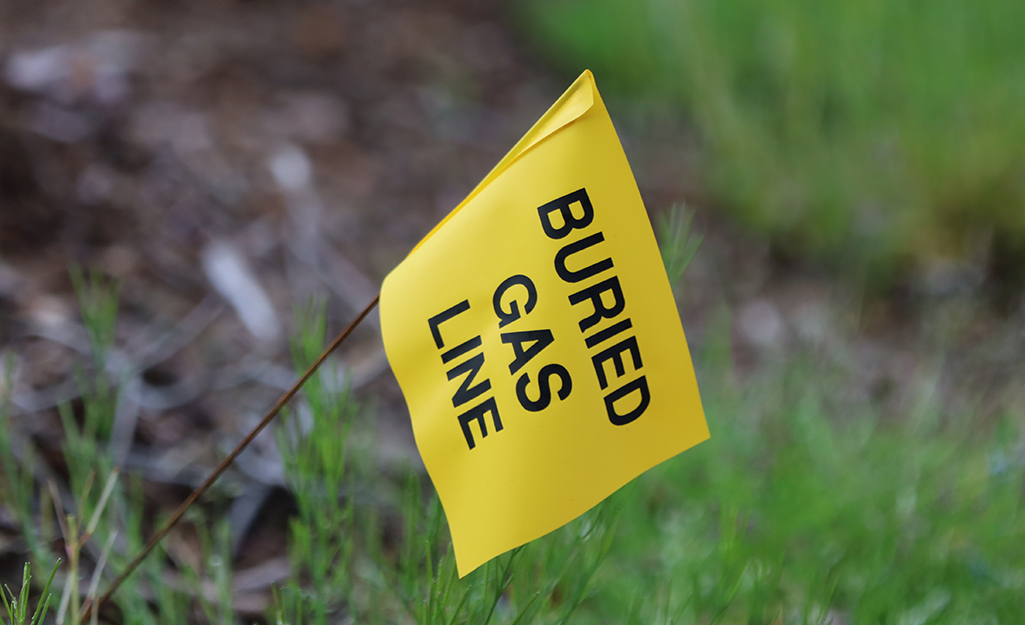
Before you begin your tree planting job, do a little bit of planning to make sure you’ve chosen spots for your new trees that won’t endanger you or your property. Follow these tips to choose the right places to plant your trees:
- Watch how the sun moves over your planting site. Some trees need more sunlight than others. Fruit trees, for example, need at least six hours of sun each day. Refer back to your research or read any planting instructions that came with your tree.
- Consider the plants, shrubs and trees already in the area. Are there any you want to remove or replace?
- Read the tag on your tree to see how tall it will eventually become. Does your planting site have room for its canopy when it matures?
- Will the tree brush up against your house? Are there overhead obstructions such as wires or eaves that it might hit as it grows?
- Never plant new trees too close to your roof. Bark, leaves and sap may compromise your shingles and lead to premature roof failure. If branches scrape against the side of your roof, they can strip off layers of roofing materials, too.
- Don't plant too close to your foundation, so the tree roots won't grow under it.
Be safe and avoid utility lines when you dig. A few days before you start, call 811. It’s a free, federally designated number that connects you to a “one call” center. Homeowners and professional landscapers can use this service.
The center will contact your local utility companies and tell them where you want to dig.
Someone will come out to mark the approximate location of your buried lines, so you won’t accidentally hit them. Some lines may be just inches below ground, so this can prevent a lot of problems, including injuries, property damage, possible fines and repair charges and local service outages.
Knowing the location of your underground utility lines will also help you plant a safe distance away from them, so the tree roots won’t contact or damage them as they grow.
Dig the Hole
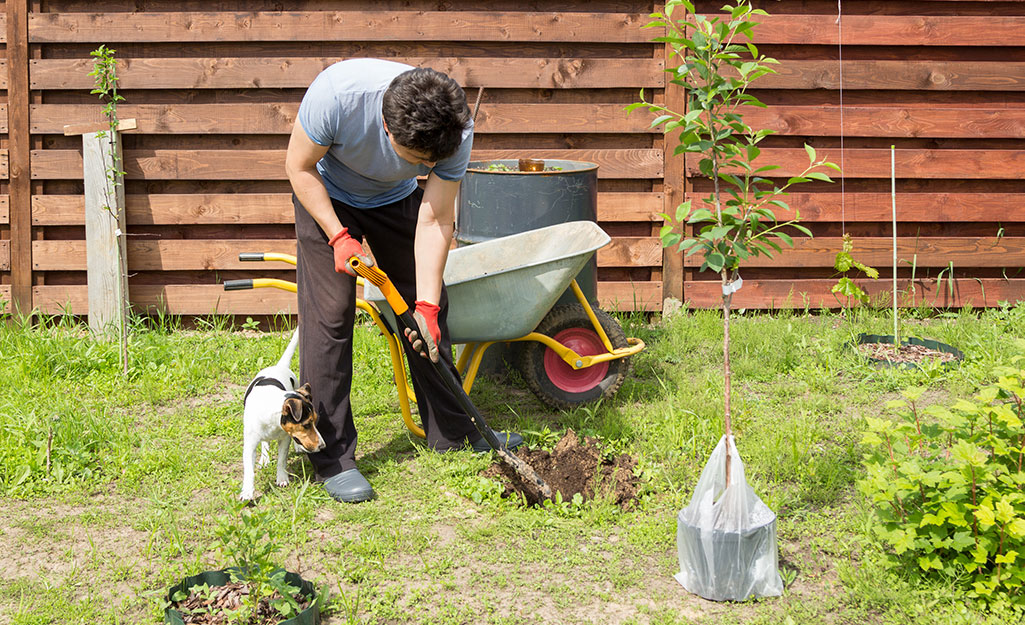
Gather a few tools to make the job easier, such as gardening gloves to protect your hands and a tarp or wheelbarrow to keep the surrounding soil protected as you dig.
- Once you have selected a tree, it’s time to dig the hole. Measure the tree’s root ball.
- Dig the hole at least three times the diameter of the root ball of the tree and no deeper than the root ball. You may want to wear gardening gloves to protect your hands.
- Place the soil on a tarp or in a wheelbarrow to avoid killing any surrounding grass.
Prepare the Hole
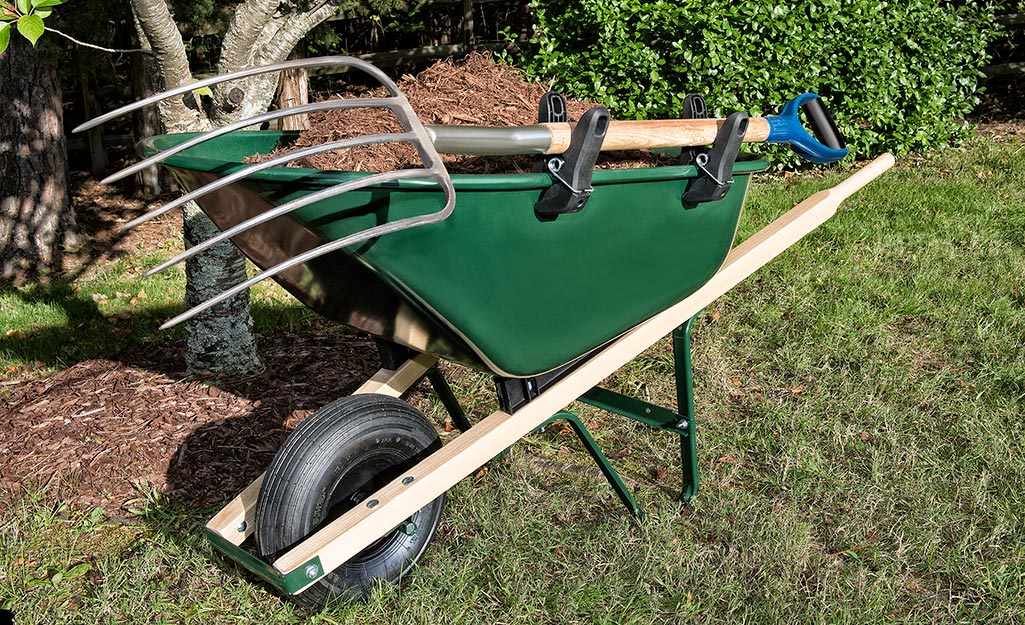
To plant a new tree that will grow to be healthy, the dirt around the roots should be loose enough to allow the root system to thrive as it grows. If the dirt is too compact, take the sharp end of your shovel, and cut into the sides of the hole to loosen up the surrounding soil.
- If you’re digging in ground with a high clay content, check the walls and base for glazing. Glazing refers to the smooth sides and base of the planting hole. It can prevent tree roots from absorbing water and growing into the surrounding ground.
- Use a gardening tool, such as a garden fork, to scratch a few inches deep into the soil and break up any glazing.
- Dig a slightly deeper ring around the outer edges of the hole, leaving a higher ridge of compacted soil in the center.
Later, you'll put the root ball of the tree on this ridge. - Before you plant, you can amend the soil with compost or organic matter about 1 to 2 inches deep. However, this is not always necessary for healthy root growth.
Prepare the Tree
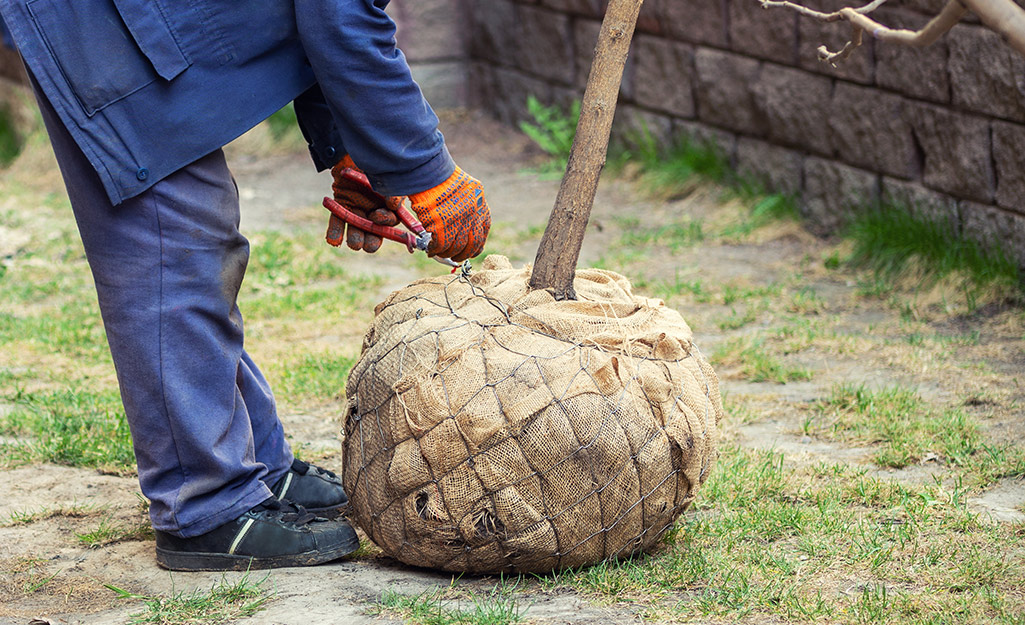
How you prepare a tree for planting the right way depends on the tree species you’ve purchased. Trees are sold wrapped in burlap, planted in pots or as a bare root tree. The roots of burlap-wrapped trees are already removed from the native soil, and the material holds the roots together until the tree is ready for planting. Trees grown in pots are ready to plant as soon as you remove them from their containers.
- Gently loosen the root ball with a shovel or your fingers.
- If the tree is in a burlap wrap, remove any string, wire or twine and discard them.
- If you’re planting a container-grown tree, gently tap around the edges, tip the container on its side, and slide out the tree. If it's in a plastic container and it won't come out, carefully cut away the container with a sharp
knife.
Plant the Tree
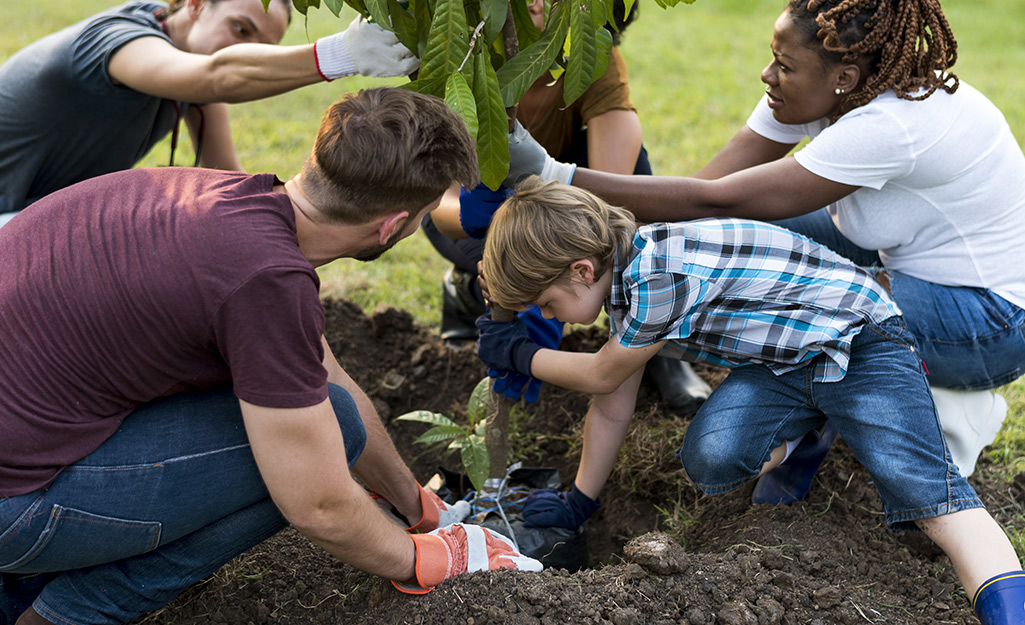
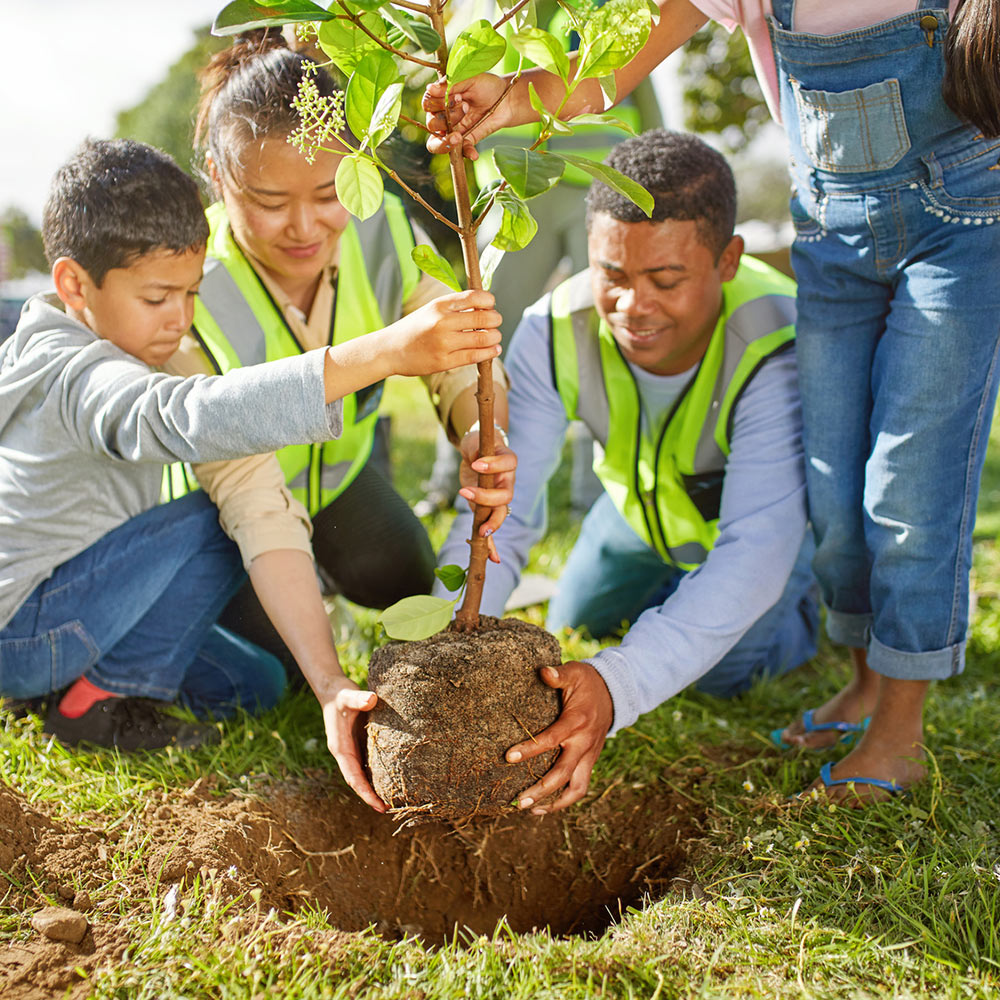
After all your hard work getting the tree home and prepared for planting, it’s time to put it in the ground. Soon, you’ll have a thriving, healthy tree that will add instant character to your yard. Here’s how to get the tree safely and securely in the ground:
- Use your hands or a shovel to lift the tree by the root ball and lower it into the hole.
Don’t lift the tree by its trunk. - Place it on top of the raised center section and let the roots spread out.
- Lay the handle of your shovel across the hole to check that the crown of the root ball is level with the surrounding ground.
- If the root ball is below the surrounding ground, remove the tree and add more soil.
- If it’s too high, remove more soil from the hole.
- If your soil is sandy and fast-draining, add some peat moss to the excavated soil. Use that mix of native soil and peat to backfill the hole.
The peat will absorb water like a sponge. - In most regions, you won't need to add amendments to your soil. As they grow, the tree roots will adjust to the native soil around them and start to spread.
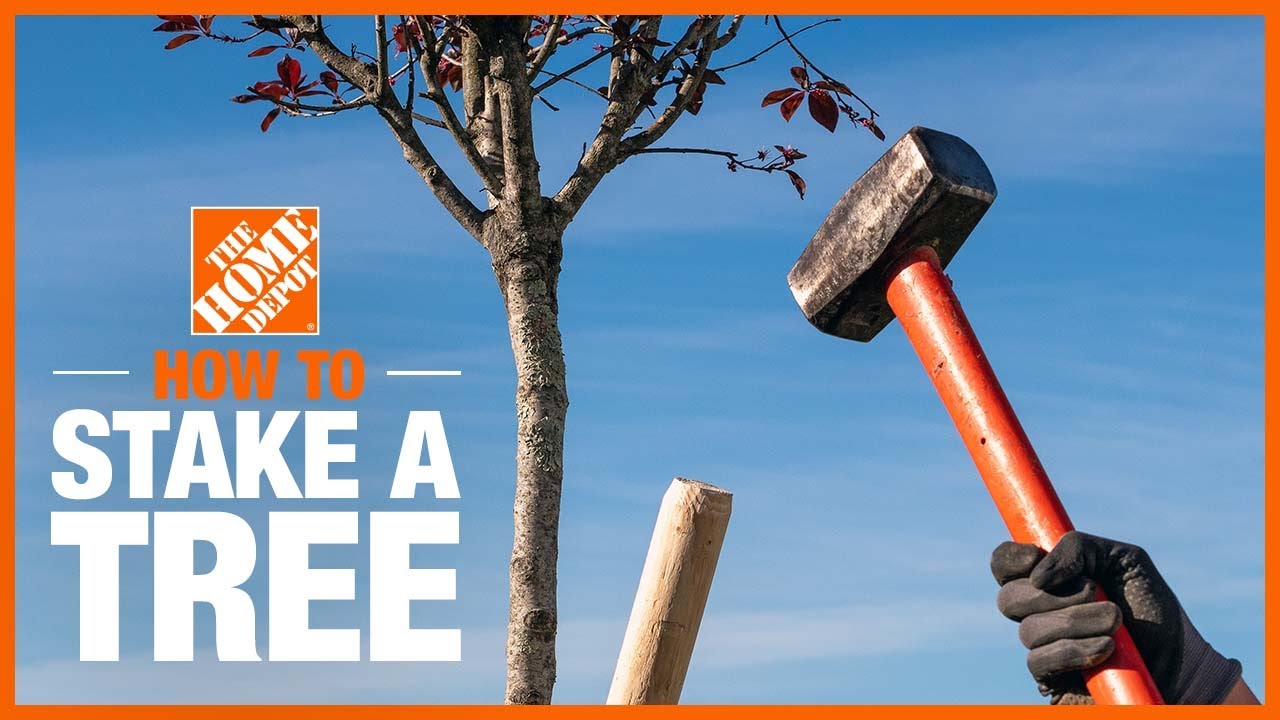
- Straighten the tree and stake it, if necessary.
Tip: Young trees may need stakes until they’re established. Tie the stakes loosely to the trunk, so it won’t be injured as it grows. Be sure to remove the ties and stakes once the tree is established.
Backfill the Hole and Mulch
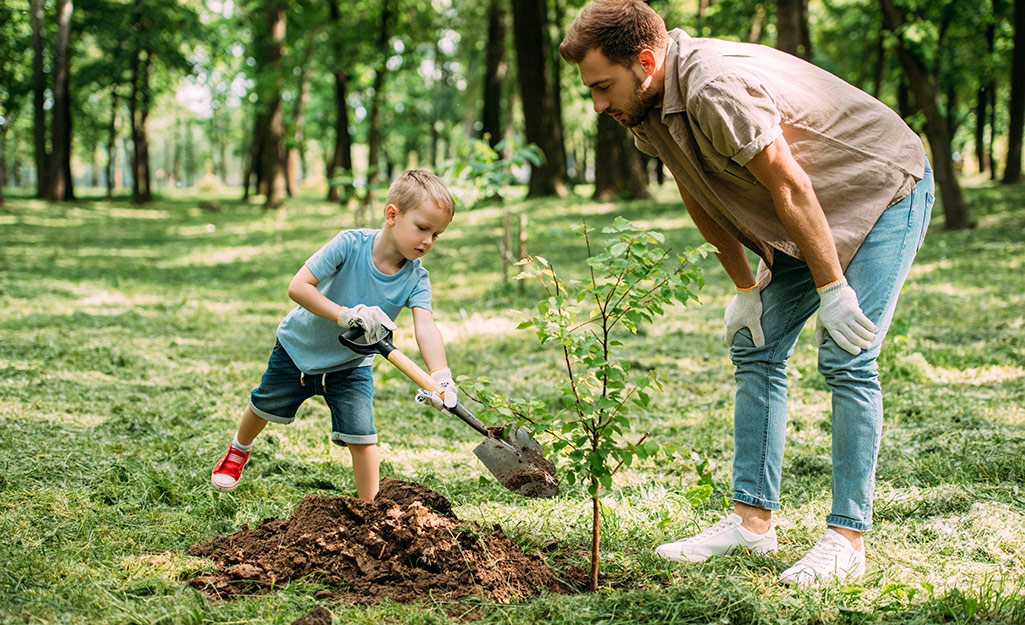
- Backfill with soil just to the height of the ball or slightly lower to allow for settling. Don’t mound the dirt over the ball and up the trunk so that it looks like a volcano.
- Be careful not to compress the soil too much.
- Mound dirt around the tree to form a moat that will help collect water.
- Spread 2 inches of bark or wood chip mulch around the area to help retain water and control weeds.
- To help discourage insect pests and diseases, don't let the mulch touch the trunk of the tree. Clear any mulch away from the base of the trunk so air, light and water can reach the soil. Mulch piled too high on a tree trunk can lead to rotting.
- It’s fine to prune away any broken, unhealthy or diseased limbs, but wait until the tree has been in the ground for about a year to do any additional pruning, if it's necessary.
Tip: It’s fine to prune broken, unhealthy or diseased limbs once you’ve planted your tree, but wait at least a year to do any additional pruning.
Water and Maintain the Tree
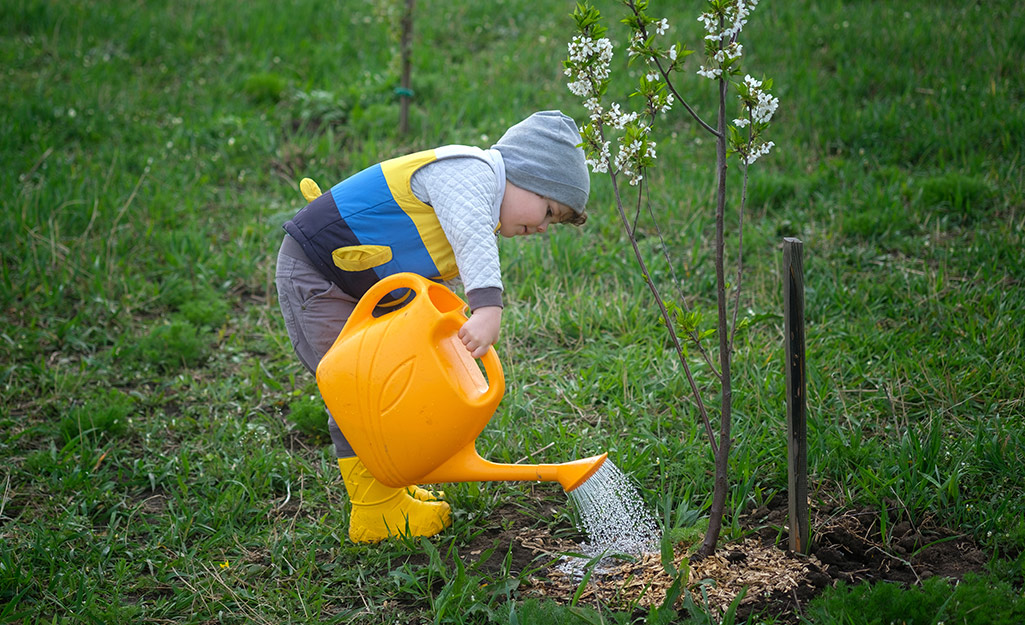
Proper tree care begins the moment you plant it. How you treat your newly planted tree during its first few years of life will determine its growth and overall lifespan.
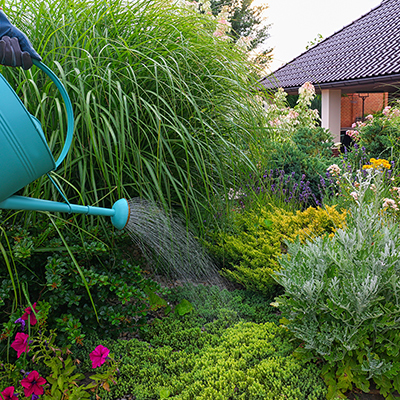
- Water the tree at the time of planting and at least once per week during its first growing season.
- Water it more often during the height of the summer if rain is scarce, or if it’s windy enough to dry out the soil.
- Avoid over-watering the tree by giving it deep soakings rather than frequent, light waterings. A soaker hose can help deliver water to the roots. Water from a garden hose often runs off before it can penetrate deeply enough.
- Don’t fertilize a newly planted tree. Wait two or three years, or until your tree is established. Except for fruit trees, many mature trees don't need fertilizing at all. If you do use fertilizer, follow the directions on your product for how much to apply and how often. In general, it's best to fertilize trees in late April or early May or late in the fall, when the tree is dormant.
How to Plant a Shrub
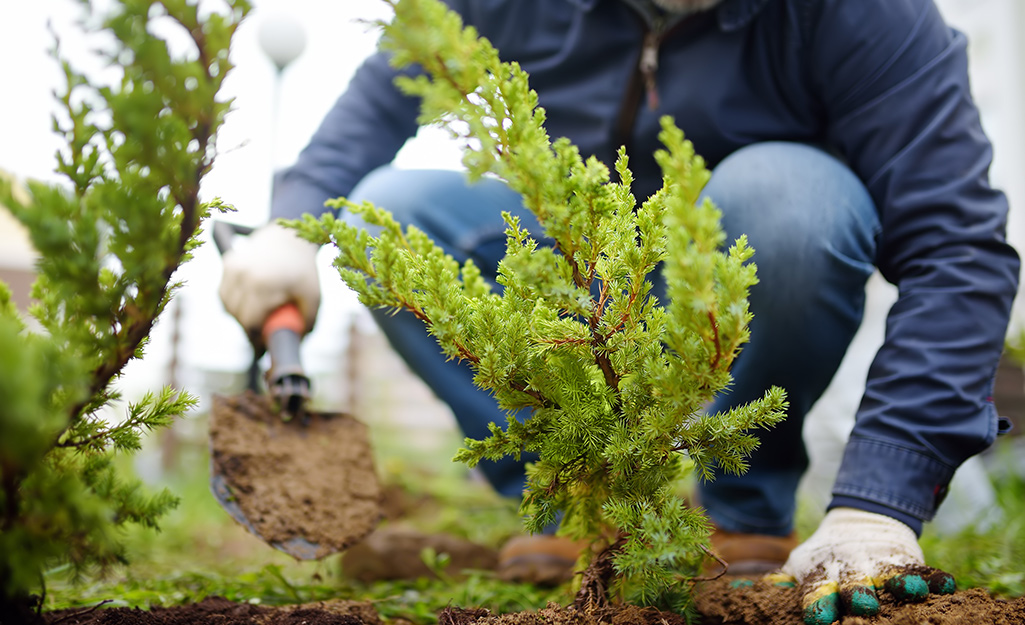
Thinking about planting shrubs along with your tree? The steps it takes to plant shrubs are very similar to the steps of planting a tree:
- Want to add a new shrub or shrubs along with your tree? As with a tree, watch how the sun moves across your planting location, as well as read the tag to determine the shrub’s sunlight needs.
- Consider the distance from where you want to put the shrub to any existing plants. Make sure it will have room to grow and that it will get as much sun as indicated on its tag or label.
- Dig a hole as deep as the root ball and two or three times as wide.
Remove any rocks, roots or other debris from the soil. - Gently loosen the shrub’s roots with your fingers or a garden trowel.
- Place the shrub in the hole and check that the base of the trunk is even with the surrounding ground.
- Create a moat of dirt around the drip line of the plant to allow water to collect around the shrub.
- Spread 2 inches of mulch or pine straw around the shrub, but away from the base of the trunk.
How to Maintain a Shrub
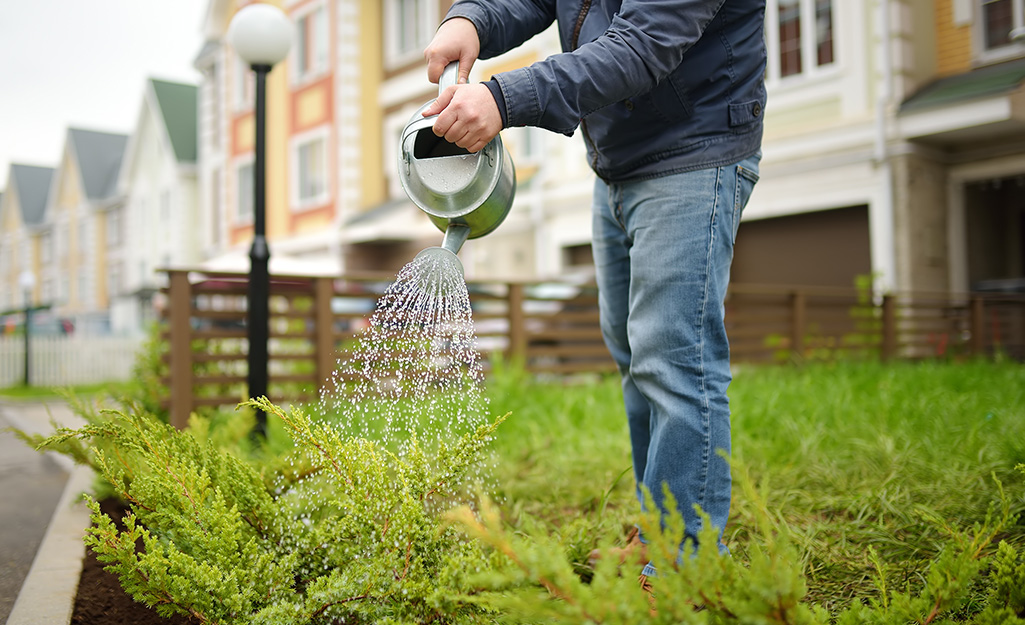
Once you plant your shrub, keep it nourished and growing strong with a few easy maintenance tips:
- Give the shrub a long, generous watering at planting time. You might want to use a drip irrigation kit to apply water slowly, so it has time to soak into the ground. Some kits have timers, so you can program them to start and stop automatically.
- If rainfall is scarce, repeat the deep watering two or three times per week until the shrub is established.
- Apply a plant starter solution to your shrub immediately after planting.
- Wait to fertilize until late April or early May, or in autumn when the shrub is dormant. Follow the directions on your shrub fertilizer product.
- Use a hand pruner to lightly trim long, unbranched stems. Cut stems right above the bud.
Planting trees is easy if you follow these guidelines. Trees and shrubs add shade, beauty, and privacy to your landscape, and there’s nothing more satisfying than watching them grow into mature trees over the years. The Home Depot’s mobile app helps you find the right products, tools and materials you need to take the guesswork out of planting and growing healthy trees.