How to Use a Smoker
Published December 26, 2025
Standard gas or charcoal grills are great for fresh, flavorful, home-cooked meals. But nothing brings out rich flavor quite like a smoker. Smokers slow-cook foods at lower temperatures over longer periods of time. Think of them as the slow-cooker versions of grills. This guide will teach you how to use a smoker, whether the charcoal, propane or wood chip styles. You’ll also learn tips for properly cooking your favorite meats and other dishes.
Tip: When learning how to use a smoker grill, it’s important to periodically check the food temperature with a meat thermometer. This ensures that food's internal temperature is high enough.
Difficulty:
Intermediate
Duration:
2-4 hours
Table of Contents
Setup & Prep
Temperature Regulation
Understanding Smoker Styles
Smoking Techniques and Tips
How to Use a Smoker with Wood Chips
Smoking Times & Temps - Beef and Pork
Setup & Prep
Smokers work by circulating a low and steady stream of heat through a smoking chamber. The heat mixes with a small amount of water on the inside to create steam. This slowly cooks the meat for a tender and flavorful finish.
Setup will vary depending on the type of smoker grill you have. Always follow the manufacturer’s instructions for assembly and placement before the first use. It’s best to put your smoker on a flat and even surface. Make sure it’s at least 10 feet away from your home, so the heat doesn’t damage your siding. Avoid windy areas, as this makes it easier to light the wood or charcoal.
New smokers should be seasoned or cured to remove any lingering manufacturing materials, like paints and solvents. To do this, clean the interior and wipe it with a light cooking oil. Then, run the smoker for a full cooking cycle.
Tip: Different smoker styles and models will require different startup methods. Always refer to your instructions manual to understand how to start the smoker correctly.
Temperature Regulation
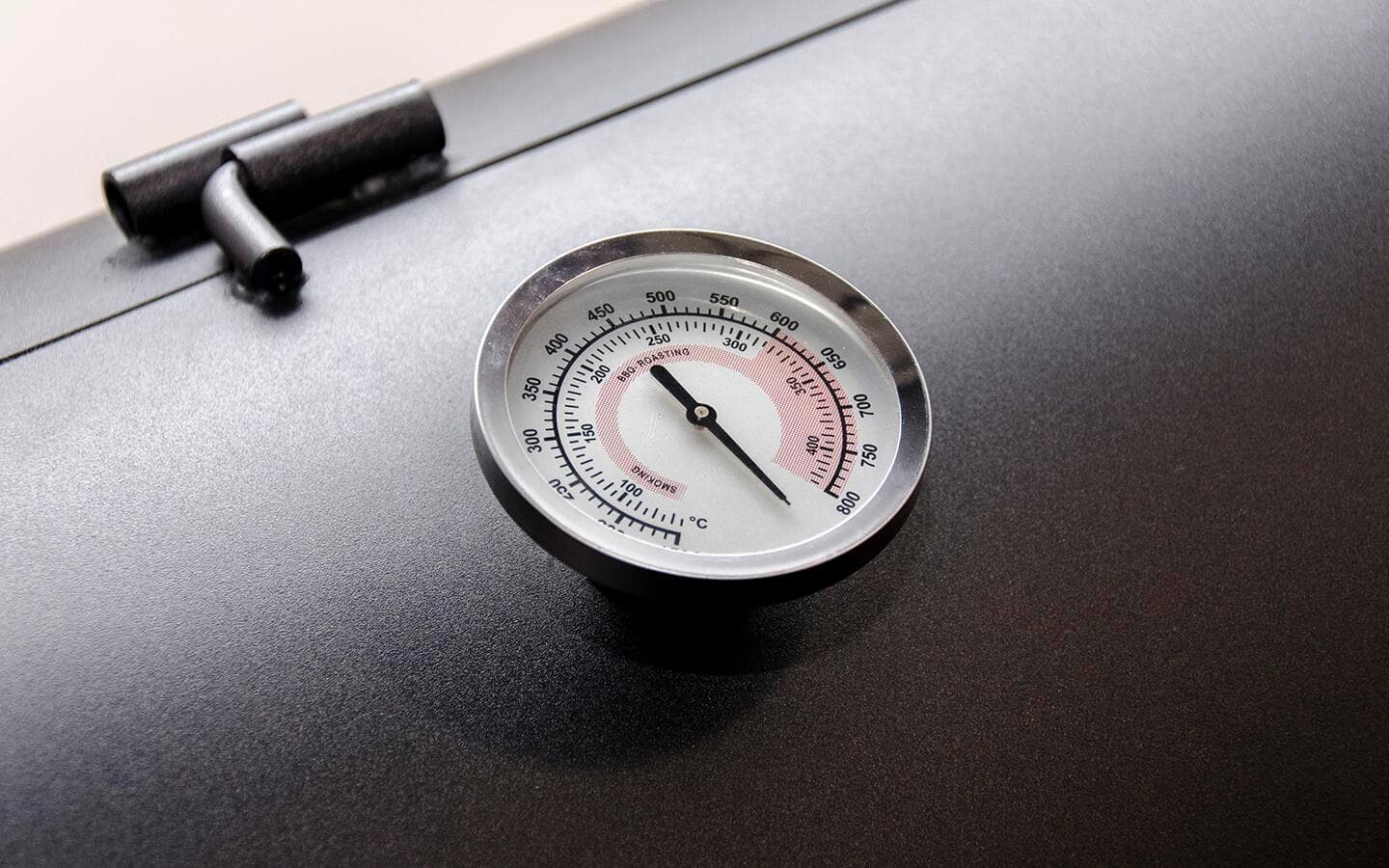
Depending on what you’re trying to cook, meat smoker temperatures are usually set between 200- to 275-degrees Fahrenheit (ºF). The temperature is regulated using dampers found at the top and bottom of the smoker.
By regulating the airflow, you can adjust the temperature up and down. Opening the lower damper will allow more air to flow to the fire and increase the heat. Meanwhile, opening the upper damper will allow more heat to escape, lowering the temperature.
Cooking times will vary based on the exact temperature, the type of meat and the particular smoker you’re using. But a good rule of thumb is to allow 1 to 1.5 hours per pound of meat.
If smoking for an extended period of time (over 4 hours), it may be necessary to add more charcoal. Make sure you cook to temperature, and not to time! Smoke your meals to perfection by following the guidelines below.
Tip: Be sure to monitor the smoke's color, as it can impact how meat tastes. Generally, white smoke promotes flavorful qualities. Black smoke may indicate that meat is directly over the flames. This can cause its juices to burn, which can worsen the flavor.
Understanding Smoker Styles
Most people choose a smoker for cooking large cuts of meat. That's because they’re designed to cook at lower temperatures over longer periods of time. This infuses the food with a rich flavor, making meats juicier and more tender.
Some grill enthusiasts find that smoking can overwhelm meats' flavors. Specifically, it may impact finer, leaner, more expensive cuts, such as pork tenderloin, lean roasts and steaks. However, they can be cooked quickly and deliciously on a grill. Certain cuts, particularly those that are tougher or have a higher fat content, suit the smoking process. Additionally, they're more cost-effective than those considered the finer cuts. As a guideline, consider cheaper, fattier cuts when smoking. A smoker can turn tough meat tender.
Cuts like brisket, ribs and shoulder are great smoking choices. But you can also use a smoker for poultry, hot dogs and sausages. This guide reviews popular meats to smoke. And don't forget, smokers can also be used to cook other foods, including vegetables, side dishes and desserts.
When it comes to selecting the right smoker for you, here is some helpful information.
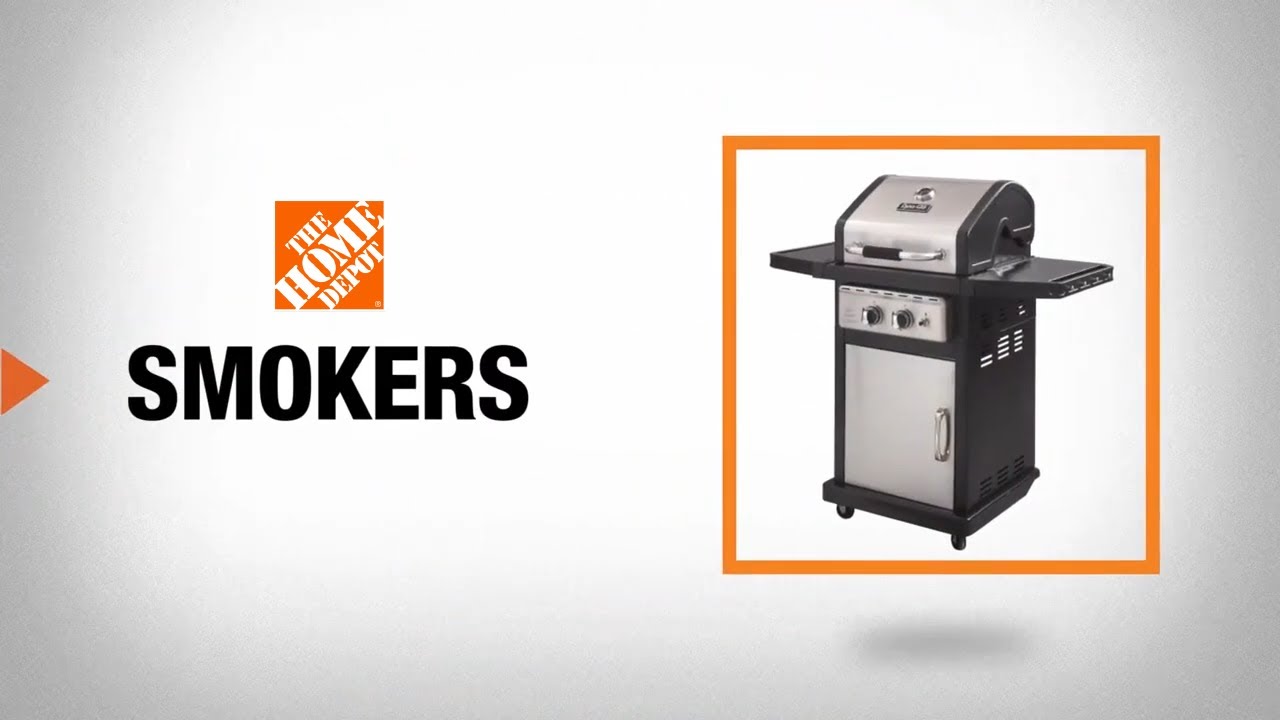
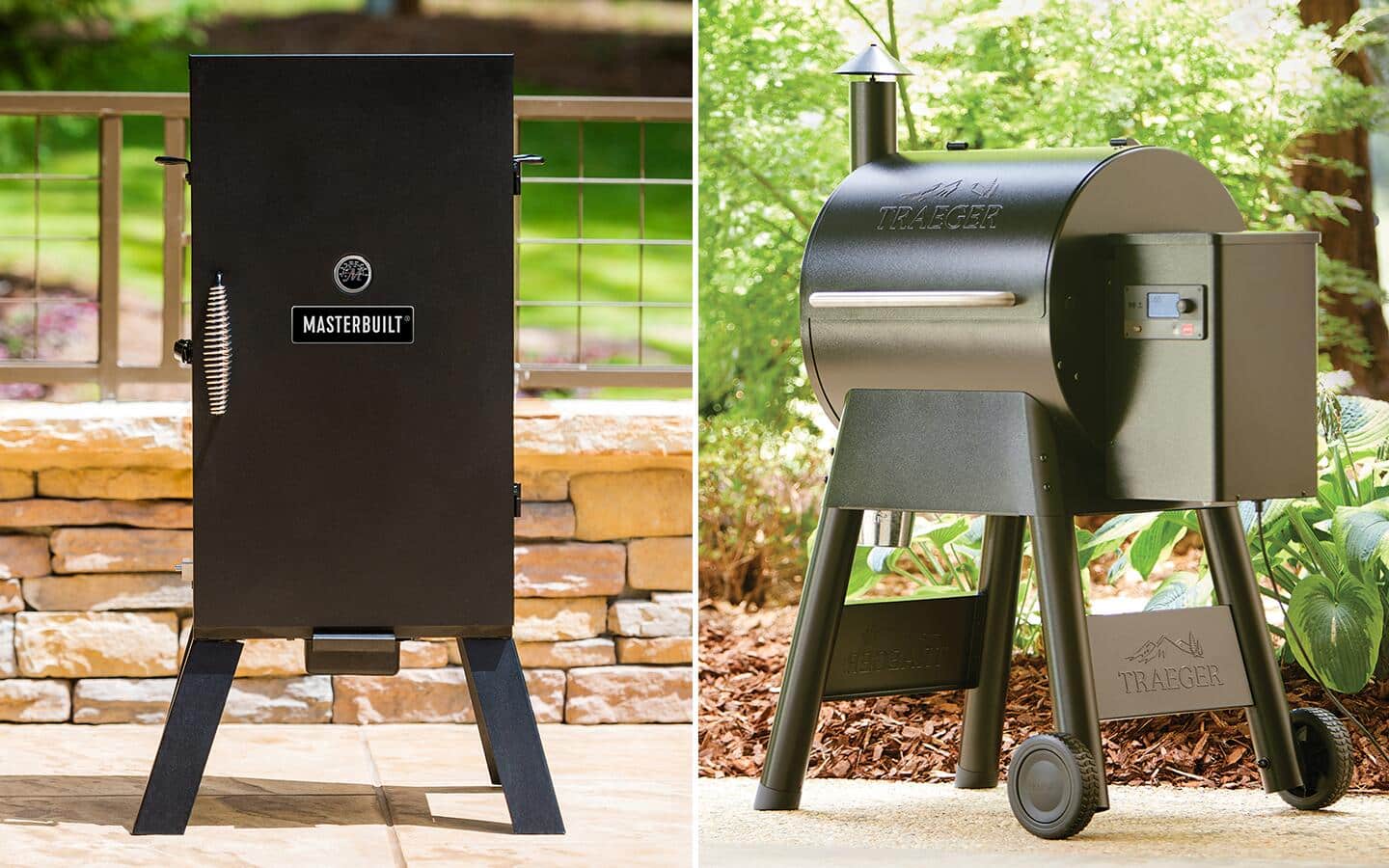
Vertical smokers are one of the most popular types of smokers. These stand straight up and make it easy to fit lots of different foods inside, depending on how many racks are included. Learning how to use a vertical smoker is relatively simple. As both vertical and barrel smokers can handle larger food capacities, they're ideal for bigger groups.
Barrel smokers, also known as offset smokers, are a versatile and often more affordable smoker variety. They come in both vertical and horizontal orientations and a wide size range, depending on your barbecue needs. With these models, you have the versatility of using direct heat. You'll just need to install a grill grate over the smoker box.
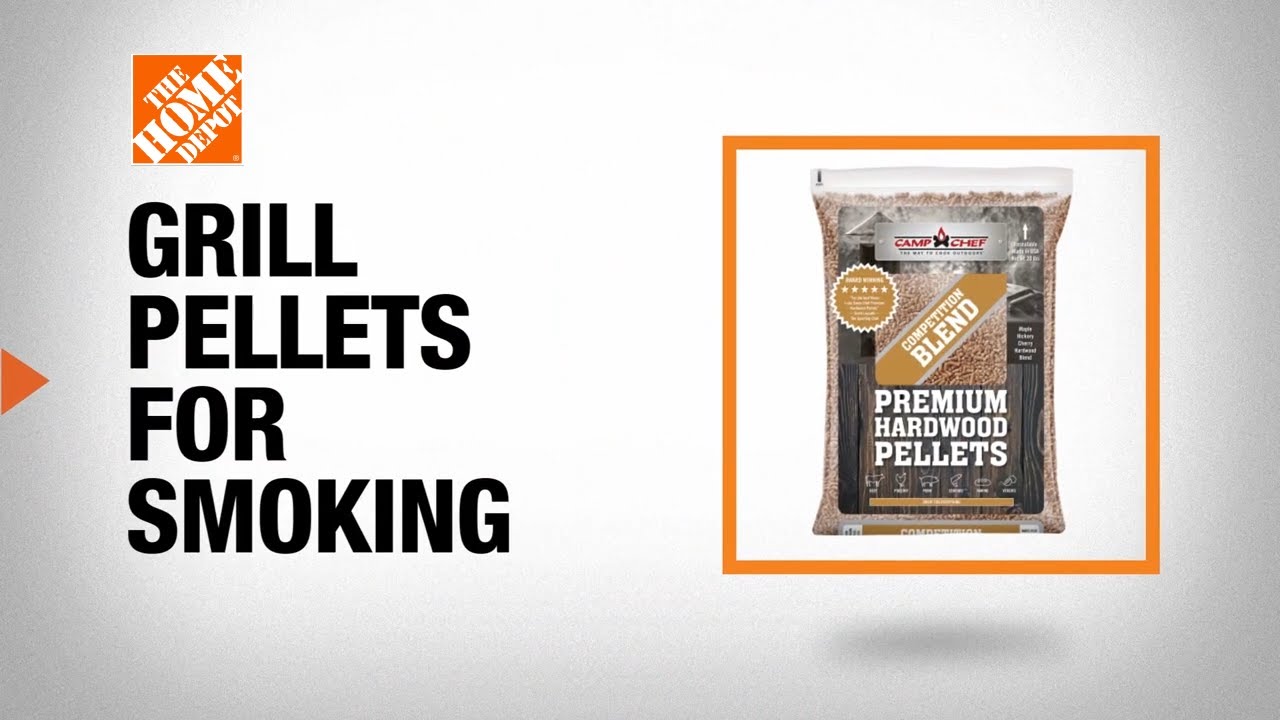
You should also consider a smoker's fuel source, whether electric, propane, charcoal or wood pellet varieties. Charcoal or wood pellets provide richer flavor. However, it’s quicker to heat and easier to control the temperatures in electric or propane smokers.
- Electric smokers use electric rods as their heating source. One of the simplest types, they can be set to exact temperatures for precision smoking. And they're equipped with dampers and vents to control temperature.
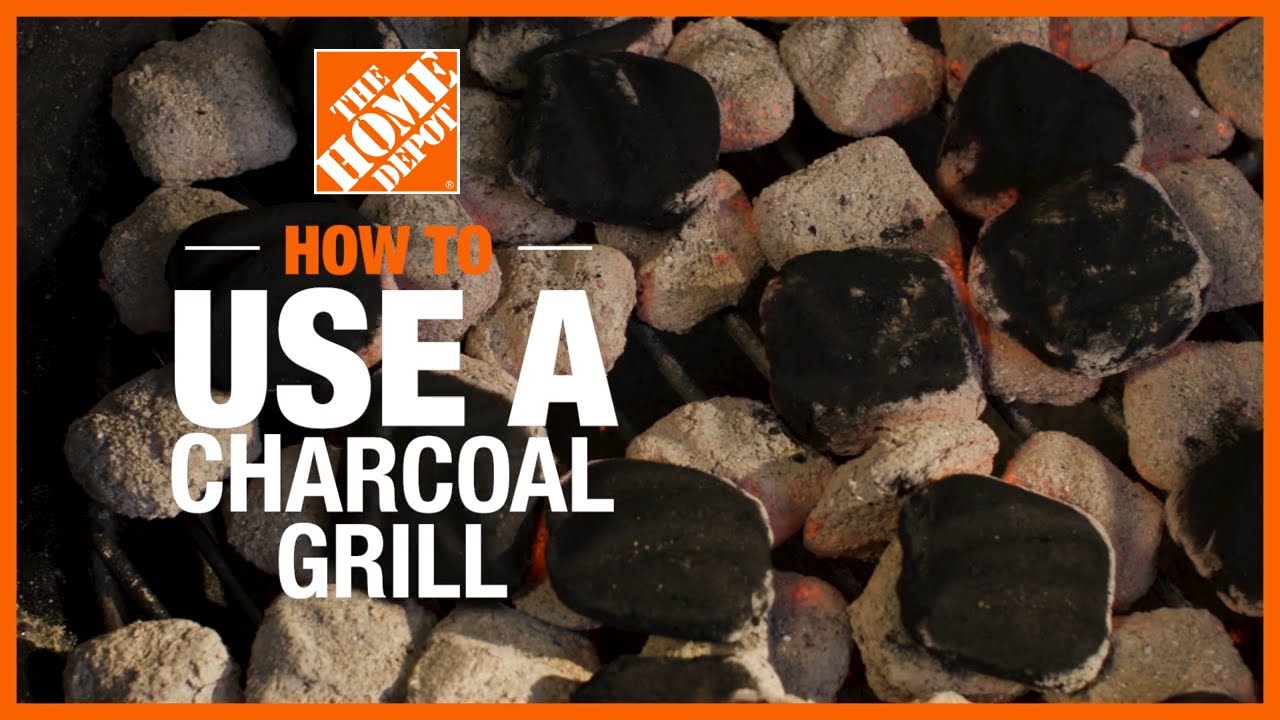
- Charcoal smokers use burning charcoal as their heating source. A 15-pound charcoal bag burns for about 15 hours. They have lids to keep smoke inside, with vents to control airflow.
- Propane smokers, also called gas smokers, use burning propane as their heating source. Some models can convert heat from natural gas. They have dampers and vents to control temperature.
Smoking Techniques and Tips

Only charcoal smokers can give you that rich, chargrilled taste. Wood pellet smokers naturally infuse your food with smoky flavors. But what if you find the cleanliness and ease of gas or electric smokers more appealing? Fortunately, there are a few steps you can take to try to match the flavors created by naturally fueled smokers:
- To ensure freshness, buy meat no more than two days before smoking.
- For added flavor, mix herbs and spices into the water pan. Then, place the meat over the water pan, so the drippings fall in.
- The more food you add to the smoker, the longer its cooking time.
- Always cook your food with the lid closed on the smoker.
- Cook your food on indirect heat, not directly over the heat.
- Whichever smoker you choose, resist the temptation to open the lid during cooking. Doing so will cause you to lose valuable heat and smoke. For every time you open the lid, add 15 to 20 minutes to your cooking time.
- Only turn the food a few times while cooking.
- External temperatures and altitude will affect the performance of your smoker. Adjust your cooking times accordingly.
- Learn how to use a smoker with wood chips by playing around with various temperatures, different chip types and new foods to find what works for you. Make a note of the ingredients, combinations and results, so you can try them again.
Tip: Purchase small containers of flavored, pre-packaged wood chips that are ready to be inserted into your grill or smoker.
How to Use a Smoker with Wood Chips
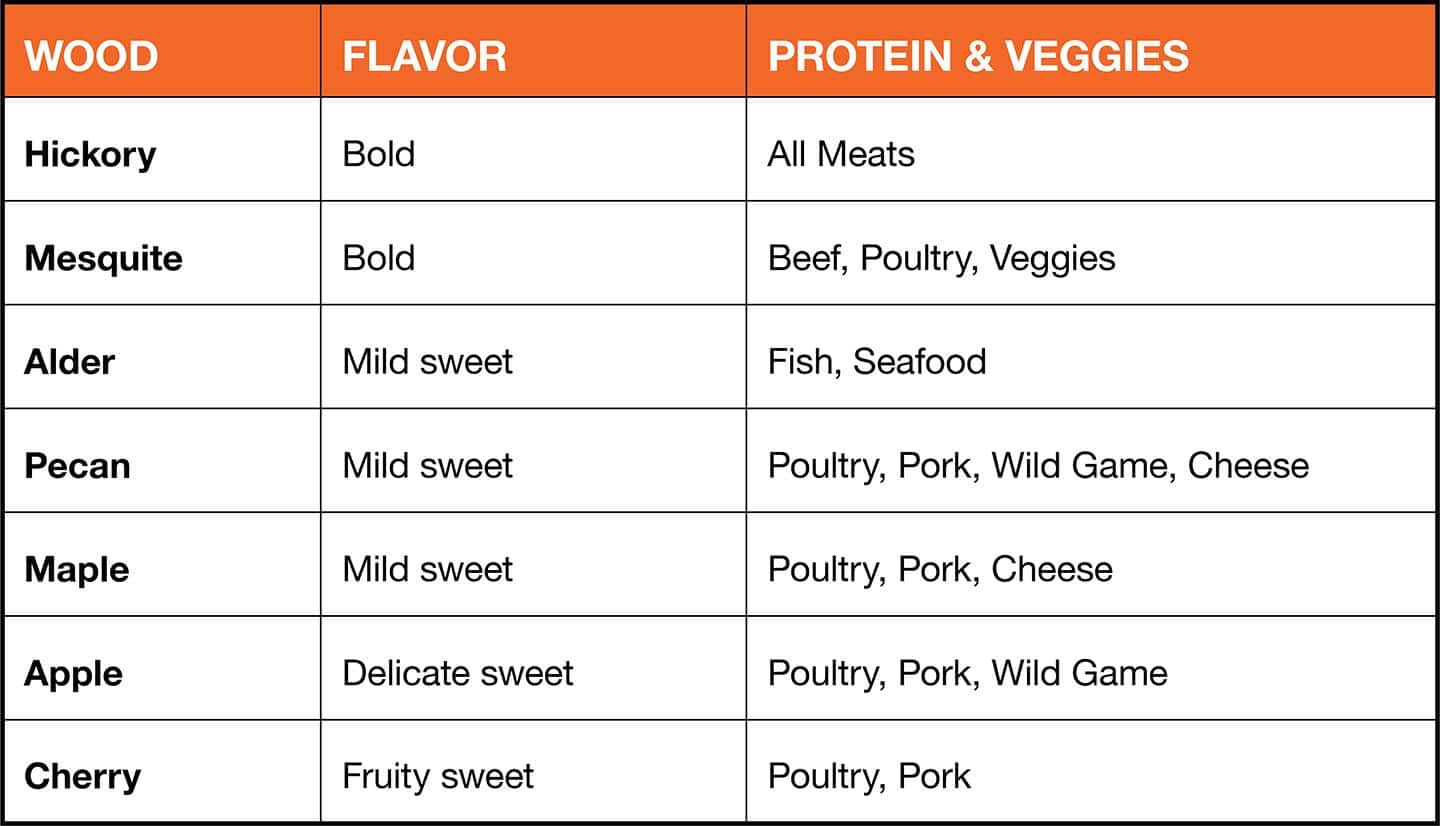
- To get the most flavorful food from your smoker, try adding wood chips (or chunks) to the smoker box. Or you can add place them in a pan of water on your cooking surface.
- Different foods may taste better when smoked with certain types of wood. For example, fruitwoods, like apple, cherry and pecan, add sweetness to ribs and other cuts. Maple’s mild flavor works well with vegetables and poultry. And with its stronger flavor, mesquite is used with darker meats.
- Soak the chips in water for 30 minutes and strain them. Then, add them to the preheated coals before cooking.
- The wood chips will add a smoky taste. And the water will keep the food from drying out over the long course of cooking.
- Refill this water pan as needed when you turn the food during cooking.
Smoking Times & Temps - Beef and Pork
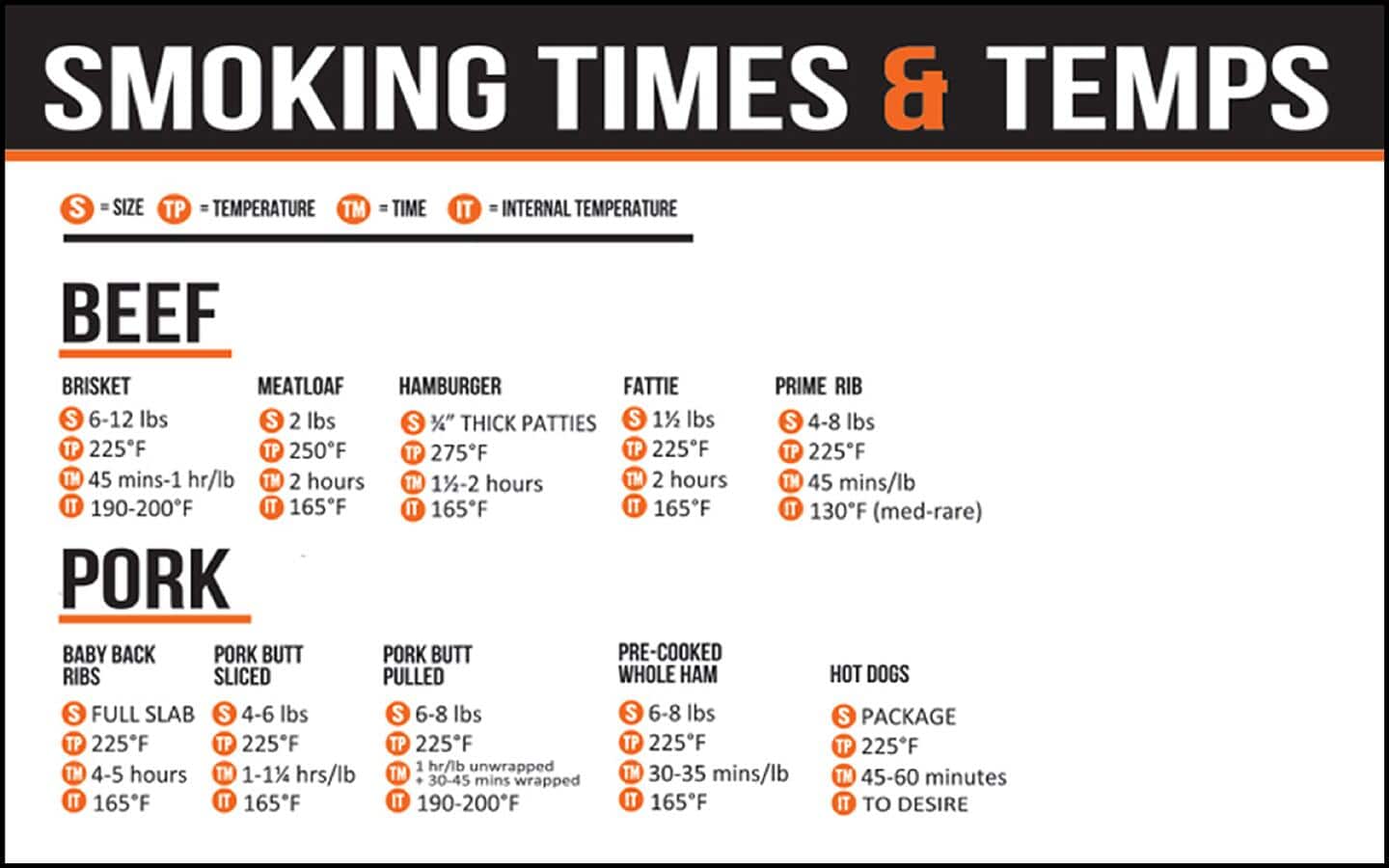
Here are some things to know when smoking various beef and pork cuts. Use the chart above to ensure you cook beef and pork thoroughly.
Ribs – No matter the type or cut, it’s recommended you smoke ribs with low heat over a slow cooking time. For pork, baby back ribs are the most popular smoking choice. Often smaller, they cook more quickly than pork spareribs. Beef ribs can take longer to smoke than pork. Beef baby back ribs often have less meat, whereas chuck ribs and plate ribs can be larger, requiring more smoking time.
Beef brisket - While popular, beef brisket can be tough. Look for well-marbled tender brisket with a fatty layer, as this will keep the meat moist. Beef brisket can take 10 to 14 hours to smoke. Be sure to cook it to an internal temperature of 205 degrees ºF.
Pork shoulder - Also known as “Boston butt,” pork shoulder benefits from slow smoking, with its good ratio of lean meat to fat. Aim for an internal temperature of 205 degrees ºF, which should take 10 hours.
Hot dogs - For tasty hot dogs, you usually need to smoke them for about an hour, at 225 degrees ºF. Other sausages may require longer cooking times. For instance, smoke Italian sausage at 250 degrees ºF for three hours, or until an internal temperature of 165 degrees ºF is reached.
Corned beef - Once soaked in water to remove salt, you'll find that corned beef does very well with smoking. Preset your smoker at 250 degrees ºF. Then, add in charcoal and hickory chunks. When the smoker hits 250 degrees ºF, cook the beef for 8 to 9 hours. Check it every 2 hours, adding more hickory chips, if necessary. You want an internal temperature of 185 degrees ºF once completely smoked. The meat should be somewhat soft when a thermometer is pushed in.
Smoking Times & Temps - Poultry and Sides
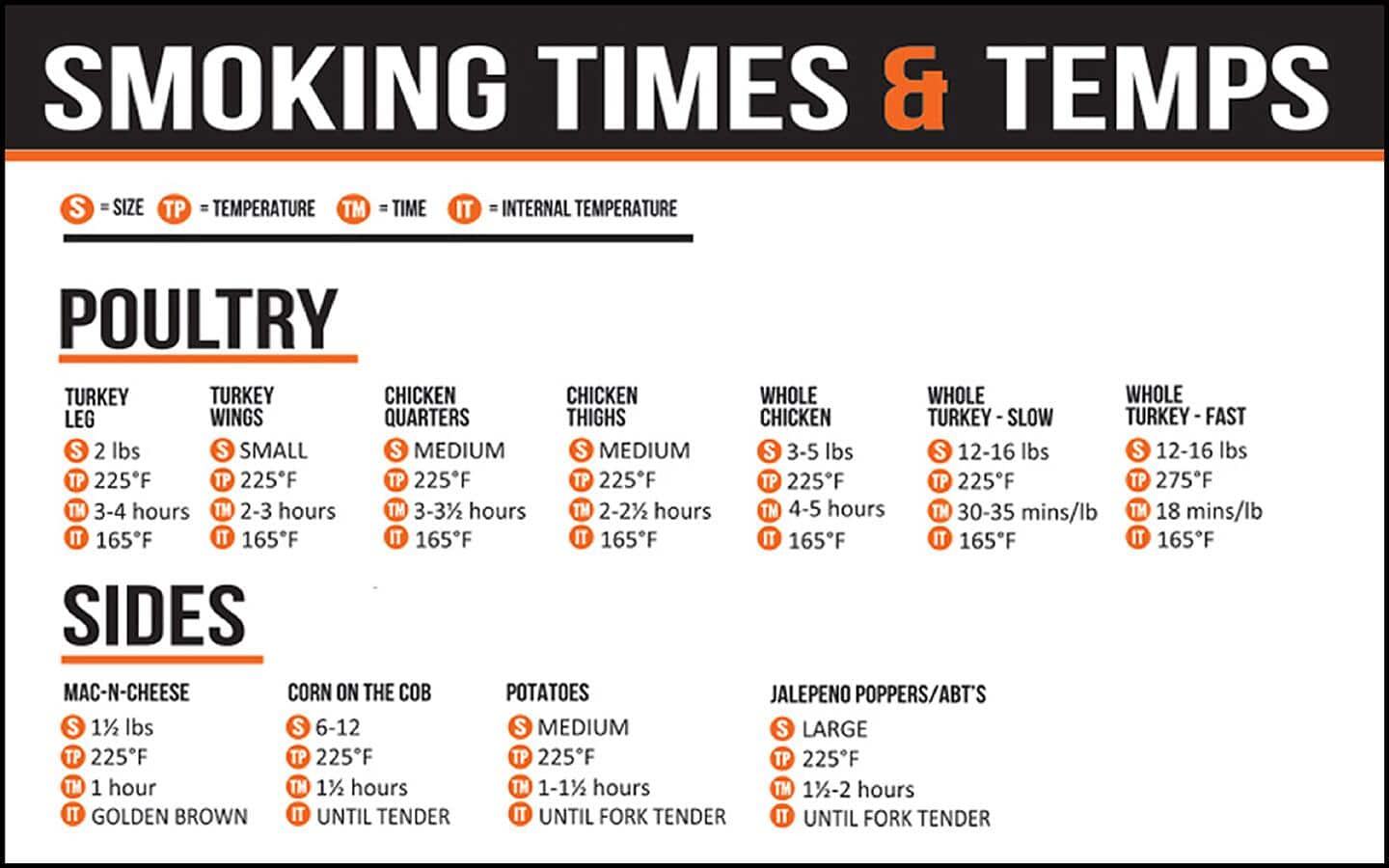
Smoking turkey and chicken provides delicious alternatives to beef and pork. However, finding the right cooking time and temperature for poultry, as well as any side dishes, can be tricky. Follow this chart to ensure your poultry and sides are cooked well.
- When smoking poultry, brining ensures that the meat will remain moist and flavorful throughout the cooking process.
- Consider “spatchcocking” turkeys and chickens over 15 pounds. This cooking method involves removing the spine and breastbone, so the bird lays flat. It increases the surface area that can receive smoke.
- Spatchcocking reduces the time needed to cook a whole bird. As such, chicken (or turkey) halves and quarters can be smoked faster and more easily than whole birds.
- Turkey can be smoked or cooked on gas or pellet grills. But be aware of its long cooking time. A whole, thawed turkey can take 30 minutes per pound to cook in a smoker’s indirect heat.
Your smoker is a great tool to cook sides. You can serve up delicious, savory vegetable dishes, like green beans or corn-on-the-cob. You can even prepare dairy creations or tasty desserts, such as cobbler. You may want to try this recipe for a creamy, mouth-watering side:
Four-Cheese Smoked Mac N’ Cheese (serves 4 to 6 people)
INGREDIENTS:
- 1 (16-ounce) package elbow macaroni
- 1/4 cup butter
- 1/4 cup all-purpose flour
- 3 cups milk
- 1 (8-ounce) package cream cheese, cut into large chunks
- 1 teaspoon salt
- 1/2 teaspoon black pepper
- 2 cups (8 ounces) extra sharp cheddar cheese, shredded
- 2 cups (8 ounces) Gouda cheese, shredded
- 1 cup (4 ounces) Parmesan cheese, shredded
DIRECTIONS:
- Preheat your smoker to 225 °F. Load the wood tray with one small handful of wood chips (your choice).
- Cook the pasta as per package directions.
- In a medium saucepan, melt the butter.
- Whisk flour into the butter.
- Cook over medium heat for 2 minutes, until the sauce is bubbly and thick.
- Whisk in the milk and bring it to a boil.
- Cook for 5 minutes, until it's thickened.
- Stir in the cream cheese until the mixture is smooth.
- Add salt and pepper.
- In a large bowl, combine 1 cup cheddar, 1 cup Gouda and all of the Parmesan cheese.
- Add the pasta and cream sauce to the bowl and mix.
- Coat an 11 × 9 1/2-inch aluminum roasting pan with nonstick cooking spray.
- Spoon the mixture into the pan.
- Sprinkle top with remaining cheddar cheese and Gouda cheese.
- Place in the smoker and cook for 1 hour at 225 °F, until brown, bubbly and delicious.
Smoking Times & Temps - Game
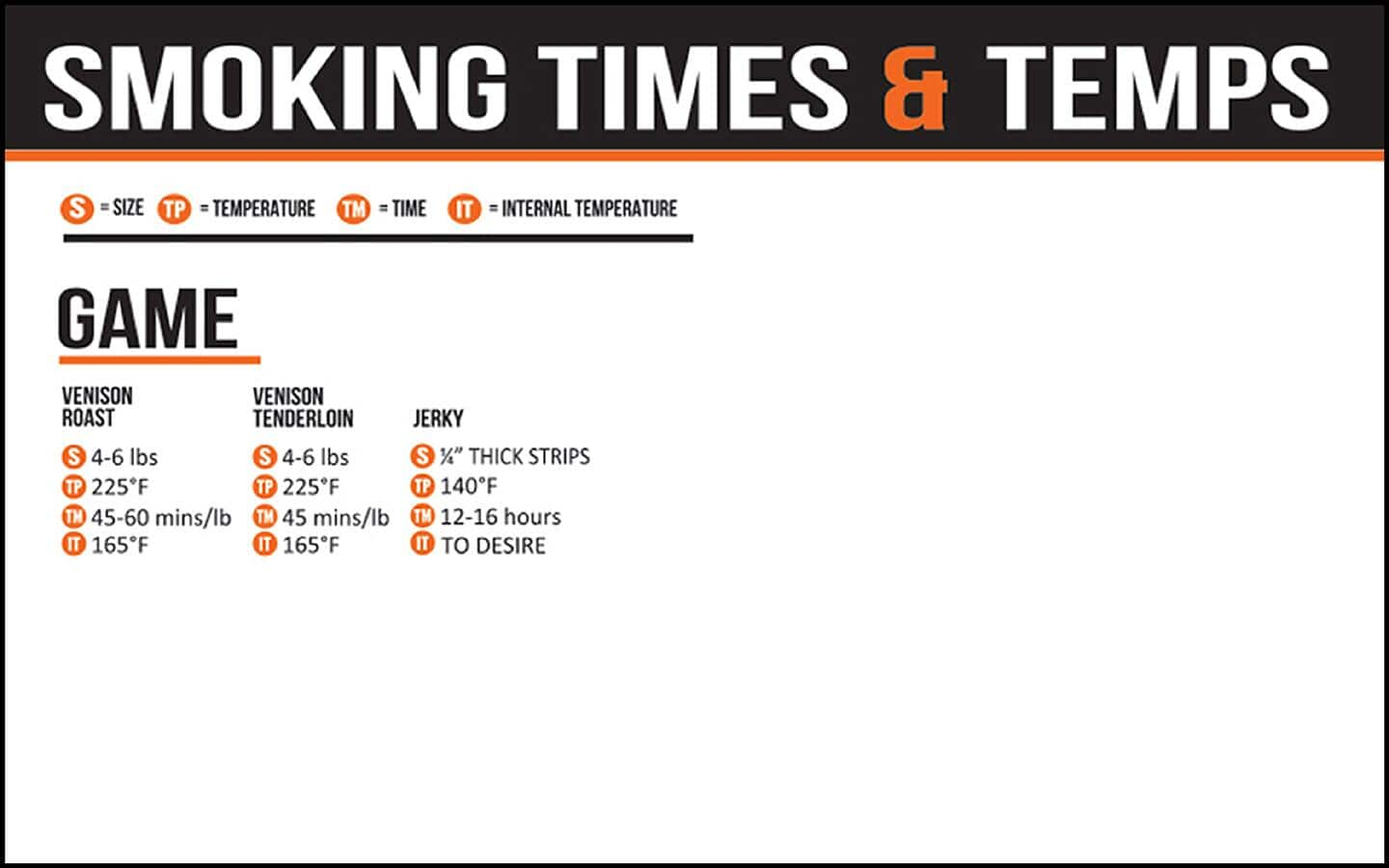
Wild game, such as venison, can be smoked easily. Follow the time and temperature suggestions on this chart for well-smoked game dishes.
Smoker Care & Maintenance
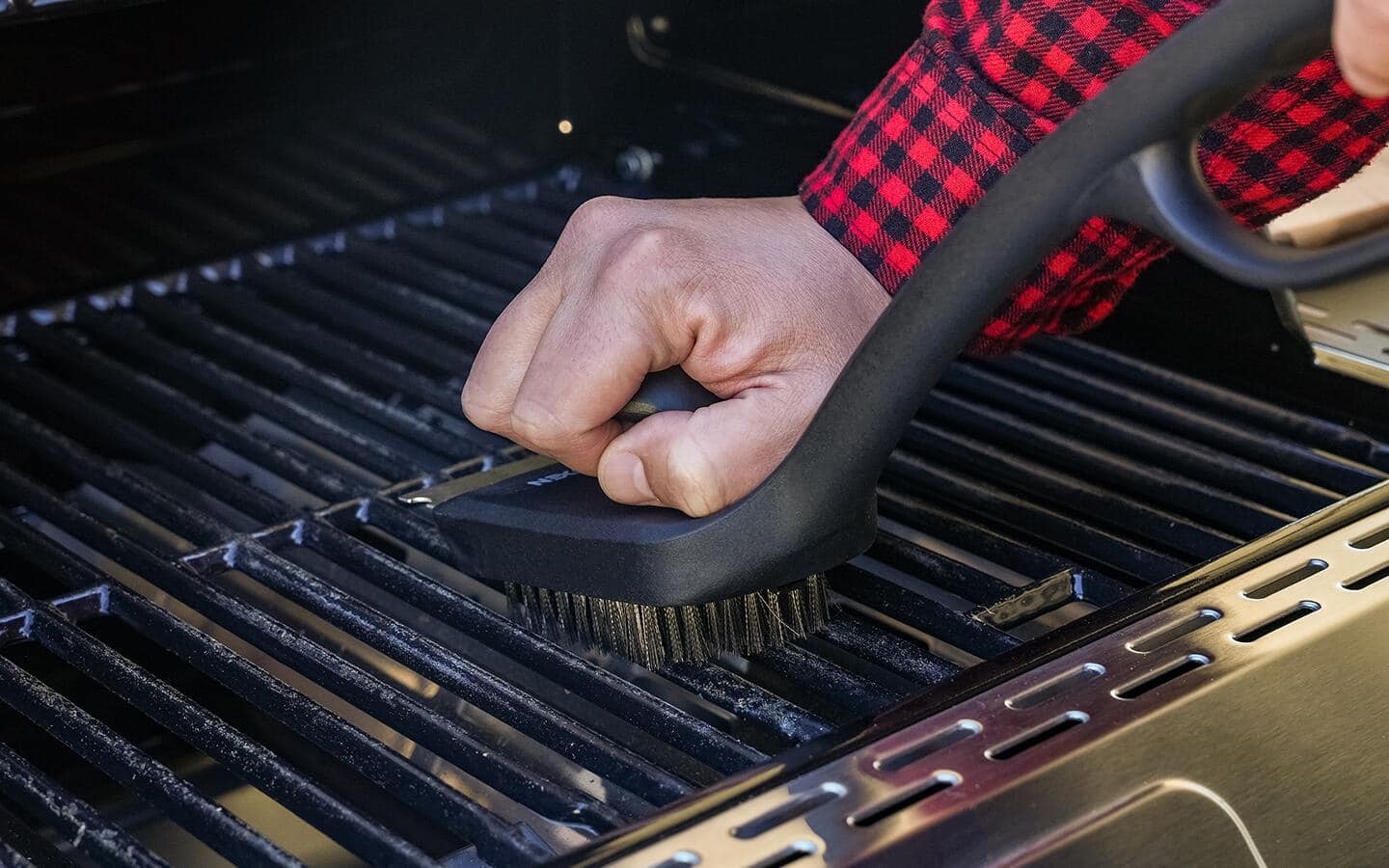
Just like with regular grills, you should clean the smoker grates after each use, using a wire brush and water. As for the rest of the smoker, it’s good to retain flavors in your BBQ smoker. But over time, grease and debris can gather in the bottom. After a few times using your smoker, you should clean it out. Doing so can prevent fires and protect your health,
- Wearing gloves, scrape out the grease from the bottom of the smoker.
- Wipe down the bottom and sides with a paper towel. Then, apply a thin layer of vegetable oil around the bottom of the smoker to prevent rust.
- You can use the same vegetable oil trick on the outside of the smoker. But smokers' extended cooking times may cause their external paint to flake off quicker than standard grills.
Using a smoker grill requires a bit of patience. But it's a rewarding pursuit for any barbecue enthusiast. You may just be learning how to use an electric smoker or how to use a charcoal smoker. Or you’re a skilled grill master looking to upgrade your setup. Regardless, you can shop our wide selection and get your online orders delivered. Just say when, where and how.