Cordless Blinds Safety & Law
Last updated November 12, 2024
Make the switch to cordless blinds to protect pets, children and your business.
Table of Contents
Dangers & Legal Standards
How Cordless Blinds Work
Retrofitting Corded Blinds
More Tools. More Products. More Perks.
Dangers & Legal Standards

Corded blinds are dangerous to children and pets. Roughly one child per month dies from blind cord strangulation, and more than 600 children per year are injured. That's nearly an average of 2 preventable injuries to a child per day. Between 1990 and 2015, more than 16,000 children were injured.
In light of this, industry-wide government regulations were passed. Corded blinds and shades are no longer available for sale in the United States. Any companies who manufacture, distribute or sell window coverings in the U.S., including The Home Depot, must comply with these standards.
New Voluntary Standards
- The Window Covering Manufacturers Association (WCMA) decided safer standards in January 2018.
- Manufacturers adopted the new standard on cordless blinds in December 2018.
- In 2019, all standard model window blinds were expected to be cordless.
Cordless Blinds & Law
- Corded blinds are not regulated under state or federal legislation.
- For all made-to-order, custom window covering products, the new, safer guidelines eliminate the use of free-hanging operating and tilt cords. They also eliminate the use of multiple cords into a cord connector.
- Per WCMA standards, custom cords should not be longer than 40% of the window height.
How Cordless Blinds Work

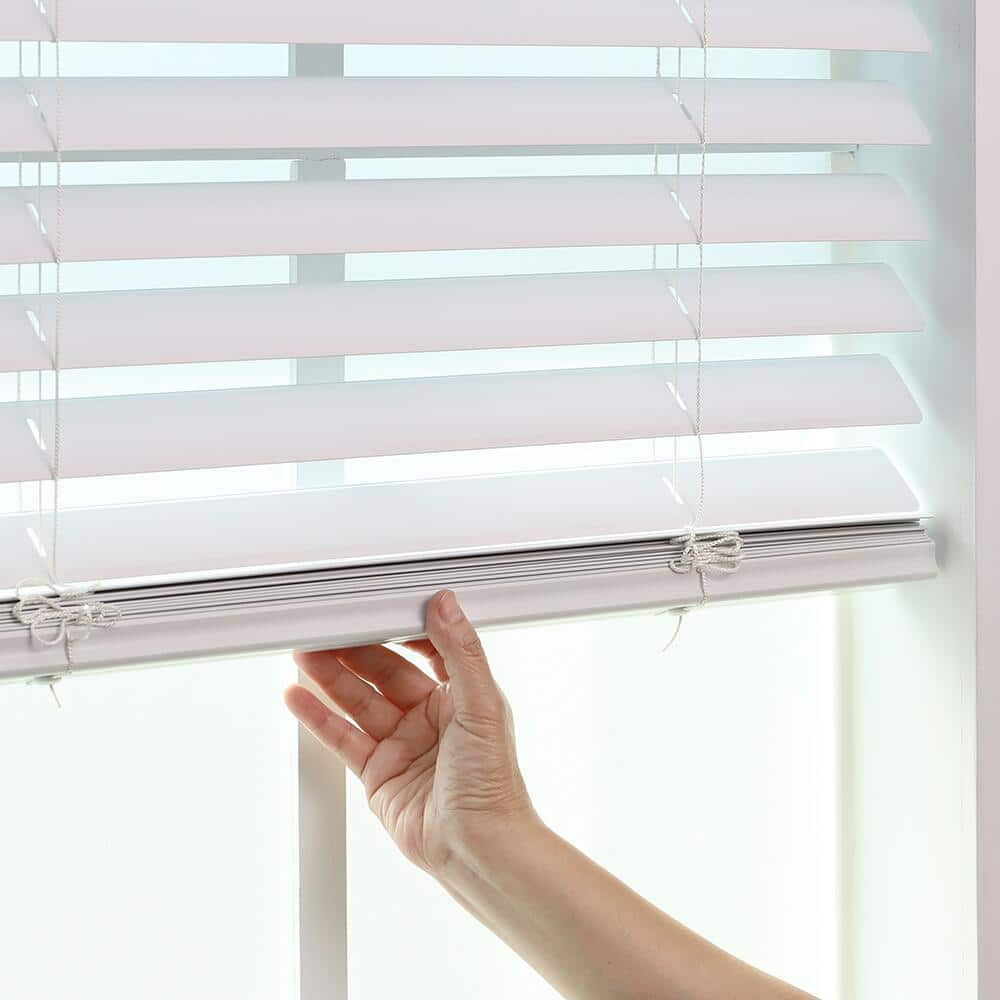
Cordless blinds, despite the name, contain a hidden cord in each slat. These cords connect to a lift mechanism in the blind’s head rail or bottom rail. Like a pulley system, this cord raises and lowers the blinds. To lower the blinds, pull down on the bottom rail. To raise the blinds, tilt and push up.
Cordless blinds operate just as simply as corded blinds—only safer. They also offer lower lifetime costs. Cordless blinds are more widely available than corded models. The industry requirements, voluntary standards and increased supply have resulted in more affordable options for your windows. That means more products and more savings for your business.
People with physical disabilities or health concerns can also appreciate the benefits of cordless blinds and shades. Adaptive devices make these window coverings easier to use. For example, motorized shades can be installed, enabling remote opening and closing. Available in many styles, sizes, colors and fabrics, they’re ideal for multiple windows or those that are hard to reach. You can control the blinds with your voice, a button or remote control. Or you may integrate them with your home’s smart hub, using a smartphone, tablet or voice-activated device, like Amazon Alexa. You can also program an automatic timer for scheduled shade control.
Retrofitting Corded Blinds
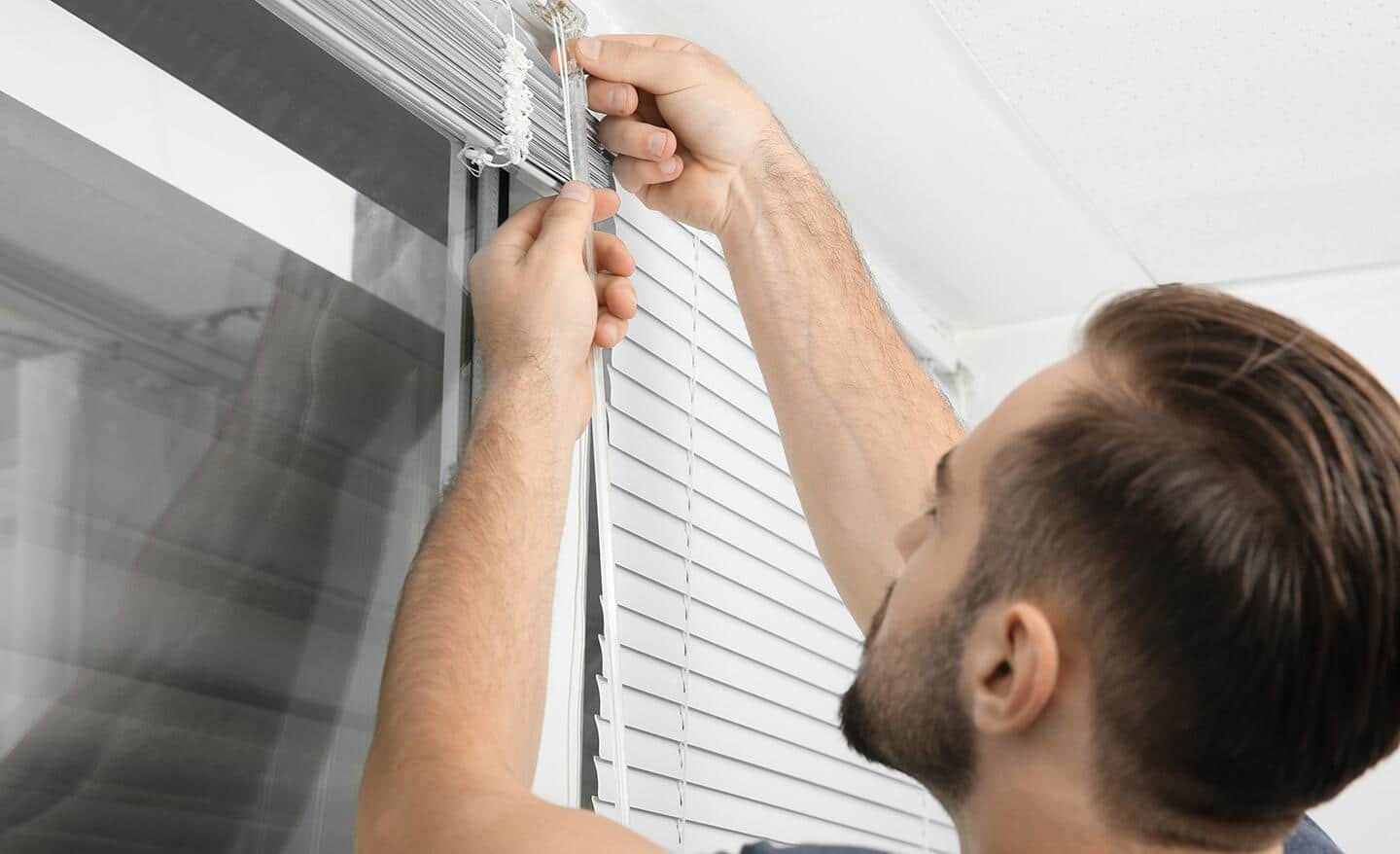
Replacement is the best way to protect your clients or residents and their children and pets from injury and strangulation. If you cannot replace corded blinds with child-safe cordless blinds, take these precautions.
Retrofit Dangerous Cords
- Cut looped pull cords above the tassel to remove the loop.
- Tie on safety washers to the lifting cords. These small, plastic washers prevent loops from being created lower down on blinds. They should be installed within three inches of the cord lock when the blind is fully lowered. Safety washers can also be used with all shade types.
- Remove equalizer buckles if they are present.
- Attach the individual cords to separate tassels.
- Do not tie or retie separated pull cords.
- Lock all blinds, even when fully lowered, to help prevent cords from being pulled out lower.
Safety Measures
- Advise your staff, clients and residents on the hidden dangers of corded blinds and ensure these precautions.
- Position cribs, beds and furniture away from windows and window cords.
- Shorten cords, links and tassels as much as possible, so they are out of reach. Ideally, cords should be 40% or less than the blind's total length.
- Permanently anchor all looped cords to the floor or wall. You can use a cord cleat, a fixture screwed onto the wall. Cleats should be installed at least five feet above the floor, beyond children's reach.
Install Cord Stops
- Lower blinds to a safe desired length and lock them into position.
- Gather individual cords and pinch them together to create a loop close to the head rail.
- Slide a cord stop over the looped end.
- Knot the cord’s loose end to the cord stop by slipping it through its loop and tightening. The new position will limit the movement of interior lift cords.
More Tools. More Products. More Perks.

Be more competitive and boost your bottom line with Pro Xtra, The Home Depot’s free loyalty program built for Pros. Sign up today to access the enhanced Pro Online Experience, built with the online business tools and time-saving features Pros need.
Organize orders and track your job needs when you create Predefined PO/Job Names in a free Pro Xtra account. Name orders by properties, jobs and more to quickly filter and simplify your spend management.