The Best Shower Curtain for Your Bathroom

Last updated September 23, 2025
When it comes to sprucing up your bathroom, luxurious towels and smart storage solutions get all of the attention. The humble shower curtain deserves a little love, too. Most shower curtains do more than keep water in check. The right ones can add a ton of style to your small space. Some even come with built-in liners that snap on and off, making cleaning easy. They are available in a variety of materials, prints and colors.
Use this complete guide to select the best shower curtain for your bath. Find all the information you need, including picking the right size, fabric and hardware maintenance. You'll also get cleaning and washing tips, to keep your curtains and liners attractive and mildew-free.
Table of Contents
Shower Curtain Sizes
Shower Curtain Styles
Fabric Shower Curtains
Vinyl Shower Curtains
Shower Curtain Liners
Shower Curtain Hardware
Shower Curtain Sizes
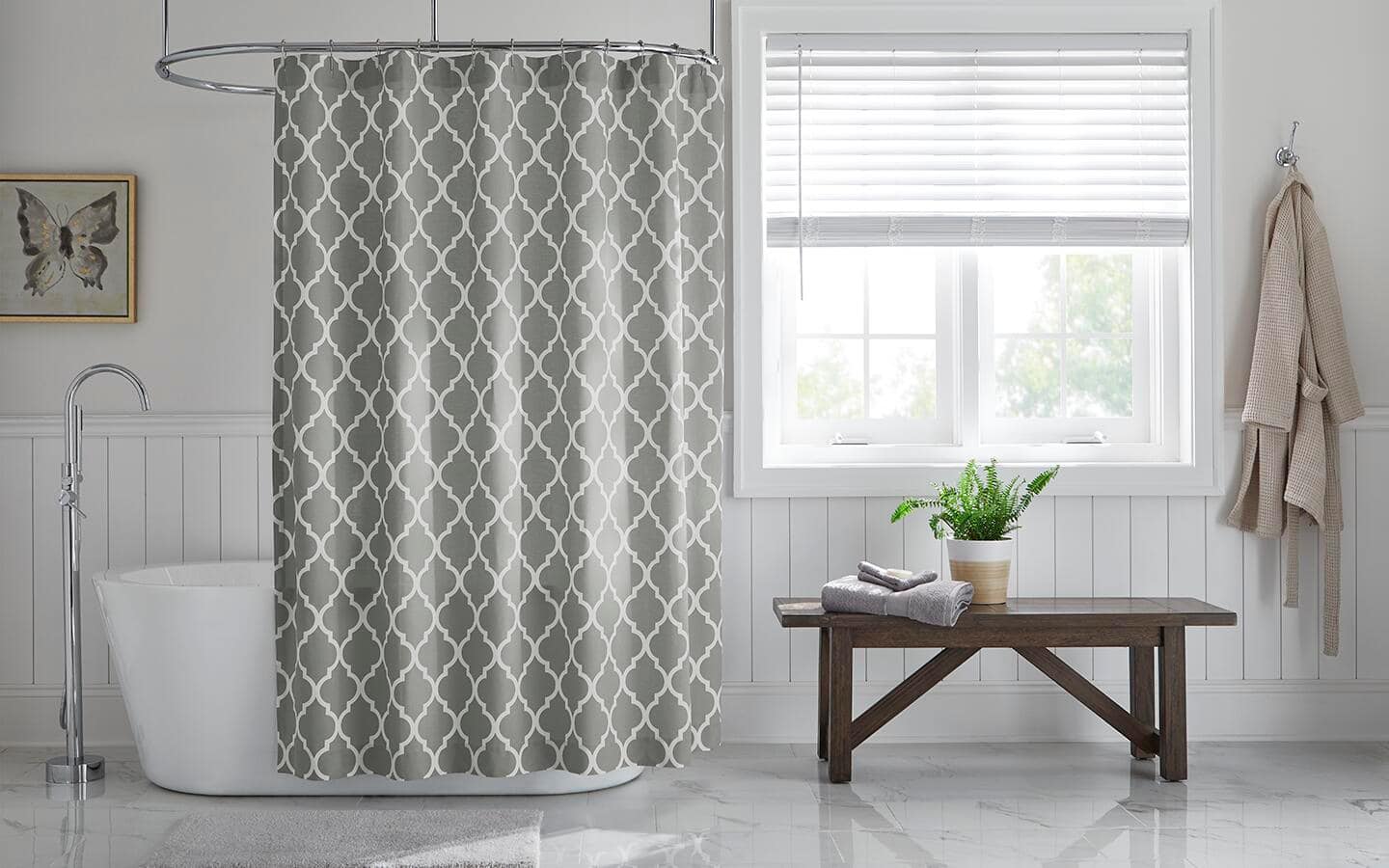
Before you default to the standard size for a shower curtain, measure your shower opening and the height of your showerhead to determine the best fit. Older homes may have a standard height for a showerhead that's 72 to 78 inches. Newer homes usually have a showerhead height that's 80 inches.
If your showerhead is installed on the higher side, a 79- or 84-inch length curtain might better protect from overspray, without allowing water to leak at the base. An extra-long shower curtain that reaches from floor to ceiling creates a more tailored look. It also feels more lavish and upscale.
If you have a shower stall without a tub, look for a narrower curtain. This helps to avoid excess bulk, which not only looks odd, but also traps moisture. You should always double-check shower curtain dimensions because they can vary. Here are some common sizes (width by length):
- Stall: 54 x 78 inches
- Standard: 70 x 72 inches
- Long: 72 x 79 to 84 inches
- Extra-long: 72 x 96 inches
Shower Curtain Styles
Neutral:
- When you want your shower curtain to be a supporting player, rather than a star, go for calm hues, like white, gray, cream, taupe or sand. A neutral design works with every decor style, from minimalist to traditional, and every style in between.
Solid:
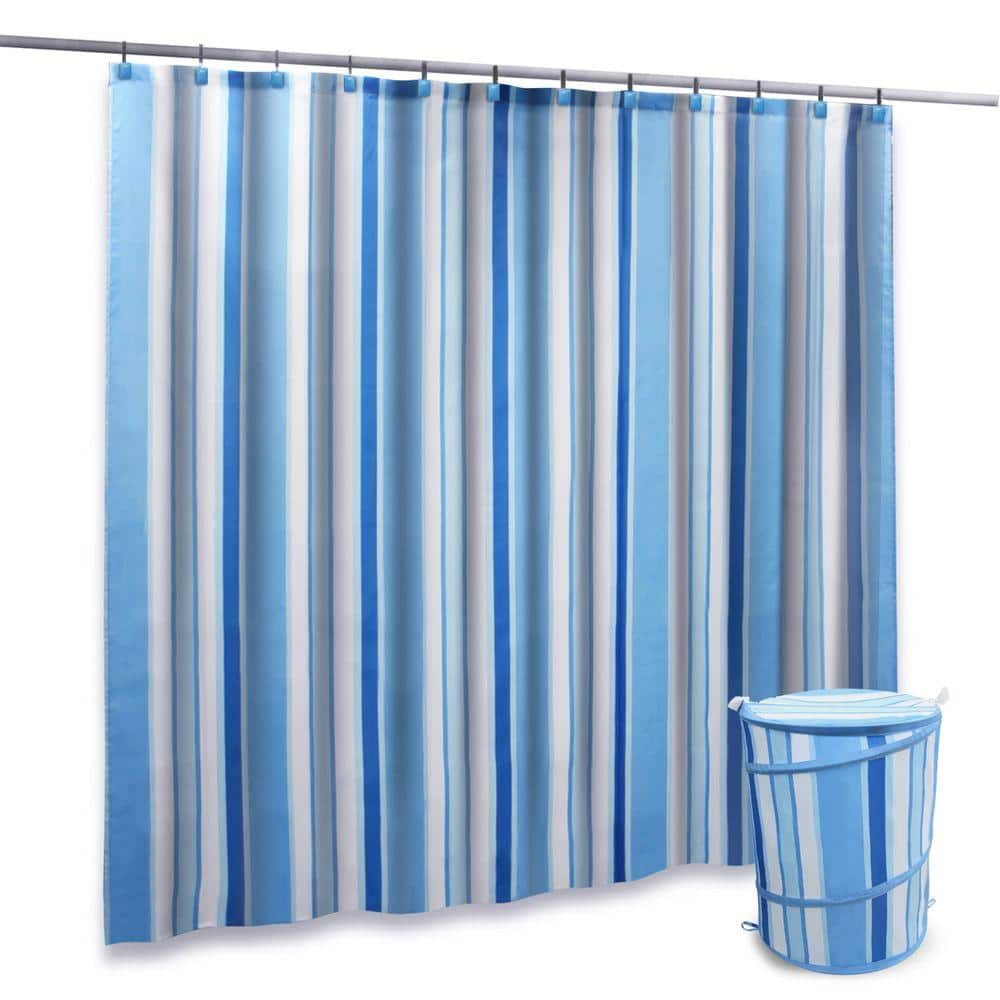
- Whether one hue or a color-block design, shower curtains can introduce bold swathes of color in a bathroom, with a lot less commitment than painted walls or permanent fixtures. The color you choose sets a tone. For example, think pretty powder blue for a spa feel, bold navy for a nautical or preppy look, soft blush for sweet vintage space or olive green for an eclectic boho vibe.
Textured:
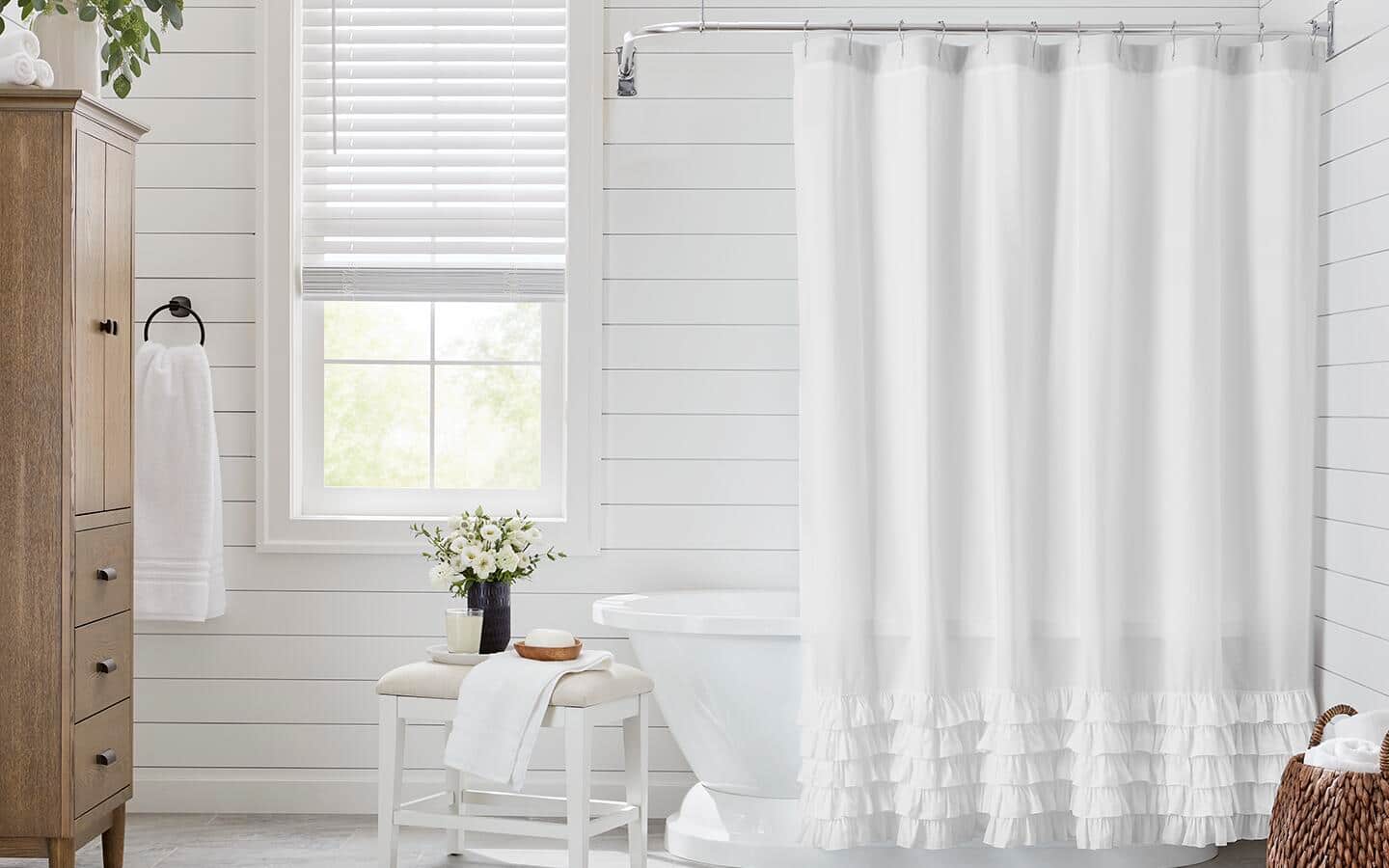
- A textured shower curtain brings sophistication and depth to a bathroom in the same way nubby throws and woven baskets add subtle interest to a bedroom or living room. Waffle, diamond and jacquard (intricate, multicolored weaves) textures are go-to classics. Meanwhile, those with ruffles, tassels, and trims, such as pom-pom or ruching (pleated, fluted or gathered fabric strips), are trendier choices.
Patterned:
- When you want your shower curtain to be the focal point, a pattern is a no-brainer. Bold or delicate, multicolor or monochrome—with all the options available, settling on just one is the biggest challenge. Let your overall vision for the space guide you. For instance, floral or botanical designs can swing cottage or contemporary. Abstract looks feel modern or eclectic. Geometric designs or stripes can feel classic and traditional or sleek and minimalistic. And scenic mural or themed motifs feel whimsical and fun.
The best part? If you grow tired of a look or want to switch things up every so often, you can swap out a shower curtain, easily and affordably.
Fabric Shower Curtains
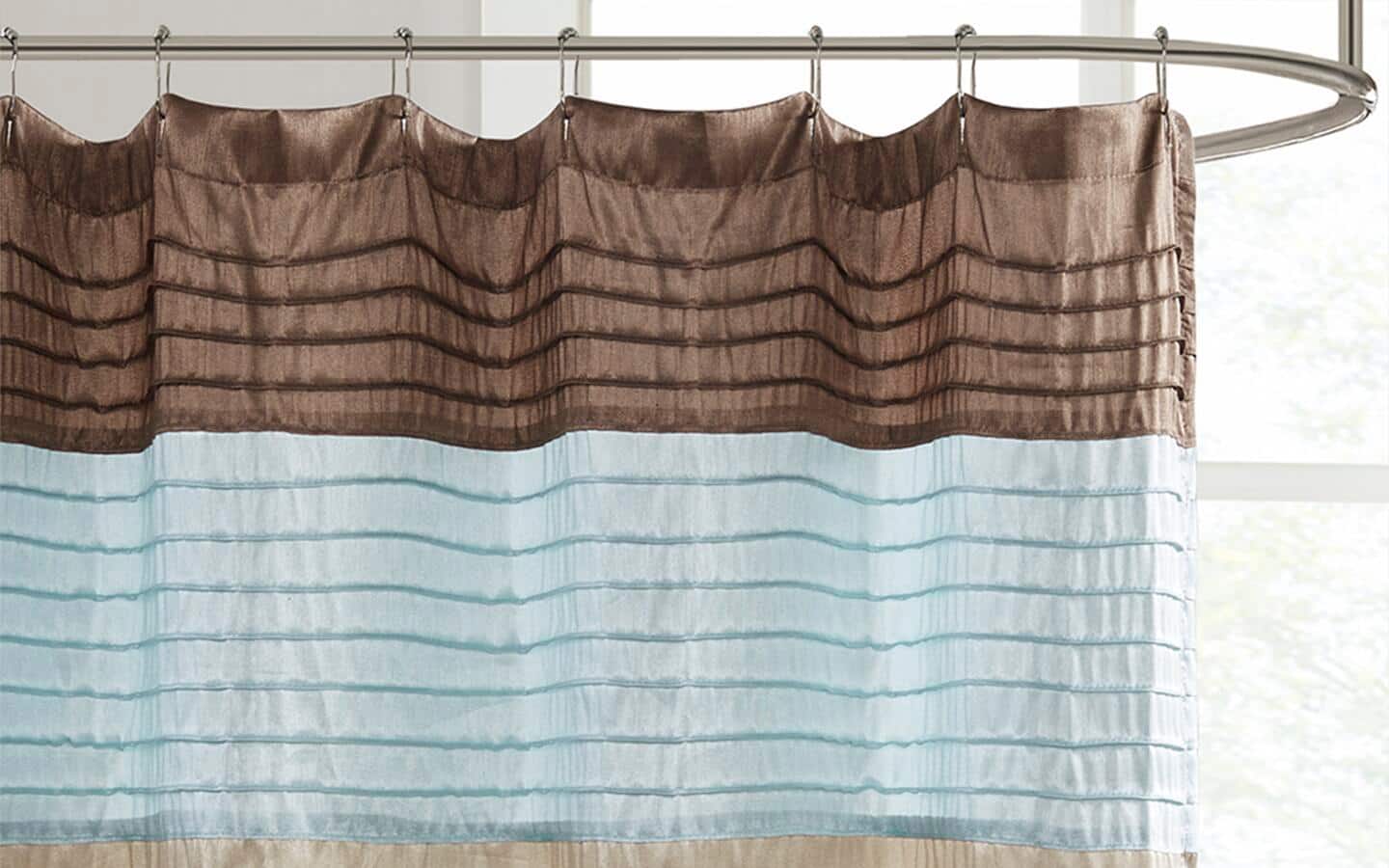
A fabric shower curtain adds a layer of warmth and softness that ups the cozy factor in a room filled with hard surfaces. While a decorative fabric shower curtain offers a lot in terms of form and feel, most aren’t water-resistant. Pair it with a liner to keep water inside the tub or shower and prevent the curtain from molding or mildewing.
Fabric curtains are made from natural materials (cotton, linen, canvas), synthetic (polyester) or a blend of the two, for the best of both worlds. Natural materials feel luxurious and usually have a price tag to match. They are durable and available in a range of colors and textures. But they tend to wrinkle and need to be washed more frequently than synthetic materials.
Polyester curtains often imitate the look of cotton, linen, silk or satin at a lower price point, but may not be as soft. While not completely waterproof, polyester can be water-resistant, so it’s less likely to mildew. They also come in a range of styles and patterns. When in doubt, go for timeless over trendy.
Vinyl Shower Curtains
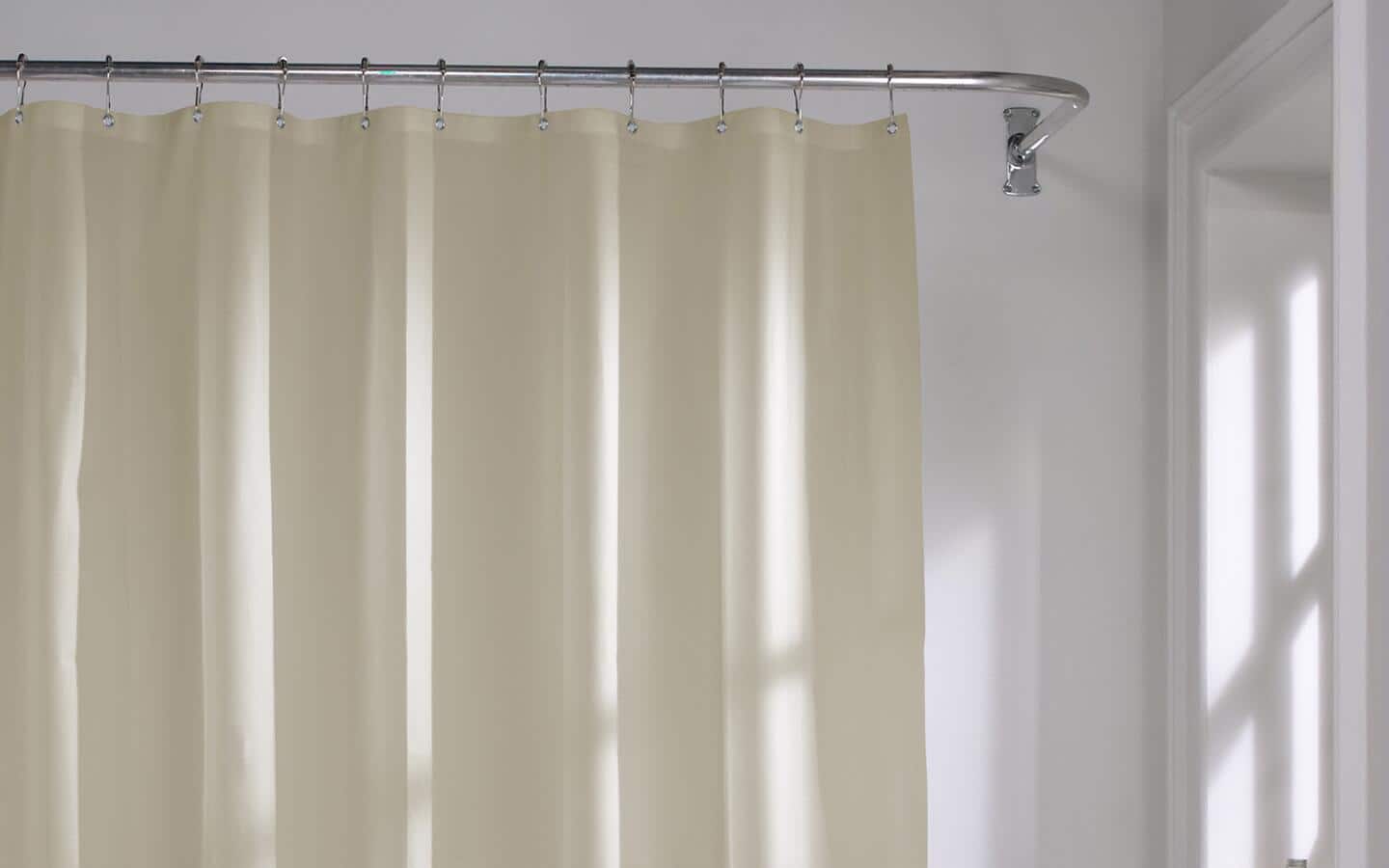
If low maintenance and simple is more your style, a vinyl shower curtain might be right for you. This two-in-one option is water-resistant, so no additional liner is needed. Just be sure to tuck the curtain into the tub before turning on the water. Vinyl curtains are budget friendly, easy to clean and available in lots of fun colors and prints. They're great in a kids’ bath or if you like to switch up looks often. You may opt for PEVA (polyethylene vinyl acetate) or EVA (ethylene vinyl acetate) materials, which are chlorine-free, less toxic and more eco-friendly.
Shower Curtain Liners
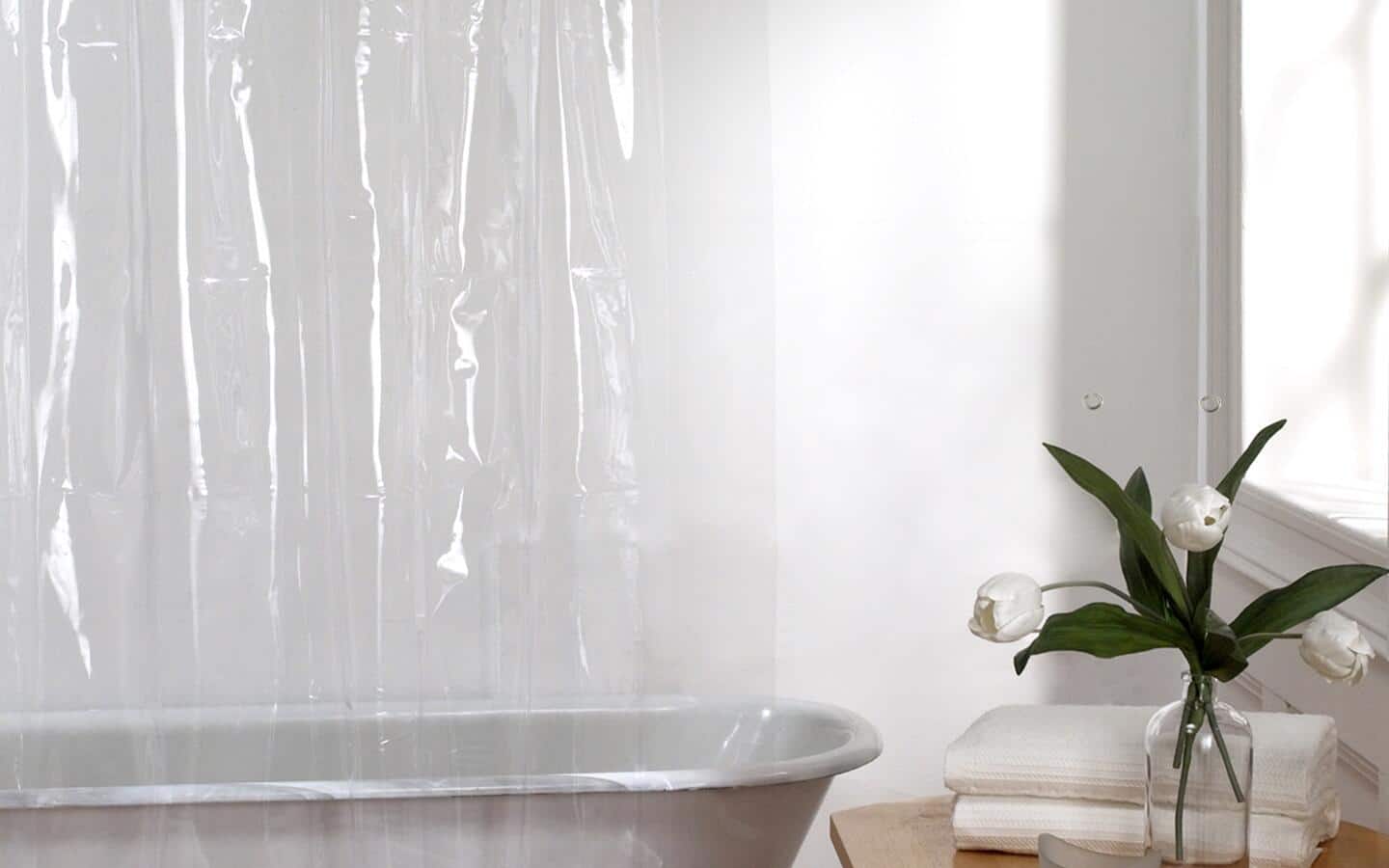
When paired with a decorative curtain, a shower curtain liner's top job is to keep spray and splashes contained inside your tub or shower. A weighted or magnetic bottom hem ensures the edge stays in place at the tub or shower pan, so water can’t splash out from below.
Liners are usually clear or white vinyl, and you can find different weights at different price points. Some are also available in water-resistant polyester, which is softer, but tends to require more frequent washings than vinyl.
Shower Curtain Hardware
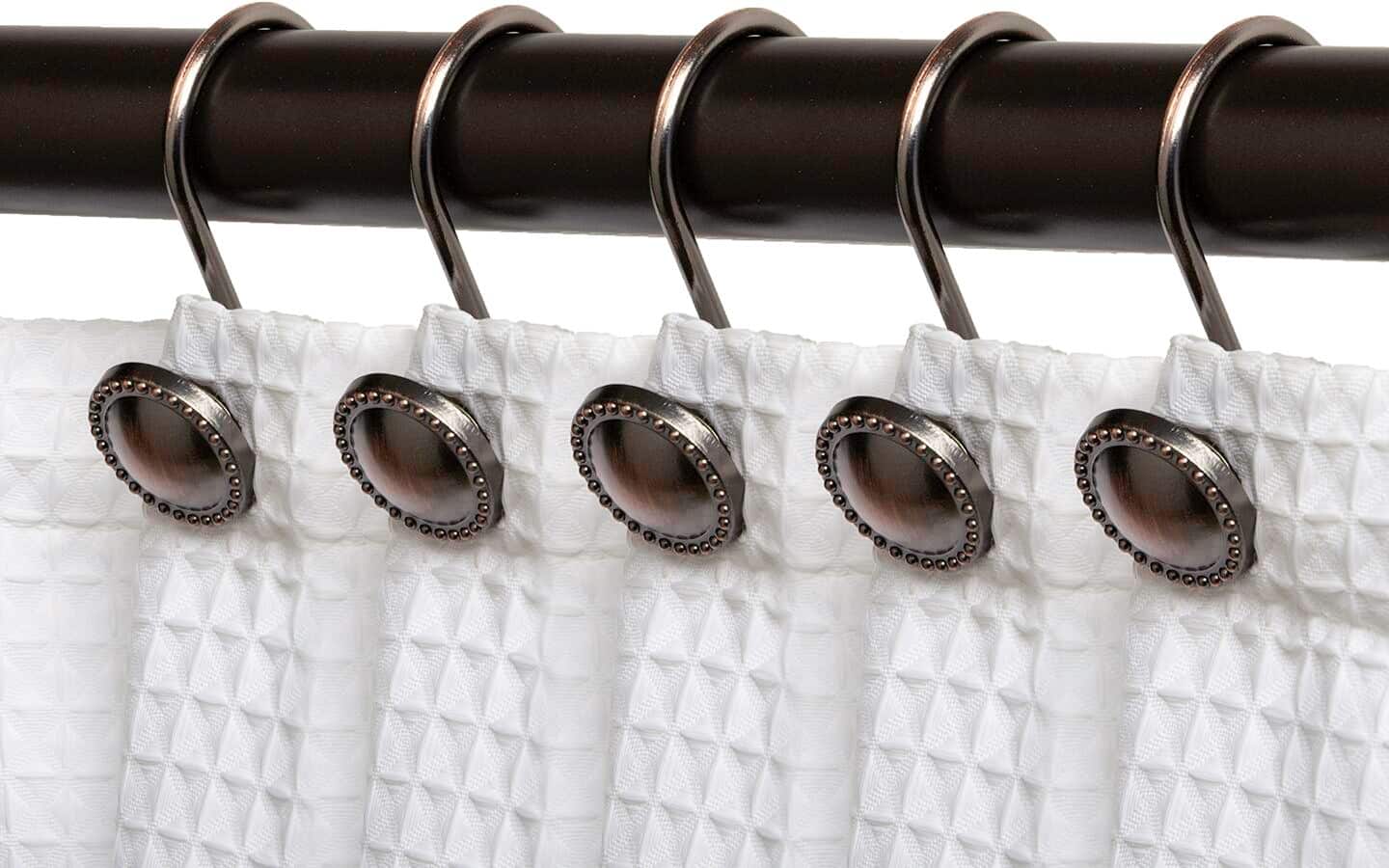
The shower curtain rod may seem like the simplest decision, but there are a few features to consider. A straight rod is the most common, but a curved rod can make a tight shower feel more spacious. Tension rods are a less permanent installation, while fixed rods are installed by drilling holes into the walls. A single rod can accommodate a shower curtain and liner if you layer both on the same set of rings. A double rod leaves a little more breathing room between the two to help with dry time. Choose a metal finish that coordinates with other fixtures in your bath, or go with classic white.
Shower curtain rings and hooks are your final hardware decision. Many shower curtains come with slits or small holes along the top edge for inserting shower curtain rings. Others have the newer grommet-style options that slide directly onto the rod. For a cohesive look, choose a finish that coordinates with your rod. Options run the gamut from super decorative to super simple in various metals or plastic. Roller hooks or rings have rolling ball bearings that glide effortlessly on a rod. Double hooks make it easy to hang both a shower curtain and shower liner.
Daily Maintenance for Your Shower Curtain
After every shower, there are basic steps to keep your curtain and liner clean. They may even allow you to reduce or even prevent mold and mildew from developing. Generally, if kept clean, shower curtains and liners should not need replacement, unless they become torn.
- Spread out your curtain and liner so they can fully dry. If they’re scrunched up to one side, moisture can become trapped, and mold can grow.
- Let the liner hang inside the tub and the curtain hang outside the tub for better airflow between the two.
- To help keep mildew at bay between washings, spritz with a daily shower cleaner, made of equal parts water and vinegar.
- If possible, turn on the exhaust fan or crack a window a bit after you shower to help clear excess moisture from the air.
Shower Curtain Cleaning Tips
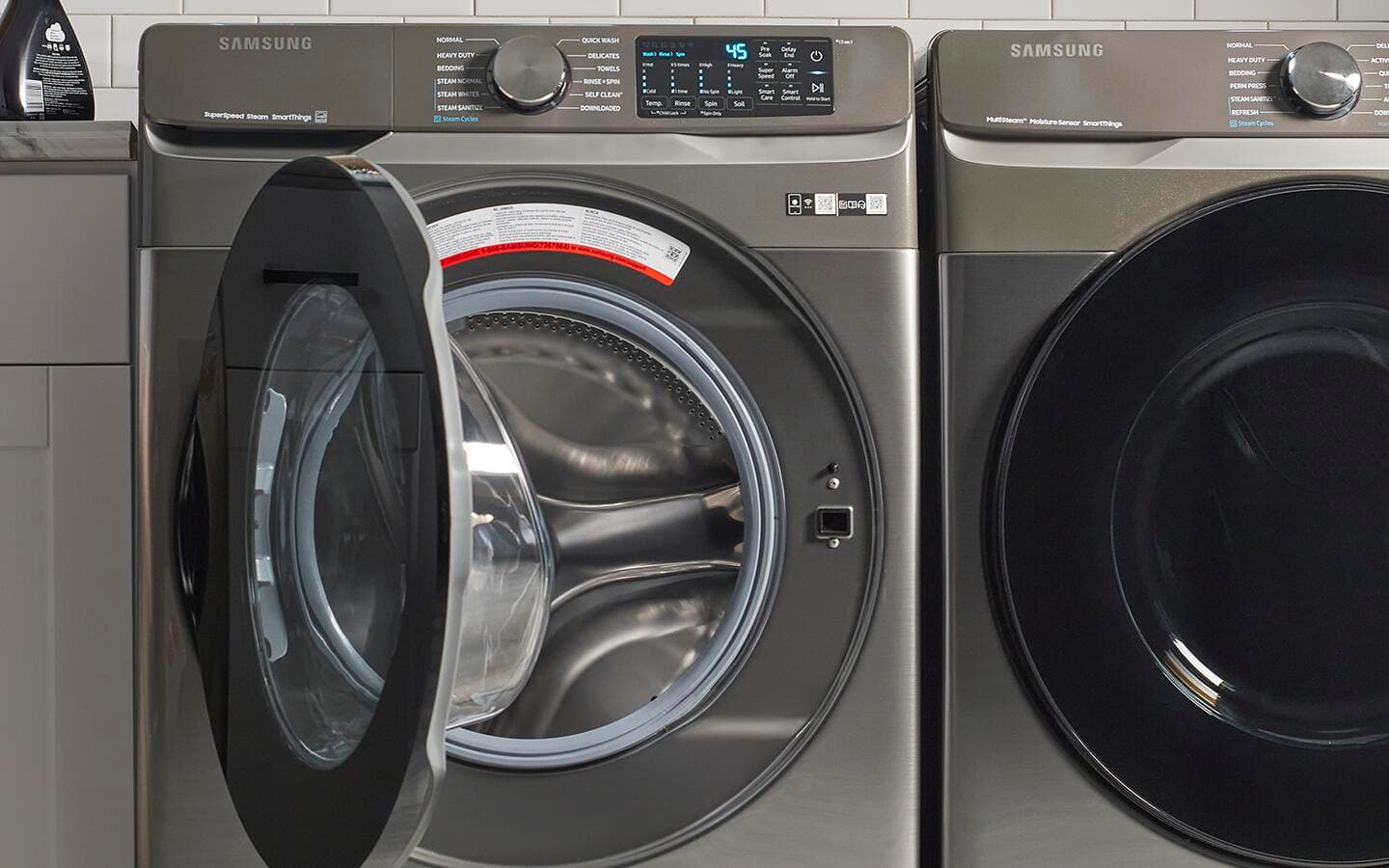
With each shower, dust and soap scum can accumulate on your curtain and liner. Plus, the heat and moisture allow mildew to thrive. Even with daily maintenance, you need to clean your curtains and liners. This creates a healthier environment, extends curtains' lives and gives bathrooms a brighter, fresher appearance.
It's not difficult to clean vinyl and plastic shower curtains and liners. But even for those requiring hand washing, cleaning is easy. Curtains without direct water contact can be washed every couple of months. For vinyl curtains that see daily water contact, wash at least once a month. However, more frequent cleaning may be needed in bathrooms with poor air circulation, or if you often see mold or mildew.
Tip: Before cleaning a curtain, check the label for any special washing instructions.
When cleaning with a washing machine, first ensure that curtains and liners are machine washable.
- For most curtains, add a solution of half a cup of baking soda to the usual amount of gentle laundry detergents or mild all-purpose cleaners.
- Fabric shower curtains should be washed on a gentle cycle, with warm water, using the highest water setting. Use only a small amount of mild detergent.
- Vinyl curtains should be washed on a gentle cycle, but with cold, not warm water. Add a cup of bleach or a laundry booster, like borax, to clean soap scum or buildup. But avoid mixing cleaning products.
- Stubborn stains should be washed with the same procedure. You'll want to use a mixture of 1/2 cup laundry detergent and 1/2 cup baking soda. Then, before the rinse cycle, add 1 cup of vinegar. You could also mix 1/2 cup chlorine bleach and 1/4 cup mild laundry detergent. But only use bleach on white or transparent shower curtains.
- Throw 1 or 2 clean, white towels into the machine. This will help scrub the curtains and liners, while preventing tangling and wrinkling.
- Stop after the rinse cycle; the spin cycle is usually unnecessary for shower curtains or liners.
- Reattach the curtains and liners to the curtain rings or hooks and allow them to hang dry.
Washing curtains by hand:
- Sprinkle baking soda on a damp, microfiber cloth.
- Scrub the entire shower curtain.
- Rinse with a clean, damp cloth until all the baking soda is removed.
- For more stubborn stains, scrub the curtain with baking soda until the stains are gone, then rinse again.
- To clean shower curtain rings, after removing them from the rod, fill a sink with warm water and a cup of white distilled vinegar. Soak the rings, drain and rinse with warm water. Stubborn soap scum residue can be removed with a brush or fingernails.
Drying shower curtains:
- While some fabric shower curtains can be dried on low heat, always check the care tag for instructions.
- Most curtains and liners can be hung to dry in the shower. This is particularly true with natural fabrics, as they can shrink in dryers, or vinyl, which can melt. Curtains made of heavy natural fibers may need to tumble dry and be ironed afterward.
- Once washed, hang the curtain back up on the rod while wet but spread it out to dry in place.
Now that you know about the many shower curtains options, it’s time to start browsing. The Home Depot has all of your shower curtain needs and delivers online orders when and where you need them.